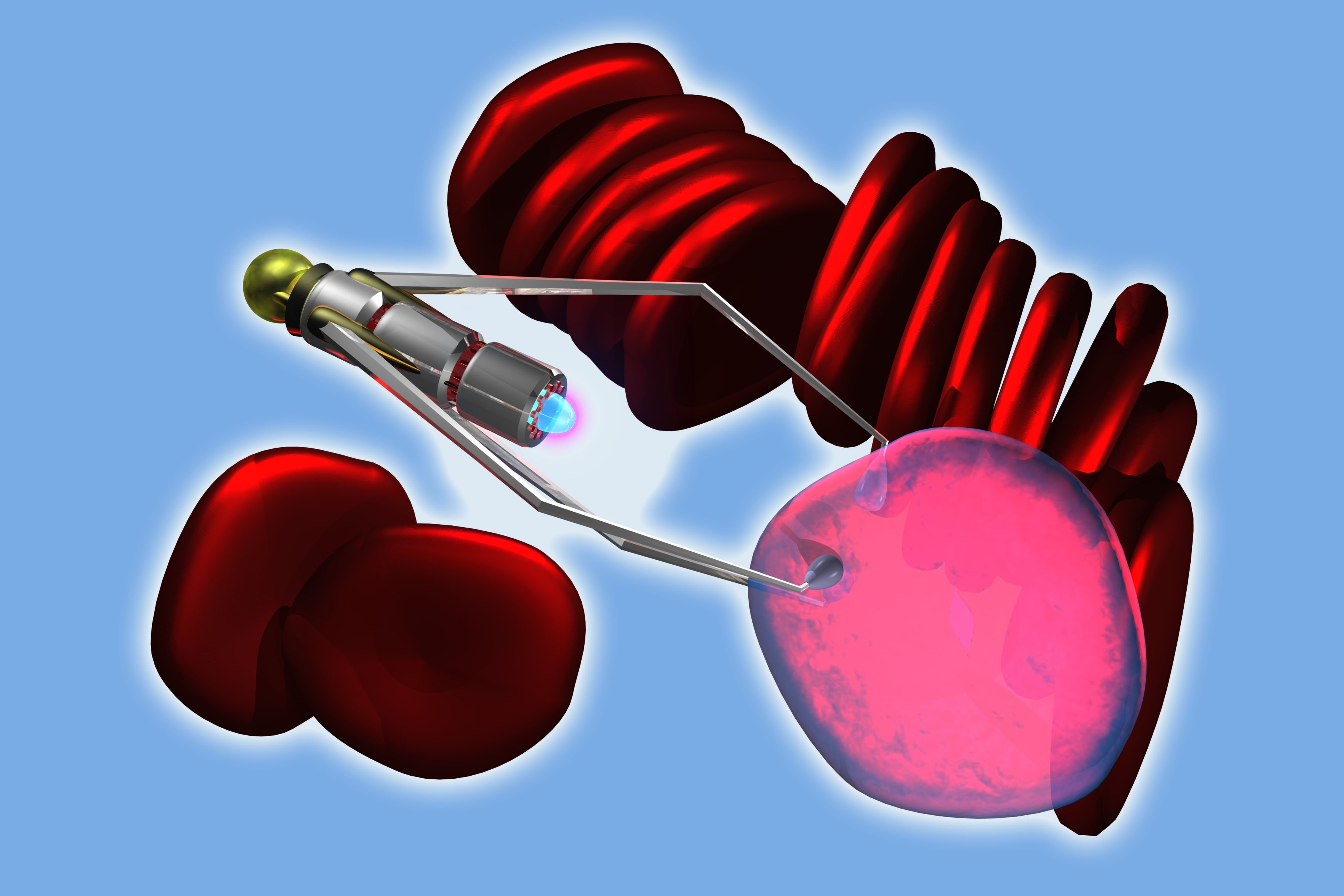
Nanotechnology is one of the engines of the fourth industrial revolution. The global market of nanotechnology-enabled products stood at approximately US$1.6 trillion in 2014. In one estimate, the industry could generate 6 million jobs and account for 10% of global GDP by 2030.
Nanotechnology creates, uses and studies materials at nanoscale – one nanometre is a billionth of a metre. Some of these materials occur in nature. DNA, proteins and viruses are examples. Others can be created by slicing larger molecules into smaller ones or by building up atoms into nanoparticles.
Nanomaterials have special physical, optical, biological, chemical, electrical and mechanical attributes. For instance, graphene is a very light nanomaterial but is several hundred times stronger than steel.
The field of nanotechnology has blossomed to encompass physics, chemistry, engineering, materials and biological sciences. It has applications in agriculture, industry, medicine, the environment and consumer products.
The big players in nanotechnology investments are the US, Japan, the EU and South Korea. Along with China, they accounted for 72.12% of the nanotech patents in the US patent and trademark office in 2016. Brazil, Russia and India are also very active.
Egypt, South Africa, Tunisia, Nigeria and Algeria lead the field in Africa. Since 2006, South Africa has been developing scientists, providing infrastructure, establishing centres of excellence, developing national policy and setting regulatory standards for nanotechnology. Companies such as Mintek, Nano South Africa, SabiNano and Denel Dynamics are applying the science.
In contrast, Nigeria’s nanotechnology journey, which started with a national initiative in 2006, has been slow. It has been dogged by uncertainties, poor funding and lack of proper coordination. Still, scientists in Nigeria have continued to place the country on the map through publications.
In addition, research clusters at the University of Nigeria, Nsukka, Ladoke Akintola University of Technology and others have organised conferences. Our research group also founded an open access journal, Nano Plus: Science and Technology of Nanomaterials.
Nanotechnology in Nigeria
To get an idea of how well Nigeria was performing in nanotechnology research and development, we turned to SCOPUS, an academic database.
Our analysis shows that research in nanotechnology takes place in 71 Nigerian institutions in collaboration with 58 countries. South Africa, Malaysia, India, the US and China are the main collaborators. Nigeria ranked fourth in research articles published from 2010 to 2020 after Egypt, South Africa and Tunisia.
Five institutions contributed 43.88% of the nation’s articles in this period. They were the University of Nigeria, Nsukka; Covenant University, Ota; Ladoke Akintola University of Technology, Ogbomoso; University of Ilorin; and University of Lagos.
The number of articles published by Nigerian researchers in the same decade was 645. Annual output grew from five articles in 2010 to 137 in the first half of 2020. South Africa published 2,597 and Egypt 5,441 from 2010 to 2020. The global total was 414,526 articles.
The figures show steady growth in Nigeria’s publications. But the performance is low in view of the fact that the country has the most universities in Africa.
The research performance is also low in relation to population and economy size. Nigeria produced 1.58 articles per 2 million people and 1.09 articles per US$3 billion of GDP in 2019. South Africa recorded 14.58 articles per 2 million people and 3.65 per US$3 billion. Egypt published 18.51 per 2 million people and 9.20 per US$3 billion in the same period.
There is no nanotechnology patent of Nigerian origin in the US patents office. Standards don’t exist for nano-based products. South Africa had 23 patents in five years, from 2016 to 2020.
Nigerian nanotechnology research is limited by a lack of sophisticated instruments for analysis. It is impossible to conduct meaningful research locally without foreign collaboration on instrumentation. The absence of national policy on nanotechnology and of dedicated funds also hinder research.
Benefits of nanotechnology
The size of Nigeria’s economy points to great potential for research and the development of patents and products.
Nanotechnology would benefit Nigeria in several ways. In agriculture, nanomaterials can be exploited as slow release fertilisers and eco-friendly agents against pests and diseases. There are applications in renewable and clean energy generation, through biofuels and solar panels.
Read more: How new energy technologies can help South Africa ease its energy crunch
In security, nanomaterials in gadgets and vehicles can enhance protection and capabilities of personnel. For example, there is potential for smart uniforms with ultraviolet protection, antimicrobial properties, camouflaging, and resistance to water and fire.
Nanomaterials can make drinking water safe through disinfection and removal of chemical pollutants. In healthcare, antimicrobial nanofabrics can help prevent hospital-acquired infections.
Read more: Nanomedicine could revolutionise the way we treat TB. Here’s how
Through numerous applications, Nigeria can use nanotechnology to deliver on development goals. Ending poverty and promoting sustainable industrialisation are just two.
Moving forward in nanotechnology
In February 2018, Nigeria’s science and technology minister unveiled a national steering committee on nanotechnology policy. But the policy is yet to be approved by the federal government. In September 2021, I presented a memorandum to the national council on science, technology and innovation to stimulate national discourse on nanotechnology.
Government should implement the outcomes of these efforts without delay. It can:
-
approve a national policy,
-
set up an agency to coordinate implementation,
-
make funds available for infrastructure, and
-
establish a centre of excellence.
The country’s trading and diplomatic partners may be of aid. The private sector also has a part to play. It can provide funds for research, offer scholarships and donate instruments. Adopting nanotechnology in commercial activities will also promote its development in Nigeria.


