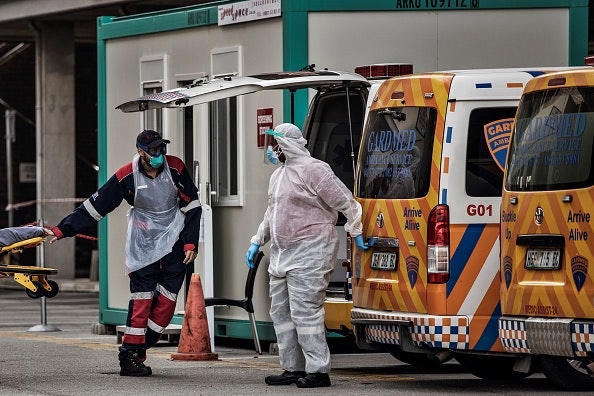
COVID-19 has spread at great speed since it was declared a global pandemic by the World Health Organisation.
In South Africa, President Cyril Ramaphosa declared that COVID-19 was a national disaster two weeks after the first case of COVID-19 was detected on 1 March 2020.
The country has since undergone numerous lockdowns at various levels. Most recently there have been fears of a fourth wave in the wake of the detection of a new variant.
For the past year the country has rolled out vaccinations across age groups.
Nevertheless, it’s widely recognised that it’s still important to identify the people and areas most vulnerable to the pandemic to reduce transmission.
In a recent paper I refined an index that had been used to measure social vulnerability in South African society.
My revised version to derive a COVID-19 vulnerability index included considering a wider range of indicators to identify the areas – as well as characteristics – of people most vulnerable to the pandemic.
I used demographic and geographical characteristics, as well as the indicators (from four dimensions) associated with vulnerability to COVID, to build the index.
From the derivation of the index and the empirical findings, it’s possible to identify groups of people who could be exposed to greater likelihood of COVID infection risk.
In 2020 Statistics South Africa (StatsSA) published a report using the Alkire-Foster multidimensional poverty index (MPI) approach to derive a vulnerability index.
However, there were two shortcomings of this study. Firstly, some important indicators were not included, for example educational attainment. Secondly, the deprivation cut-off point of some indicators needed refinement.
To address these shortcomings, my index included numerous indicators from four dimensions (socio-economic, demographic, housing and hygiene, health) to derive a revised index.
A decomposition exercise enabled us to find out which indicators contributed most to the vulnerability index in percentage terms. The results of the index decomposition found that indicators from the housing and hygiene dimension contributed most to COVID-19 vulnerability.
Vulnerability in this context means association with a greater likelihood of being infected with the virus.
In addition, my study shows the profile of people who are more vulnerable to the pandemic. This includes gender, ethnicity, age, area and province of residence and income quintile.
The hope is that the study can help efforts to manage the pandemic. It can be used to guide resource allocation – certain regions and people can be prioritised. And it can help the design of risk mitigation strategies.
Methodology and data
The original global multidimensional poverty approach was introduced in 2011 by Sabina Alkire and James Foster. Their aim was to measure acute multidimensional poverty across countries.
The index was derived from extracting three dimensions (health, education and living standard) from ten dimensions.
The authors proposed the approach as an alternative to others being used at the time which didn’t provide a multidimensional poverty index.
Data from the Census 2011 and Community Survey 2016 was used for my study. It considered a wider range of indicators from four dimensions.
-
Socio-economic: educational attainment, informal employment, car ownership, access to media
-
Demographic: multi-generational households, number of people per room
-
Housing and hygiene: dwelling type, refuse removal frequency, water source, sanitation facility
-
Health: disability status, use of chronic medication, quality of public healthcare
Findings
My findings showed that the majority of South African households were most deprived with the following indicators: car ownership, education (number of adult household members with complete Matric), refuse removal (at least once a week) and sanitation (presence of flush or chemical toilet in the dwelling).
Individuals most vulnerable to the pandemic were predominantly those coming from households headed by females (about 55%), Africans (95%) and older adults aged at least 55 years (about 50%).
Those living in rural areas (two-thirds share), in the Eastern Cape, KwaZulu-Natal or Limpopo were also most vulnerable.
By income, the segments most vulnerable were the bottom two household income quintiles 1 and 2, representing 75% of the vulnerable people’s share.
In contrast, those who were classified as not vulnerable to the pandemic came from households headed by males (60%), Africans (about three quarters) and relatively younger adults aged 25-54 years (70% share). It also included those living in urban areas (more than three quarters’ share) in Gauteng, Western Cape and KwaZulu-Natal.
Alfred Nzo, Amathole, Harry Gwala, OR Tambo and Umzinyathi were the five district councils that are most vulnerable to the COVID-19 pandemic. Interestingly, the first four were declared COVID-19 hotspot areas by the South African government in December 2020.
Lastly, the two indicators contributing most to the vulnerability included car ownership and multi generational households.
In other words, households that do not own motor vehicles and consist of members coming from different generations are relatively more vulnerable to the pandemic.
Suggestions
First, the government, in cooperation with the private sector businesses, could consider some options for people who do not have their own motor vehicles.
This could include promoting online shopping and delivery of items at their residences. Online shopping websites could make themselves available for free to give more people access.
At the time of writing, a total of 1 068 websites are zero-rated, as released by Internet Service Providers’ Association. However, these websites are almost all related to education and learning.
But it’s important to ensure such initiatives don’t unfairly knock small businesses. Additional support to small firms could help them convert online and develop a system of home delivery of shopping items.
There could also be greater initiatives on forming community neighbourhood groups to encourage residents with motor vehicles to have bulk purchases, before delivering some of the essential items to neighbours who don’t have motor vehicles.
These initiatives could reduce the likelihood of the less privileged people using public transport and being exposed to big crowds.
Areas with a high proportion of multi generational and overcrowded households could be targeted as hotspots. More public tests could be conducted, and more designated quarantine venues made available for self-isolation.
In addition, vulnerable people who need chronic medication should be discouraged from visiting healthcare facilities if possible. Medication should be delivered to their residences.
Lastly, a COVID Alert mobile app has been available in the country since September 2020. But it’s not clear how effective it’s been in contact tracing, or helping reduce transmission.
It’s important that this information is released so that an assessment can be made about what upgrades are needed to make it work more efficiently.
For example, in Singapore, everyone entering places such as shopping malls, schools and banks must first scan the QR codes with their smartphones and input their personal information. They also have to ‘check out’ when they leave.
In Hong Kong, it is compulsory to scan QR codes on your smartphone when entering restaurant for a sit-down meal.
Malaysia’s contact tracing app includes a QR-code scanning feature and allows the users to complete a basic survey.
This covers travel history, symptoms and recent contact with a confirmed case. They are then automatically classified into different risk categories and informed about next steps.


