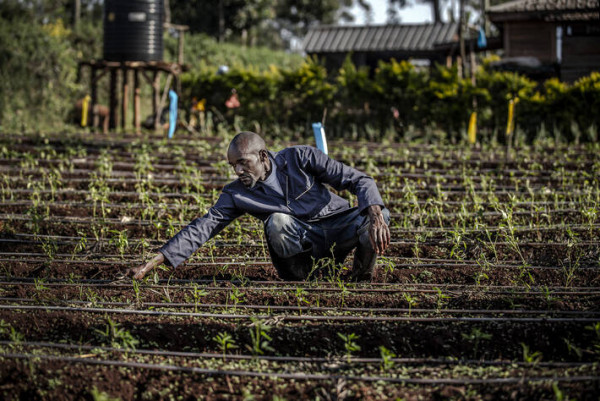
Africa's agri-food systems must be transformed to make healthy diets more affordable for Africans. That is the central message of a new report launched today by the Food and Agriculture Organization of the United Nations (FAO), the UN Economic Commission for Africa (UNECA) and the African Union Commission (AUC).
According to the latest Africa Regional Overview of Food Security and Nutrition, Africans face some of the highest food costs when compared to other regions of a similar level of development. Nutritious foods, such as fruits, vegetables and animal proteins, are relatively expensive when compared to staples such as cereals and starchy roots, and, the report argues, some of the reasons for this are systemic.
Evidence presented in the report shows that nearly three-quarters of the African population cannot afford a healthy diet of fruits, vegetable and animal proteins, and more than half cannot afford a nutrient-adequate diet, which provides a mix of carbohydrates, protein, fats, and essential vitamins and minerals to maintain basic health. Even an energy-sufficient diet, which supplies a bare minimum of energy and little else, is out of reach for over 10 percent of the continent's population.
“The picture that emerges is that the agri-food systems in Africa do not provide food at a cost that makes healthy diets affordable to the majority of the population, and this is reflected in the high disease burden associated with maternal and child malnutrition, high body-mass, micronutrient deficiencies and dietary risk factors,” FAO Assistant Director-General and Regional Representative for Africa Abebe Haile-Gabriel said with William Lugemwa UNECA's Director of the Private Sector Development and Finance Division, and Josefa Sacko, African Union Commissioner for Agriculture, Rural Development, Blue Economy and Sustainable Environment in the report's joint foreword.
“A common vision, strong political leadership and effective cross-sectoral collaboration, including the private sector, are essential to agree on trade-offs and identify and implement sustainable solutions to transform agri-food systems for healthy, affordable diets,” they said.
‘Unacceptably slow' progress on ending malnutrition
Overall progress in meeting global nutrition targets remains unacceptably slow in Africa, according to the report. Sub-Saharan Africa is the only region in the world where the number of stunted children continues to rise. Although the prevalence of stunting is declining, it is falling only very slowly and despite progress, nearly a third of the children in sub-Saharan Africa are stunted.
Only three countries, Eswatini, Kenya and Sao Tome and Principe, are on course to meet four of the five World Health Assembly nutrition targets. Three other countries, Ghana, Lesotho and Rwanda, are on track to meet three of the targets.
The report also states that current food consumption patterns in Africa impose high health and environmental costs which are not reflected in food prices. Including these costs would add US$0.35 to each dollar spent on food in sub-Saharan Africa.
Rebalancing diets to include more plant-based foods would reduce the cost of diets and lower health and environmental costs. Compared to current average diets, diets that are more plant-based would reduce the full cost of diets, including health and environmental costs, by 11-21 percent in low-income countries.
Transforming agri-food systems for affordable, healthy diets
The findings highlight the importance of prioritizing the transformation of agri-food systems to ensure access to affordable and healthy diets for all, produced in a sustainable manner. Smart policies and interventions throughout agri-food systems are needed to raise yields, lower costs, promote nutritious foods, and reduce health and environmental costs.
Within the African context, essential interventions include increased investment in research and extension to improve yields, especially of nutritious foods, and greater efforts to adopt modern farming technologies. Production must be intensified in a sustainable manner, the report argues, along with interventions to improve land governance, empower women farmers, reduce post-harvest losses and improve market access.
Other efforts required include micronutrient fortification of staple foods, better food safety, improved maternal and child nutrition and care, nutrition education, and government policies that promote access to nutritious food through social protection, poverty reduction and income inequality.
Key facts and figures
• Nearly three-quarters of Africans cannot afford a healthy diet
• Over half of all Africans (51%) cannot afford a nutrient-adequate diet
• An energy-sufficient diet is beyond the means of one in every 10 (11.3%) Africans
• Of the 185.5 million people globally who cannot afford an energy-sufficient diet, the vast majority (80%) live in Africa
Distributed by APO Group on behalf of Food and Agriculture Organization (FAO).


