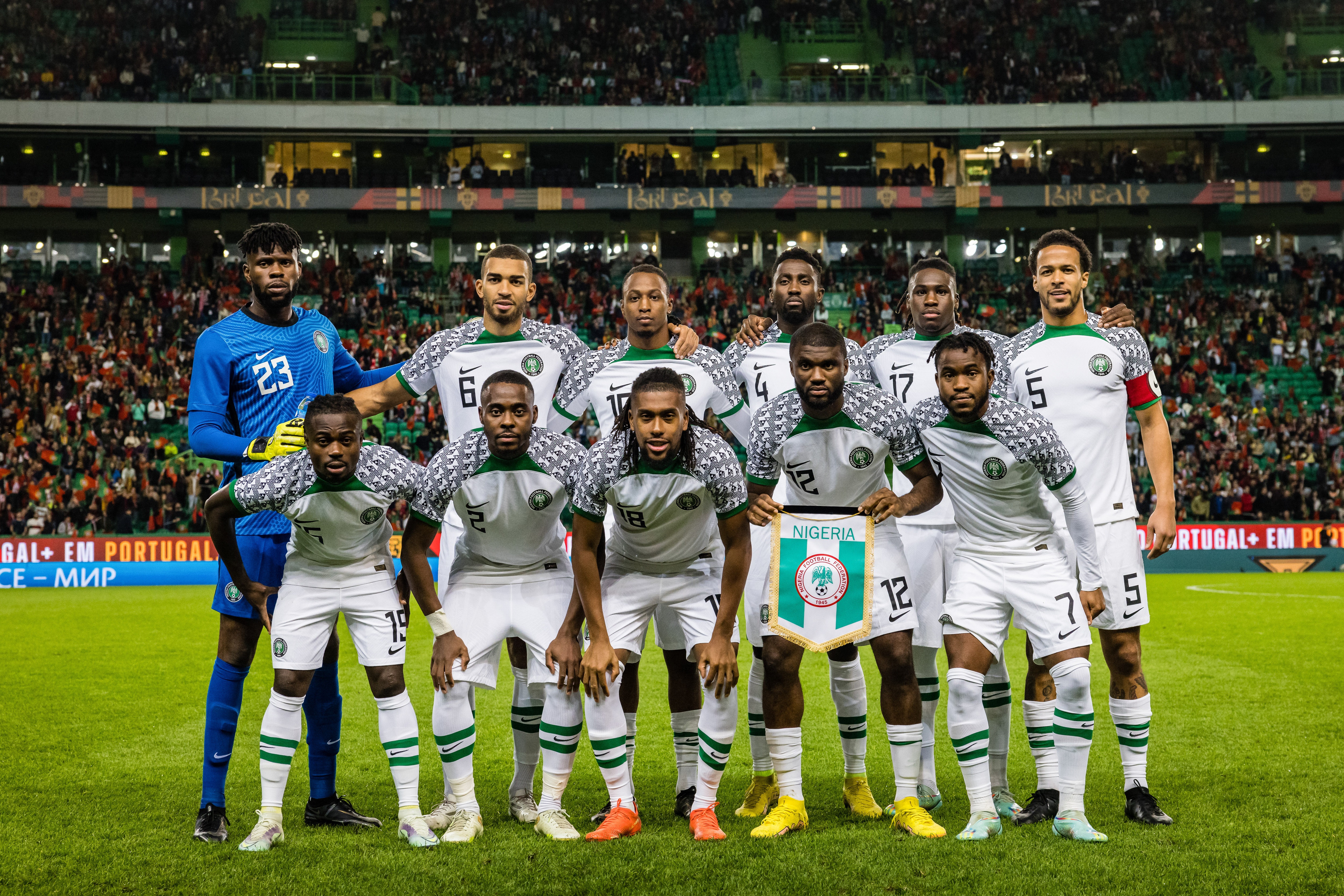
Nigeria’s national men’s football team is absent from this year’s World Cup in Qatar. It is only the second time since its first appearance in the tournament in 1994 that the Super Eagles failed to qualify. Sports scientist and FIFA physical fitness instructor Isiaka Oladele Oladipo explains why the team missed out and what it must do to qualify for the 2026 World Cup.
Why didn’t Nigeria qualify for the 2022 World Cup?
It was not a day’s failure. It started a while before we played the last qualifying game with Ghana.
When we drew the first leg in Ghana 0-0, we knew that we must win in Nigeria. But we lost and, with the away goal rules, we lost out. We didn’t take the away goals rules very seriously. We need to educate ourselves better on those rules. If the players are not aware of these sorts of rules, Nigeria should forget about qualifying for World Cups.
Nigeria recently got a new national sports industrial policy. One chapter is about sports and education, which will help players and coaches become better educated about the rules.
Education more broadly is an issue too. There isn’t enough emphasis on school sports. Some parents will scold their children for playing sport, saying this distracts them from their schooling. And many of even the country’s most renowned schools don’t have good sports arenas.
If we don’t have an environment that is conducive for children to play and exercise, then the future will not be rosy for our football. For a new player to get to play in the World Cup he must have put in place a minimum of 10 years’ practice. This is also true for the Olympics: you need 10 years’ training to win a medal. Some players in the current World Cup are 19; that means they have been playing football in conducive environments from age nine. Those are the things we need to think about.
There aren’t any Nigerian referees at the World Cup either. Why is this so?
This is a huge question – and it’s not new. No Nigerian referee has officiated at the World Cup. In 2014 Peter Egan Edibi was shortlisted for the World Cup in Brazil as an assistant referee but was not on the final list.
At this World Cup, there are six referees, 10 assistant referees and two video assistant referees from Africa, but no Nigerian. I studied this issue in my PhD in 2000. I discovered that sports managers in Nigeria think they can play politics to have a slot in such appointments. They don’t believe in scientific preparation for referees to reach such status.
These issues are still relevant today.
During my time as a referee, we were inspired by two great FIFA referees, Linus Mba and Bolaji Okubule. In 1983, Okubule became the first Nigerian referee at a FIFA tournament when he was picked for the FIFA Youth Championship (now FIFA U-20 World Cup) in Mexico. We saw the way they moved on the field and this instilled passion in us for football officiating. But these days we have referees who are attracted by money or just to enter the field or stadium free of charge.
As a FIFA physical fitness instructor, I’ve come across referees without passion and you see it in their low level of concentration. Football is a dynamic game with the rules changing every day. When our referees do not keep up with those rules, it is tough to select them. And the less time you get on international stages, the less likely you are to be identified for future tournaments.
We need to prepare our referees very well and developmental programmes at different age levels must be set out for such roles. Materials, equipment and modern facilities must also be in place. We are lagging behind in those areas.
What are the implications of Nigeria missing out?
Many business owners in Qatar planned for Nigerian fans during the World Cup. I’ve been to Qatar in the past and I worked a little bit in one of their best stadiums, Aspire Dome, and many there are disappointed that we are not there. So we lost opportunities to showcase our culture there. I know that many travel agents too had travel packages for fans to go to Qatar. Those business opportunities have been lost too.
We have also dropped in FIFA rankings and that could affect us in future games as we might get difficult games. We are also missing out on the money countries at the World Cup will get and our football will feel that. Even for those of us in academia, many of us plan to go into research concerning that competition, but since we are not there as a country, it’s a setback in how we conduct such research.
What should Nigeria do to qualify for the 2026 World Cup hosted by Canada, Mexico and the US?
To get to the World Cup, you have to train for at least 10 years consistently. That means we should be preparing for the World Cup that is coming up in 10 years’ time.
Let us identify those areas where we are having problems and tackle them. Let us see how our new sports policy can help us in working towards that goal. Let us have a developmental programme at each grade. Let us focus more on development of research centres in our universities, especially sports development.
It is bad that some constituencies, like school sports, were removed from the composition of Nigeria Football Federation. Nigeria School Sports Federation manages sports at primary and post-primary schools in the country. They are no longer part of the football federation.
Nigeria’s football structures need to link up with schools, from primary education to secondary education to higher institutions, and build diverse support. This will help the country to develop good players and intelligent coaches.


