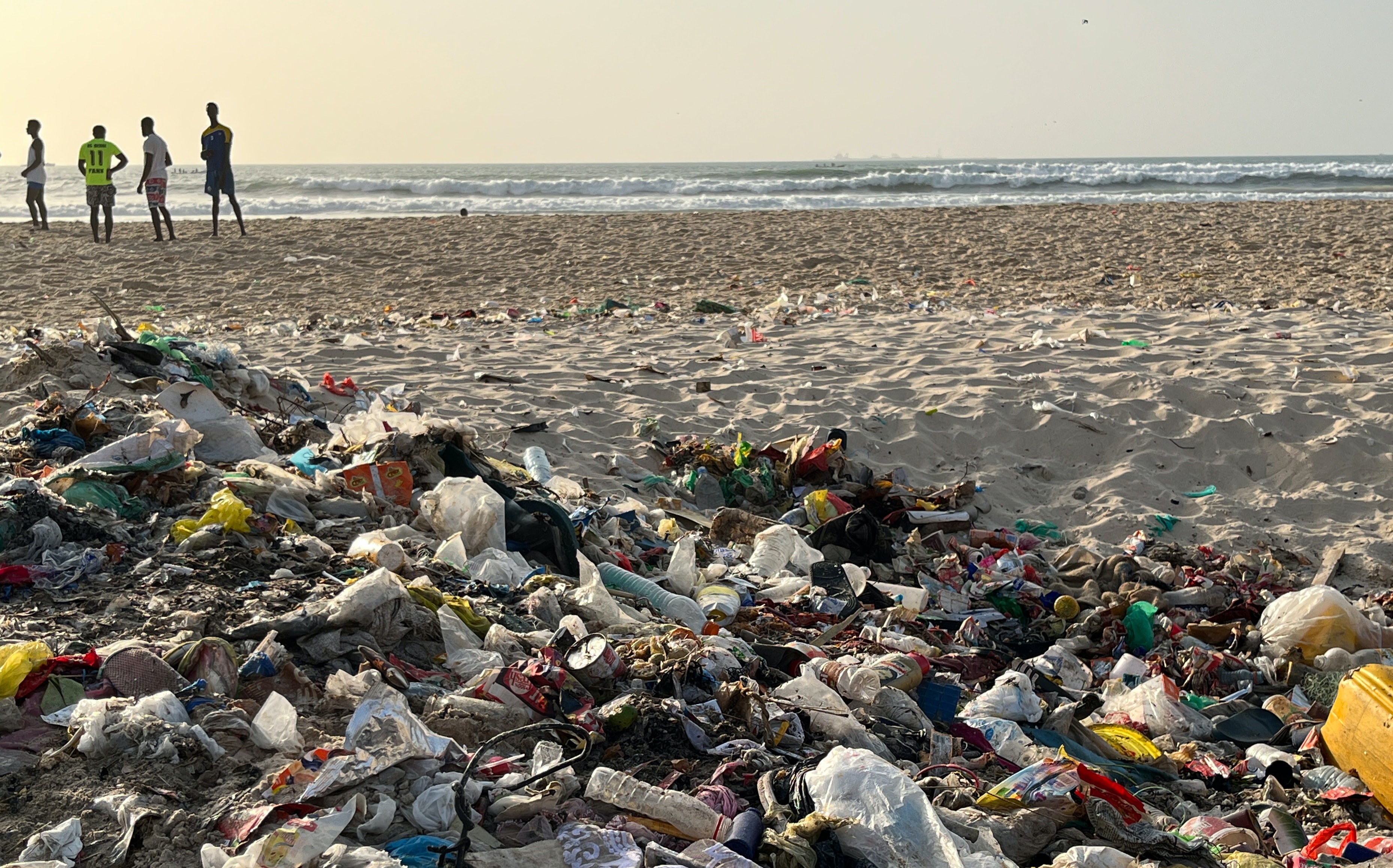
Bottles. Plastic bags. Surgical facemasks. These are just some of the 29,029 items we found along the 180km Araromi coastline Nigeria in nine months while studying marine litter. The litter weighed in at a hefty 465.54kg.
Our study took place along the Araromi seaside in Ilaje, south-west Nigeria, between January and September 2021. A collaboration between researchers at Centre for Energy Research and Development (CERD), Obafemi Awolowo University and Marine Litter Watch Nigeria, a student volunteering group, it aimed to provide a baseline data about the area and contribute to the growing body of knowledge on marine litter monitoring and prevention.
The study used the “clean coast index”, a science-based estimation tool used internationally, to assess the cleanliness of the beach. The beach was classified as dirty during the dry season and extremely dirty in the rainy season.
Over the past decade, marine litter has become a growing global problem which poses an increasingly serious threat to the environment, economies and human health.
The global nonprofit organisation Ocean Conservancy reported that in 2021 about 9,760,227 litter items were collected over nearly 30,000km of the world’s coastal areas.
At present, only 17% of world meat production is food from the sea. But demand is expected to increase strongly. Marine litter is one of the threats to biodiversity, the production of seafood and the maritime economy.
It’s clear from our research and other studies that West Africa’s marine litter problem cannot be ignored. The region has an estimated population of no fewer than 419 million people and is one of the continent’s fastest growing regions both in demography and economically.
The thousands of kilograms of litter reported as clogging up the beaches of Cameroon, Nigeria, Senegal and Sierra Leone could also stymie the region’s economic and tourism growth, as well as putting people’s health at risk.
Read more: Lagos beaches have a microplastic pollution problem
Piles of litter
The National Oceanic and Atmospheric Administration defines marine litter as items that have been made or used by people and discarded into the sea or rivers, or on beaches. It includes items brought indirectly to the sea by rivers, sewerage, storm water or winds, or accidentally lost at sea in bad weather.
Other sources include industrial emissions, discharge from storm water drains and untreated municipal sewage.
Our Centre for Energy Research and Development analysed 29,029 beach litter items found at Araromi seaside.
Araromi is a coastal town in Ilaje local government area of Ondo State, south-west Nigeria. It covers an area of 3,000km² and lies 238km to the east of Nigeria’s most populous city, Lagos. There are over 82 fishing communities on the coastline as fishing and boat making are major sources of income for the Ilaje people.
The motivation for this study was to show that remote, less densely populated communities along the coast are not shielded from the impacts of marine litter.
As measured by the clean coast index, the beach was dirty during the dry season (7,358 litter items; 141.3kg) and extremely dirty in the rainy season (21,671 litter items; 324.24kg). This implies that rain is a major factor in transporting litter from inland to the marine environment through various waterways.
The items we found included glass, metals, plastic (beverage bottles, caps, disposable cups, cutlery), abandoned fishing gear, ropes and wooden canoes, fabrics, cigarette butts and medical waste (syringes, facemasks, hospital PPE, intravenous drip bottles and sanitary pads), among other litter.
Most of the items were household waste which was poorly disposed of. Some of it stemmed from recreational (tourist) and fishing activities (economic factors).
In a similar study conducted in 2016 on lagoon beaches in Ghana, high litter deposition (49,457 items) during the rainy season was reported. This was attributed to river runoff and flooding. Most of the litter was plastic.
Nigeria and Ghana are both on the Gulf of Guinea, which has a coastline of about 6,000km from Senegal to Angola. The Gulf coast has the highest population density in tropical Africa. It is also the site of growing commercial and industrial activities. It is a shipping zone for oil and gas, as well as goods to and from central and southern Africa. The region lacks efficient waste disposal and management mechanisms and policies. All these factors help explain the state of the beach cleanliness and the likely increase in the problem if nothing is done about it.
Read more: The 5 biggest threats to West Africa’s oceans – and what to do about them
Potential interventions
What can be done?
First, frequent and coordinated clean-up efforts – by government, NGOs or volunteers. We saw none during our work at Araromi. There were no rubbish bins for beach goers to use. Coordinated efforts among the fishing communities could address the disposal of old and abandoned fishing gear.
Government at various levels must create more awareness about the dangers of marine litter and the legal, policy and institutional frameworks that govern it. This would help local communities to understand that natural resources like beaches and lagoons are their heritage, and need to be protected.
Manufacturers must be involved in monitoring and cleaning up their waste (extended producer responsibility, EPR). They also need to support awareness programmes and sponsor clean-up activities.
Most importantly, manufacturers must develop innovative materials which are eco-friendly as alternatives for their product packaging.


