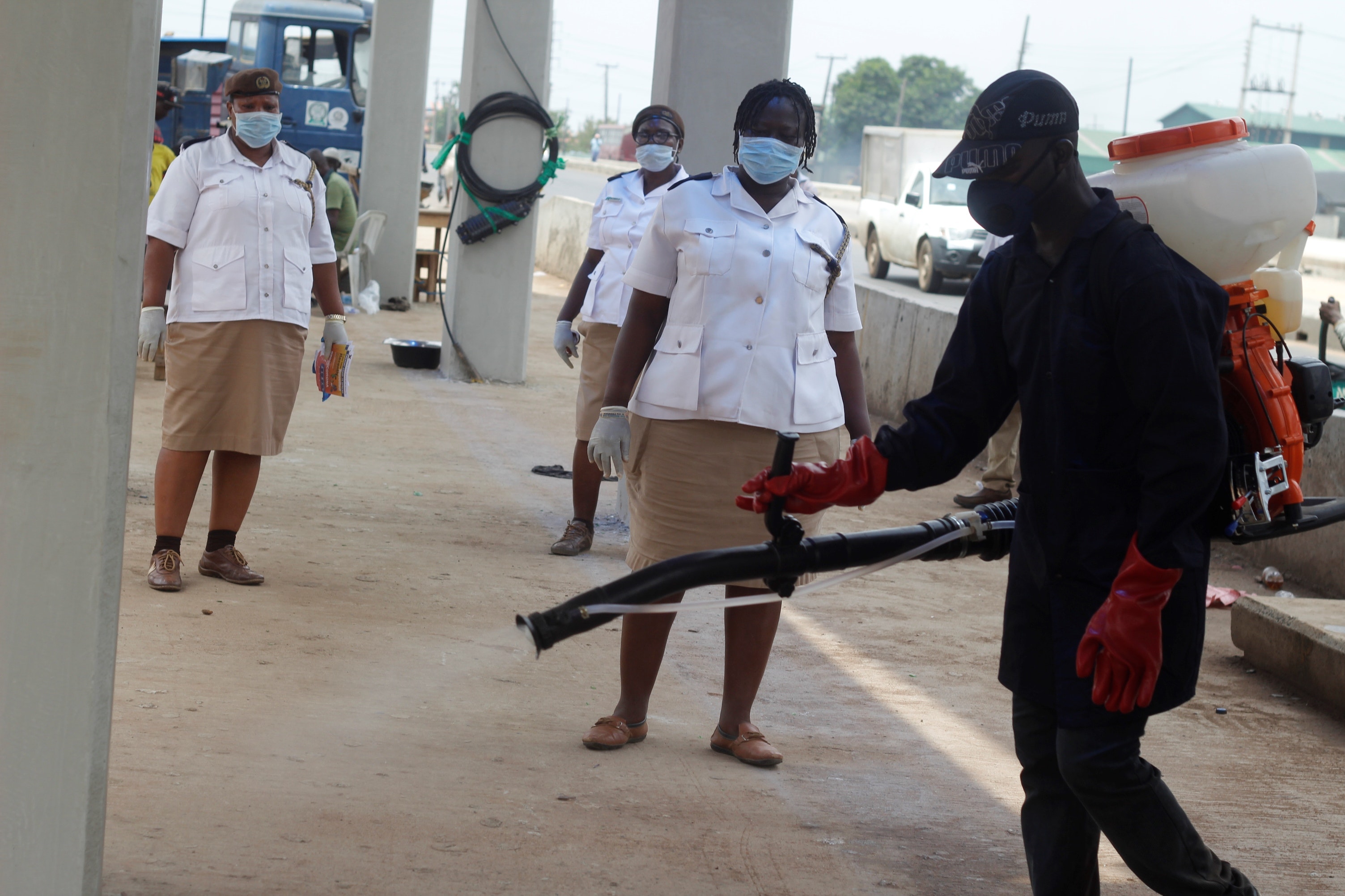
In current debates about managing and defeating COVID-19 in Nigeria, an issue that’s missing is the role that social workers should play.
In many countries social workers have played a central role in efforts to contain the spread of the SARS-CoV-2 virus, and to manage its fallout. In China they are celebrated for their exceptional roles. The same is true in the US, Italy, New Zealand, and the UK.
This reflects the fact that running healthcare sectors involves a multidisciplinary approach. It includes professionals cutting across the medical, engineering, behavioural and social sciences.
These various professionals are expected to cover specific areas of competence. This, in turn, should lead to speedier delivery of health services since they will be less distracted with tasks and responsibilities outside their training.
In countries like Nigeria, it’s common to find medical doctors and nurses offering extended and supportive health services. These range from counselling to investigating the medical histories of patients, doing home visits, explaining treatment concerns to patients and their caregivers, and monitoring the mental health of patients.
By taking on these supportive health services, medical professionals get burdened and exhausted – and distracted from their main clinical job concerns.
Countries in the global north have, in recent years, increasingly restricted professionals to their specific and specialised roles. This has led to stronger healthcare systems, and has happened in conjunction with increased roles for social workers.
Yet Nigeria has failed to recognise the roles of social workers generally, and more particularly within healthcare.
The government seems to show no understanding of the contributions made by trained social workers. They have even gone as far as frustrating the professionalisation of social work by an act of law. Social workers now don’t enjoy the full rights and privileges of a profession as do their legal and medical counterparts.
Social workers are employed in most government-owned hospitals. Yet they seem not to have mustered the same respect and recognition enjoyed by other healthcare professionals.
We conducted a study to understand the roles Nigerian social workers played during the earlier months of the COVID-19 pandemic. We engaged 12 health workers. Six were mainstream health workers, and six healthcare social workers.
Our main finding was that, due to government’s lack of understanding of the critical role they should play, social workers played a minimal role – or none – in the intervention process against COVID-19 in Nigeria, especially at the front line. On the basis of this, we recommended that social workers should be actively involved because their roles are relevant to complementing the efforts of mainstream health workers.
What social workers bring to the party
Our research showed that there are four areas: health, relationships, nutrition and work.
Health: In India, the UK, the US, and China, social workers were seen constantly engaging the public online and offline with public health education.
This takes stress off the mainstream health workers so they can be concerned more with patients’ clinical care.
In some instances they have also assisted with contact tracing.
Relationships: In some countries health workers are leading advocacy campaigns to improve the welfare and safety of health workers and the public. Additionally, they have helped initiate care for the children of frontline staff, including security agents.
Nutrition: The pandemic has been associated with lockdowns that in turn affected food security. In Italy, social workers monitored food vouchers to assist vulnerable groups. They drew on their training in equity and community work to ensure that food items were distributed fairly and on time.
Work: The pandemic has put huge strain on people adapting to new work routines. Protection of employees, helping workers and firms cope with difficult challenges, and advancing concerns of the unemployed are critical roles social workers could play.
Constraints
The people we spoke to listed a number of factors that got in the way of their ability to make a meaningful contribution.
The first was that health workers only had vague knowledge about social work. To them, social workers should be restricted to helping indigent patients, conducting antenatal classes and helping out with psychiatric cases. Such that when the pandemic broke out some social workers said they were asked to stay at home. If they did come to work, their job functions were auxiliary.
The health workers we spoke to looked stunned when told about the roles social workers were playing in healthcare in some other countries battling COVID-19.
We found gaps in the system that extend beyond attitudes.
The biggest is the fact that some heads of the social work units in the hospitals had never studied social work. They were drawn from disciplines like public administration, education, and even the natural sciences. This is one challenge that comes with lack of professionalisation, as anyone can be employed to do social work jobs without any form of regulation. This remains one of the greatest undoings of the profession in Nigeria.
Next steps
Our research underscores the indispensable roles social workers can play to help countries fight COVID-19. This would result in the maximum concentration of mainstream health workers on clinical functions and speedier victory over the virus.
Nigeria should reconsider its position on the social work profession and give to it the premium it deserves. We have seen the many instances of how social workers are benefiting other countries, including some African countries where they enjoy full professional status and are even categorised as essential workers. Confronting challenges in health must be multidisciplinary, and social workers play vital roles.
At the same time, schools of social work training should revise their curricula to address the gaps that relate to the roles of social workers in disease outbreaks and pandemics.


