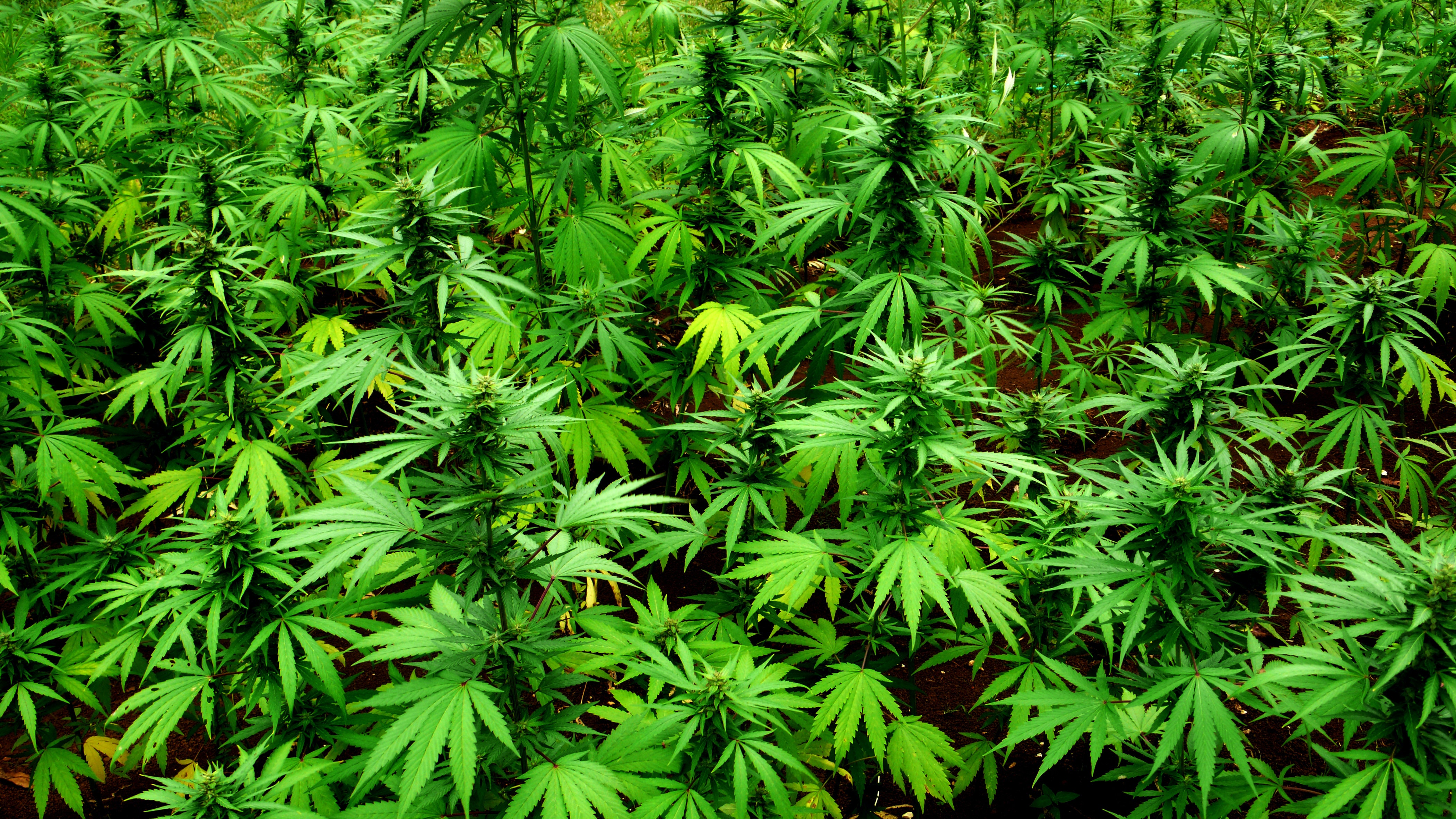
Nigeria has been debating whether to legalise marijuana. Its House of Representatives is set to discuss a bill to that effect. The Conversation Africa’s Wale Fatade asked Olakunle Idowu, a Professor of pharmaceutical chemistry, to explain the science behind the debate.
Is there any scientific basis for legalising marijuana?
The plant, Cannabis sativa, or Cannabis indica, contains several phytochemicals – cannabinoids – with a variety of pharmacological actions. Its multiple effects are the reason some people use marijuana and also the reason others feel it should not be legalised. While it gives some a pleasurable effect, the active doses also have several side effects.
A particular phytochemical – delta-9-tetrahydrocannabinol (THC) – found in the leaves, flower and resin produced by the plant, is responsible for the euphoria that users of marijuana experience. It reacts with specific receptors in the brain. This “high” is sometimes associated with addiction and crime.
On the other hand, cannabidiol (CBD), also found in the plant, is a compound that does not interact with that receptor. It does not affect a person’s mental state, but has properties that are shown to be useful for managing anxiety and epilepsy.
Cannabidiol oil is commercially available in some pharmacies in Nigeria. It is sold as a dietary supplement.
To complicate the picture, the potential effects of the chemicals on people depend on the plant variety, the cultivar. The cultivar that is grown as industrial hemp for fibre and biodiesel is much richer in CBD than THC.
In essence, legalising marijuana would mean addressing some scientific issues for safety reasons. These are:
-
determining the specific variety of the cannabis plant in the country, and
-
the quantities of the phytochemicals – THC and CBD – present in those varieties. Geography (terrain, soil quality and chemistry) affects the composition and relative amounts of plant phytochemicals.
What scientific challenges would Nigeria face in legalising marijuana?
One challenge is to have the scientific capability to evaluate what is legal and determine what is illegal.
In the US, cannabidiol, which does not produce the “high”, is legal if it contains 0.3% or less of THC, the chemical that produces the “high” with the associated antisocial effect. This comes down to “quantitative phytochemistry” – the ability to accurately and reliably determine how much of a specific phytochemical is found in a plant sample.
When THC is above the level specified, it will be ruled illegal. This level of specification is required because it is the THC concentration that is associated with the propensity for drug abuse and crime.
Reliable results from quantitative phytochemistry depend on trace analysis, which requires instrumental methods of analysis, based on laboratory equipment which is expensive to acquire and maintain. In most cases the analytical method used is liquid chromatography hyphenated with mass spectrometry (LC-MS-MS), a specialised technique that is not yet commonplace in Nigeria.
If marijuana were legal, the drug regulatory agency, the National Agency for Drug Administration and Control, would probably have an increased burden of responsibility.
Quality assurance would be a serious challenge. For a plant product that has a wide disparity in pharmacological actions, it is difficult to have a safe active dose without side effects. It can have very different effects on different people, so “abundance of caution” is the wiser approach to adopt.
As a scientist, do you support the legalisation of marijuana in Nigeria?
In my view we should not legalise marijuana yet, when there is little to no research data in our universities on the plant, especially the various cultivars that grow in our environment.
We should rather start with a mandate for the National Agency for Drug Administration and Control to coordinate research activities across pharmacy schools in the country to develop validated analytical methods to do quantitative phytochemistry. Then we can determine the levels of CBD and THC in a sample. The agency will need those competencies to determine what is safe and what is not, when counterfeiting begins. Lawsuits will come down to those analytical capabilities, when there is perceived contravention of whatever laws are passed.
A similar situation arose in the US in 1994, when the Dietary Supplements Health and Education Act was signed. The office of Dietary Supplements was set up in 1995 to implement the new law and promote safe and responsible use of dietary supplements in that country.
The conversation in Nigeria should start with what science is required and what scientific capability the country has. That might safely drive the legality of marijuana use in our country.


