Nigerian children recount the challenges they face working in a city:
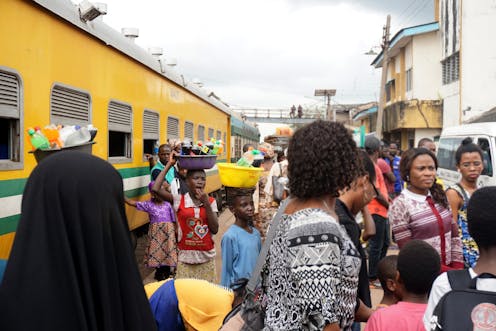
Stories of children being used in Nigerian mines have hit the headlines. But this phenomenon isn’t uncommon. About 15 million Nigerian children work –- the highest rate of working children in West Africa.
Globally there are over 168 million children, aged 5 to 14, that work. While most studies focus on child labour that happen in rural and agricultural areas, very few have reported the dangers experienced by children in urban areas of Africa where they work as street hawkers, hustlers, vendors and domestic servants.
But in a rapidly growing society such as Nigeria, where poverty is widespread, child labour in urban areas has become a systemic avenue for augmenting parental income. Though it may build the entrepreneurial skills of youngsters for later life, it can have detrimental consequences.
I set out to find out more about the lives of children who are working. Drawing on interviews with 1,535 children (aged 8 – 14 years) and their parents, my study documented their experiences. It showed that although child labour provides significant economic assistance towards the sustenance of the family, children don’t get a proper education and experience negative health and social consequences in the process.
Working children
Over half the children interviewed were female and the average age of all children was 12 years, though some were as young as 7-years-old. Most were engaged in sales (such as street hawking) and services (like car washing). While some of the children worked as much as six hours a day, the average daily hours of work was four.
When it came to the parents, more than two-thirds were engaged in trading and services, the remaining 28.4% were employed in administrative and professional occupations, indicating more education. Regarding parental income, an overwhelming 8 out of 10 parents earned about 20,000 Naira (about USD$ 55) per month. Such low earnings mean the households turned to using the labour of their children to supplement the family’s income.
Despite the economic benefits of child labour, the findings show that children face a variety of challenges in their daily activities.
More than a third had experienced accidents involving motor vehicles. “John,” a boy aged 9, complained that: “I get hit by car and motorcycles when I want to cross the roads.”
Surprisingly, 1 out of 7 children told our interviewers about attempted kidnapping. “Laide”, a 10 year-old-girl, narrated a scenario where two men wanted her to follow them by promising to give her 5,000 Naira (about USD$ 14).
The study also found that about 1 out of 10 children had been subjected to rape, sexual molestation, or assault while on the streets selling foodstuffs and fruits.
“Tayo”, a 13 year old girl said: “At times, some men would pretend that they want to buy things from me, but later would be touching my body.” “Kehinde”, a 14-year-old girl, said: “I was raped twice and became pregnant on one occasion by two men…My parents aborted the pregnancy so that it wouldn’t ruin my education.”
Because children spend considerable time away from their family and household, about one-quarter (22.8%) reported that gangsters would invite them to join in their bad activities. “Tolu”, an 11-year-old boy said: “Touts and gangsters would come to me and ask me to smoke Indian hemp (marijuana). Sometimes, they would ask me to describe my house so that they can come to visit me and invite me to join them in their activities.”
Almost one quarter (24.1%) of children miss one day or more of school each week. Moreover, 7 out of 10 of the working children attribute their poor school attendance to tiredness or sickness resulting from long distance walking due to their daily work activities, while the remaining 28% miss school because of their parents request that they should sell foodstuffs instead of attending school that day. This finding shows how child labour can have a detrimental effect on child health, which invariably affects their school attendance.
When children do go to school, about half are sometimes, or always, late. When asked why they’re late, 52.6% cited child labour as the major reason. Another one-third mentioned tiredness or illness as reasons for the lateness. Again, child labour appears to have a negative impact on their punctuality which does not bode well for effective learning and success in school.
Children were also asked about opportunities for doing homework after school. Just a little over 40% said that child labour does not hinder their time for homework.
Finally, interviews with the children reveal that two-thirds do not have time for recreation, although the remaining one-third manage to play with friends during the time they are engaged in child labour. Child labour disturbs children’s leisure time, hindering their optimal social development which they get through interacting with peers.
New policies
I recommend that policies need to be put in place that reduce the number of children working in Nigeria. Policy programmes such as credit facilities, poverty reduction schemes, by creating jobs for adults, and the provision of affordable medical facilities would improve the quality of lives and, consequently, reduce the need for child labour.
Existing laws should also be enforced, including compliance with the minimum working age and ensuring universal enrolment of Nigerian children in schools.

Prof. 'Dimeji Togunde does not work for, consult, own shares in or receive funding from any company or organization that would benefit from this article, and has disclosed no relevant affiliations beyond their academic appointment.
Source: The Conversation – Articles (AFRICA)
Read more on The Conversation.
Join the fun: Add Your event | Submit a Press Release | Add your listing.


