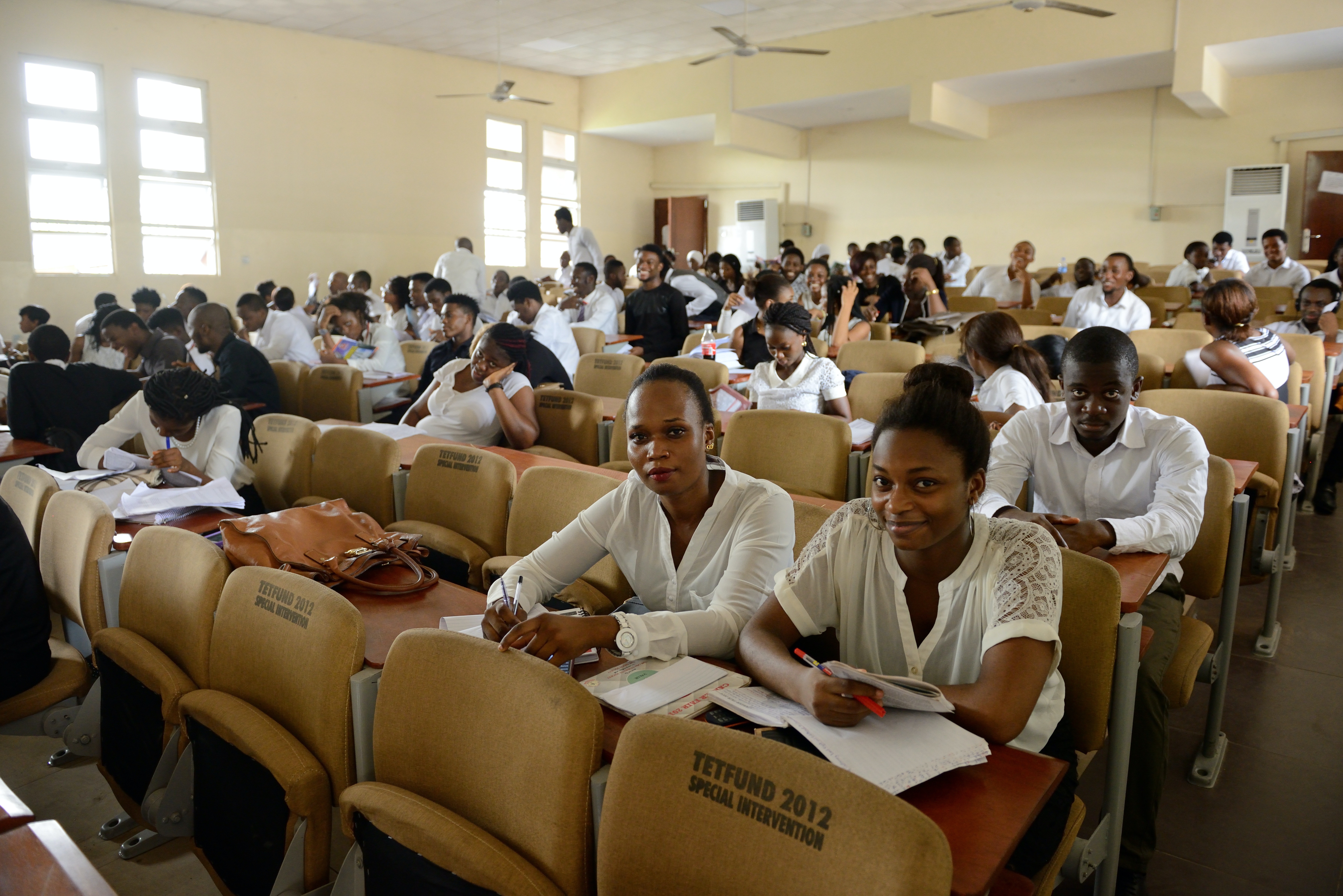
In response to the compulsory closure of institutions of learning as part of measures aimed at curbing the spread of COVID-19 in Nigeria, efforts were made to keep students busy with academic activities during the lockdown.
Thus, schools, especially privately owned universities, engaged students in different kinds of online learning approaches. This was limited to private schools because the government owned universities were on strike.
To fully understand how students feel about online learning during COVID-19 pandemic, our study investigated the views of students of Anchor University, a private higher education institution owned by the Deeper Christian Life Ministry in Lagos, Nigeria.
We found that Anchor University was one of the private tertiary institutions in Nigeria that took the initiative to respond to the challenge.
Lecturers went the extra mile to ensure that students had meaningful learning experiences. They engaged students with materials varying from text notes and voice notes, to animated videos. They also used different online tools and platforms like Google classroom, Google meet, WhatsApp, and YouTube.
So how did the students feel about this?
Our findings showed that the students had negative dispositions towards online schooling. Some of these views were tied to their home front situations. The challenges they mentioned included higher data consumption, distractions from the neighborhood, friends and relatives, erratic power supply and internet network fluctuations.
Most of the issues they complained about would have been taken care of in the school environment of Anchor University if the students were physically in school.
The research
To arrive at our findings, we collected data from 104 students out of about 500 students. Participants were drawn from the sciences, arts and the social sciences disciplines.
The participants, whose age ranges between 17 and 22 were drawn from classes between 100 and 400 levels. They all responded to an online questionnaire regarding their disposition to online teaching and learning at the early part of COVID-19 pandemic lockdown.
The results showed that students were not in favour of online teaching and learning. They had a preference for face-to-face learning and wished the practice would not be retained, post COVID-19.
Over 60% of the participants did not find it fun learning through uploaded videos and other online learning channels. For example, majority of the students say they concentrate more with a teacher in the class than when watching a video online.
Some students said they are not learning more content from online teaching than they would have in a face-to-face approach. Others said they would rather all the online lectures be repeated in the classroom after the lockdown.
Our findings surprised us.
The assumption has always been that students would readily welcome online learning given that they enjoy watching films on television and are familiar with modern technologies including laptop computers and mobile hand-held devices like smart phones and iPads.
Our findings contradict research done elsewhere on online learning. One example is a report done six years ago that assessed the attitude of students towards e-learning in South west Nigerian universities.
Also, our findings are not in tandem with a research report done 4 years ago analysing students’ attitude towards e-learning at Babcock University, Nigeria. The report showed that students have positive attitude to online learning.
Another report done 2 years ago among Purdue University students, US, found that video provides great benefits to teachers and learners, stimulating stronger course performance in many contexts, and affecting student motivation, confidence and attitudes positively.
The contradictions could be traced to the fact that students did not really expect the sudden shift to complete online mode of learning.
Recommendations
Based on the findings, we made a number of recommendations that tertiary institutions could follow should they continue learning and teaching via online channels and platforms:
-
They should provide adequate training for lecturers to acquire requisite skills to effectively facilitate online delivery of learning content.
-
They should provide adequate orientation, motivation and training for students to acquire relevant skills to maximally benefit from online teaching and learning. They should be exposed to modern information technology applications to support their learning.
We also made some recommendations for parents. They should try to provide an enabling environment for students at home. They should try as much as possible to provide support ranging from making available the necessary electronic gadgets (such as laptops and android phones), access to electricity power supply (generating sets and solar panels) and sufficient data for strong and consistent internet connection.
Parents should also provide an emotionally enabling environment so that students can benefit from the face-to-screen online teaching and learning. These would help the students to benefit maximally from online schooling.


