As Nigerians inch closer to the February 2023 presidential election, the seventh since the current wave of liberal democracy formally started in 1999, there are at least 10 key issues that are likely to drive and determine the outcome. Political scientist, Jideofor Adibe, explores them all.
1. Ethnicity and regionalism
Four of the 18 presidential candidates in the election, regarded as the front runners, come from the three dominant ethnic groups in the country: Hausa/Fulani, Yoruba and Igbo.
From the north are Atiku Abubakar, a former vice-president of the country (1999-2007) and the presidential candidate of the People’s Democratic Party; and Rabi’u Musa Kwankwaso, a former governor of Kano State and the presidential candidate of the New Nigeria People’s Party.
Bola Ahmed Tinubu, a Yoruba from the south-west, is the presidential candidate of the ruling All Progressives Congress. Peter Obi, an Igbo from the south-east and former governor of Anambra State, is the presidential candidate of the Labour Party.
Since the 1999 election, there has been an unwritten convention that presidential power will rotate every eight years between the northern and southern parts of the country. That’s why many individuals and groups from both the north and the south insist that President Muhammadu Buhari must be succeeded by someone from the south.
Some individuals and groups from the south-east further argue that because the zone has not yet produced a president, it should get its turn in 2023.
Some from the north-east, where Atiku comes from, equally argue that it should be their turn since the zone has not produced a national head since Tafawa Balewa, the country’s first and only prime minister, in the 1960s.
2. Religion
Just like ethnicity and regionalism, religion has always been an important tool of mobilisation and discord in Nigeria.
Since 1999 there has also been a careful balancing act to ensure that the president and the vice-president do not share the same religion. While the north is predominantly Muslim, the south is predominantly Christian.
This balance was upset when Bola Tinubu, a Yoruba Muslim, chose Kashim Shettima, a Kanuri Muslim and former governor of Borno State, as his running mate. Many Nigerians and groups, including the Christian Association of Nigeria strongly condemned the ticket.
Read more: Africa’s largest democracy goes to the polls amid rising insecurity
3. Emergence of ‘viable’ third force parties
Until 2015, Nigeria’s political landscape was dominated by one party – the People’s Democratic Party. It was the only party strong enough to win presidential elections.
This changed in 2015 when the All Progressives Congress, a coalition of opposition parties, defeated the sitting president, Goodluck Jonathan. This heralded an era of a two-party dominant state.
The emergence of the Labour Party and the New Nigeria People’s Party seems to have changed the electoral dynamics.
Obi frames his campaign on anti-establishment rhetoric and is therefore able to attract a horde of frustrated young voters. As the only Christian among the four leading candidates, Obi may also benefit electorally from Christians opposed to Muslim-Muslim ticket of the ruling APC. At least three opinion polls showed him leading the race, though some have questioned the credibility of those polls.
Kwankwaso, founder of the Kwankwasiya movement, is regarded as a grassroots organiser. He is believed to be popular with ordinary people in the north but is thought to lack a strong following in the south.
Burden of history
Obi’s candidacy has been endorsed by Ohanaeze Ndigbo, the pan-Igbo socio-political organisation, and some influential non-Igbo groups and individuals, including former president Olusegun Obasanjo.
In the south-east region, there is a deeply ingrained belief that there is a conspiracy to exclude the Igbo from certain key political positions in the country because of their role in the Civil War (1967-1970). This belief has helped fuel secessionist agitations. Though the political elite of the region have remained aloof or lukewarm to Obi’s candidacy, he is literally deified by ordinary people in the region who are excited by the “audacity” of his candidacy.
Presidential debates
In recent years, various groups have been organising debates for key political contestants in the country. Tinubu, touted as a master tactician by his supporters, has managed to evade these debates. After a speech to an audience in the UK in December 2022, he left it to his aides to respond to most of the questions he was asked.
I have argued elsewhere that presidential debates do not really affect the outcome of presidential elections. In fact leading candidates often refuse to take part in some or all of such debates. But Tinubu’s non-appearance accentuates suspicions about his health and several controversies around him.
Read more: Nigeria’s next president faces a collapsing security situation: five things he can do
Independence of the electoral umpire and the new Electoral Act
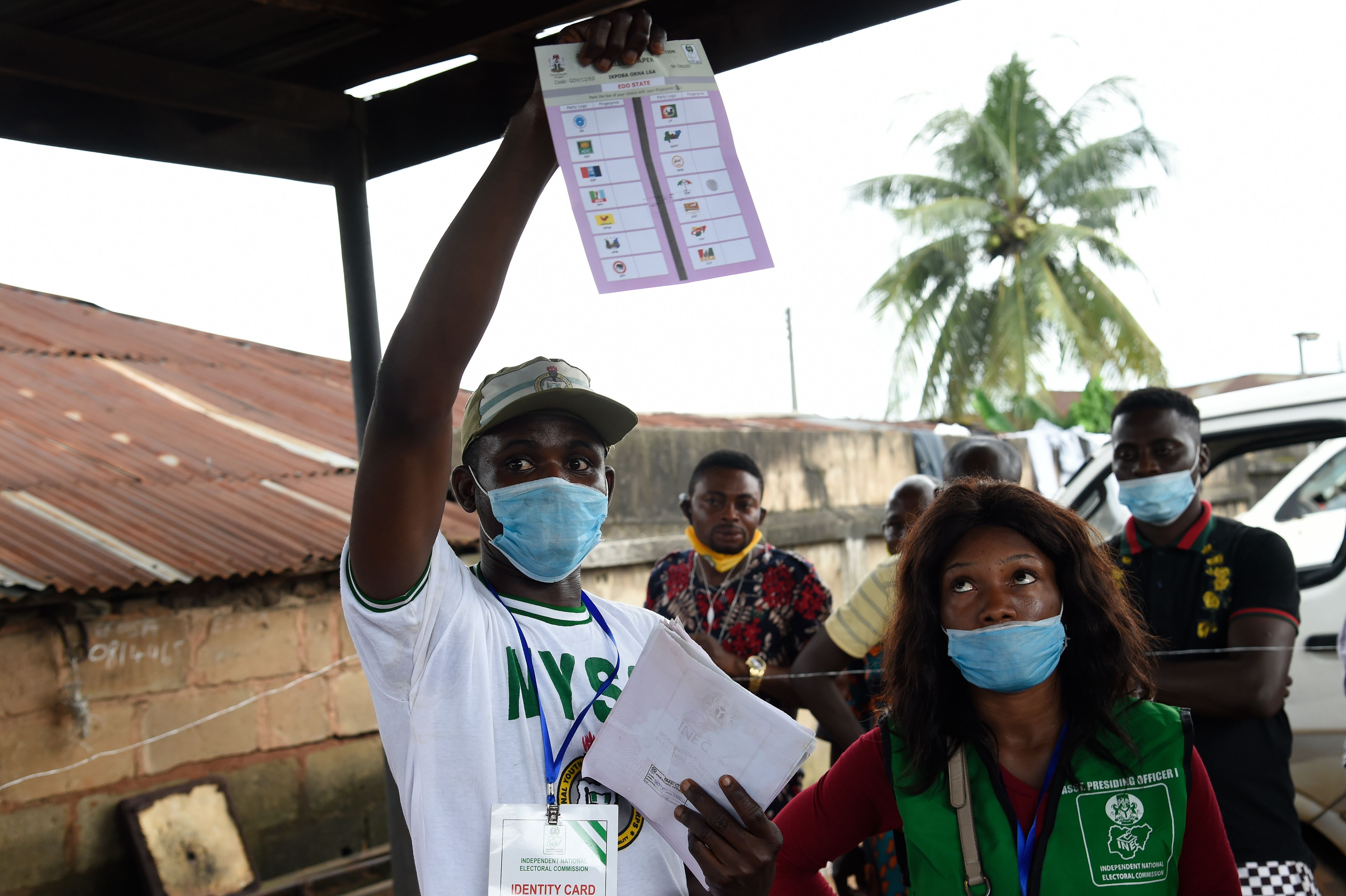
The independence of the Independent National Electoral Commission has long been contested. Incidents like the burning or stealing of some of the commission’s materials, fake names on the electoral register and under-age registrations in some parts of the country raise questions about its possible connivance.
The 2022 Electoral Act introduced innovations like the electronic transmission of results from the polling units and the Bimodal Voter Accreditation System. These were intended to curb rigging. But some political forces are believed to be opposed to their use.
Insecurity
The general insecurity in Nigeria may make it difficult, if not impossible, to conduct credible elections in some parts of the country. That could affect the electoral fortunes of candidates who regard such areas as their strongholds.
Money
Money is crucial in any election, especially in Nigeria, where the high level of poverty means that people need financial support before they can even attend campaign rallies. Vote-trading has also become a prominent feature of elections. Despite measures to improve the transparency of the electoral system, it is likely that money will remain a big factor in the 2023 election.
Read more: Votes for cash: the significance of vote buying in Nigeria’s democracy
Crises and schisms within the parties
Nigerian political parties tend to be special purpose vehicles for winning elections or positioning individuals for political appointments. That’s why there tends to be sharp divisions and crises within parties, even the smaller ones. The degree of cohesiveness of the frontline political parties will affect their chances in the election.
The unknown
In any engagement, there is always an unforeseen variable which may change the game. Military tacticians call it fog of war while the religiously inclined call it the Act of God. Until the votes are counted, a victor is announced and the inevitable court challenges are resolved, there is still the possibility of an event that could alter the election’s outcome.


