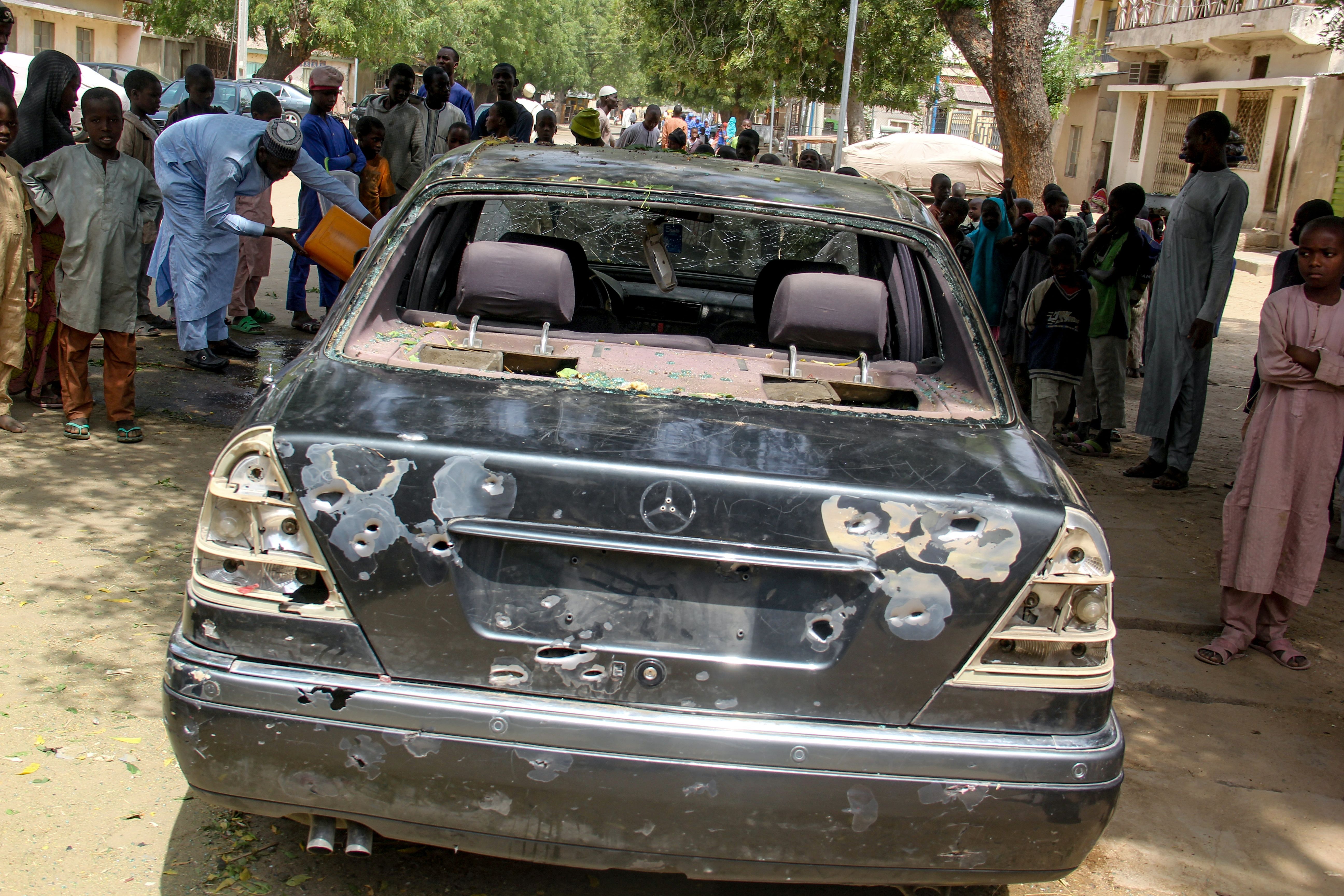
In Nigeria, the advent of Boko Haram terrorism and its wanton destruction of lives and properties has led to untold hardship, especially in the country’s north-eastern region.
The devastating impact of Boko Haram activities transcends Nigeria’s borders. The Institute for Economic and Peace Global Terrorism Index Report in 2020 highlights that Boko Haram ranks among the world’s top three deadliest terrorist groups.
In 2019 alone, Boko Haram was responsible for the death of 1,245 persons, which amounts to 9 per cent of the deaths from terrorism globally.
Boko Haram is also responsible for displacing over 2 million people in Nigeria and approximately 2.4 million people in neighbouring countries such as those of the Lake Chad Basin. This is why the reintegration of repentant terrorist combatants is a burning issue for residents of the affected region.
Previous studies have focused on government intervention and deradicalisation programmes aimed at reintegrating the repentant combatants.
However, there is a knowledge gap on how communities perceive repentant terrorist combatants in Nigeria and their reintegration into the society. Little has been done to explore these perceptions and how they inform the design of reintegration programmes.
Our paper sets to fill the gap. We conducted interviews with 24 Christian and Muslim Nigerians who lived in Lagos and the Plateau states in Nigeria.
We found that, overwhelmingly, those we spoke to had little faith in the ability of former Boko Haram combatants to genuinely reform or repent from terrorist acts.
Based on our findings we recommended that efforts should be made to shift the public fear of former Boko Haram combatants to a more positive outlook. Such steps could help people embrace reconciliation which in turn would help the successful reintegration of former terrorist combatants into Nigerian communities.
Our findings
Drawing on data from the community members some recurrent themes emerged.
Societal structure: most felt this was a factor in fuelling the identity of former Boko Haram members.
There were the perceived views that society and poor parenting bred terrorists who later became former combatants.
Societal ‘responsibility’ was construed as playing a central role. As one participant commented:
Those that are former Boko Haram members are those that the society failed in their own part to cater for … those (Boko Haram members) that their parents actually did not try to bring up in the right sense of mind.
These perceptions resonated across participants regardless of their identities as Christians or Muslims.
The implication of such perceptions is that repentant combatants are seen as a product of poor societal and familial structures. As such, improving these might potentially reduce the likelihood of being recruited into terrorism.
Indifference towards genuine repentance. This appeared to stem from the distrust in a change in attitude. This was construed from an ‘us and them’ stance, which positions Boko Haram from a negative perspective and as the ‘them’ group seeking to eradicate the vulnerable population (the ‘us’ group) through its combatants.
As a participant commented:
Boko Haram has already brainwashed (deceived) him (the member). He has not repented …So when bringing him back to society, you are giving him more privilege to harm more people.
The ideology of Boko Haram geared at Islamisation and the abolishment of western influences appears to influence how those previously affiliated with Boko Haram are perceived.
The implication is that such negative perception could impact positive reintegration even when the combatants have successfully undergone deradicalisation programmes to change their thinking and reintegrate them.
Distrust of the deradicalisation process. The lack of trust appears partly informed by the perceived inability of the Nigerian deradicalisation programme to change former combatants of Boko Haram effectively.
For instance, a participant questioned:
The issue is the institution that carries out that change. Do they have all the resources? Do they have the resources that are needed to rehabilitate brainwashed people because the meaning of Boko Haram is against modernisation? That is the real essence of Boko Haram.
Thus, the perceptions raise doubt concerning the capabilities of the Nigerian criminal justice system to successfully carry out deradicalisation and reintegration programmes.
In this case, ‘trust’ in the system appears integral and seems to draw on how the structure has been handled.
Why insights matter
Reintegration plays an important role in ensuring that those that have successfully undergone deradicalisation and reintegration programmes do not re-offend.
To achieve successful reintegration, significant attention needs to be given to the social context in which reintegration takes place. For example, the view of the community and how they perceive those to be reintegrated is vital. It could help design reintegration programmes that are reflective of the community social identity.
Also, addressing weak societal structures and poor parenting might yield positive results.
When it comes to concerns about the genuine repentance of former combatants, more needs to be done in relation to public orientation about the deradicalisation programme.
Such an avenue could also include some of the measures in place to ensure that the repentant combatants do not re-offend. That way, it might serve as a way of building community trust.
Finally, as far as the deradicalisation process is concerned, more needs to be done to build confidence by involving the communities in the design of the reintegration programme.
As our study suggests, changes in communal perceptions are important. How the repentant combatants are perceived may shape community attitudes towards them and encourage acceptance of their reintegration into post-conflict societies.


