Over a year ago, Nigeria’s President Muhammadu Buhari launched an economic plan designed to mitigate the impact of the COVID-19 pandemic.
Since the outbreak of the pandemic, Nigeria has recorded 207,618 cases of infection and 2,745 deaths as of October 11, 2021. The economic effects were devastating. Economic growth turned negative in 2020, unemployment and poverty rates increased, and companies went out of business.
Dubbed “Bouncing Back: Nigeria Economic Sustainability Plan”, Buhari’s COVID-19 plan focused on food security, job creation (especially for young people and women), renewable energy, support for small and medium-size enterprises, manufacturing, infrastructure and social investment.
Cash transfers through N-Power, MarketMoni, TraderMoni and other initiatives were cornerstones of the plan.
Now it is time to assess whether the economy has bounced back or is on track to do so.
Prior to the pandemic, the Nigerian economy grew at 2.2% in 2019. It contracted by 1.8% in 2020. It rebounded in 2021 with a growth rate of 2.5%. But the rebound was less than expected, considering that sub-Saharan African countries grew at an average rate of 3.4%.
It is unclear whether Nigeria’s growth resurgence is attributable to the economic sustainability plan or to the increase in the oil price. The price increased from US$41 a barrel in December 2019 to US$67 in December 2020.
Oil is a major driver of growth in Nigeria, accounting for about 65% of government revenue and over 90% of foreign exchange earnings. In 2010, when the oil price reached a record high of $110, Nigeria’s economic growth was 11.3%.
Nigeria could raise its economic growth by three-fourths of a percent if it improved its low-quality infrastructure.
Political instability also hinders growth.
Read more: Nigeria at 61: A giant with challenging crises amid opportunities
## Agriculture and food
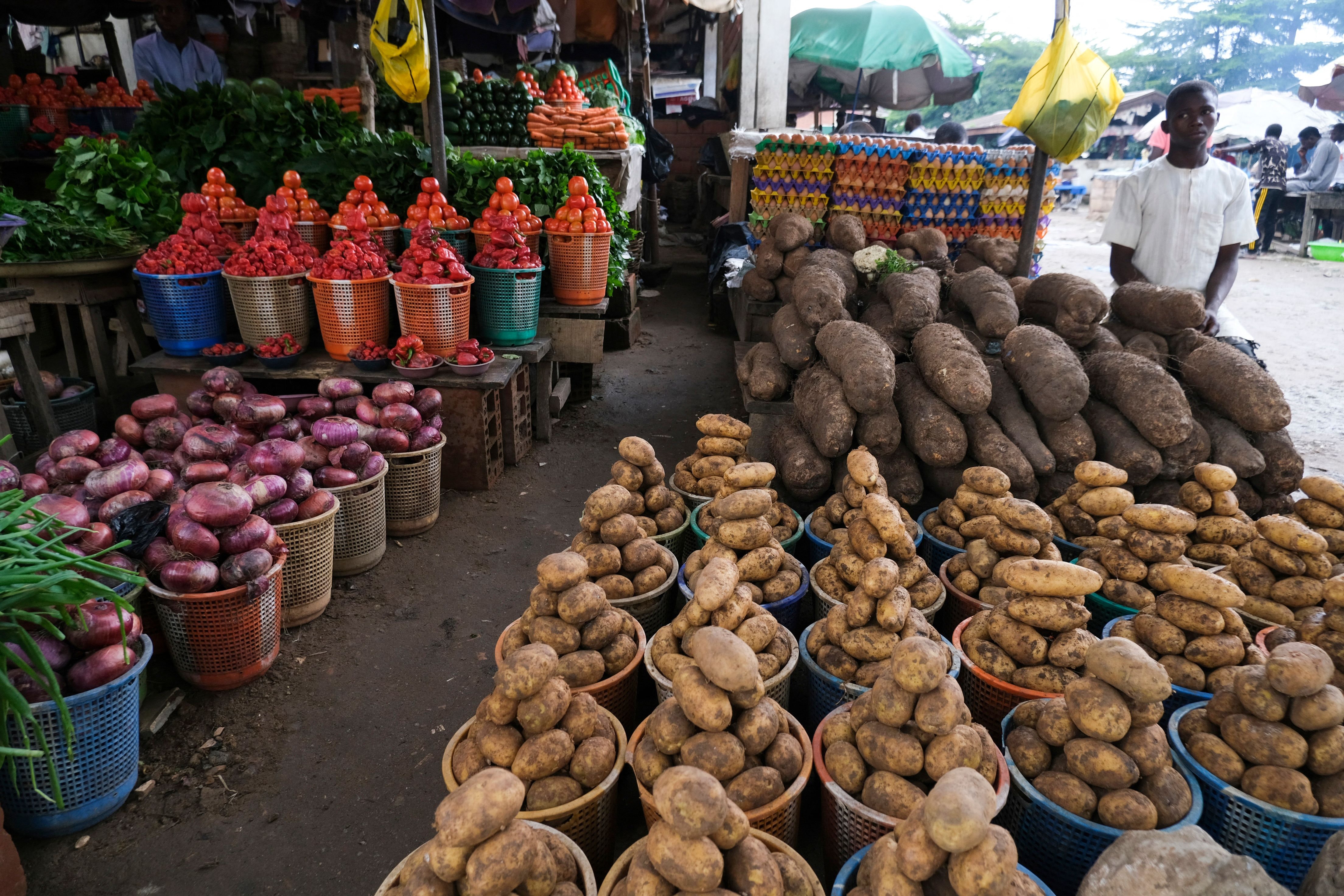
The economic sustainability plan prioritised agricultural development and food security. Early indications suggest that this goal is not being accomplished.
Under the plan, the government intended to cultivate between 20,000 and 100,000 hectares of new farmland in each of the country’s 36 states. This should have enabled the growth of agriculture value added to hold steady at the 2019 level of 2.4%. But it grew by only 2.2% in 2020.
Other African countries had higher rates of agricultural development than Nigeria by the end of 2020. Examples are South Africa (13.1%), Senegal (8.2%), Ghana (7.4%) Angola (6.9%) and Gabon (5.2%).
Given Nigeria’s annual population growth rate of about 2.6%, it means that food supply lagged demand in 2020. This explains the rising food prices. The composite food index rose by 21% in July 2021.
In his Independence Day speech on 1 October 2021, President Buhari blamed hoarders for Nigeria’s food inflation. Yet hoarding typically occurs when demand exceeds supply, and when sellers expect prices to continue to rise.
The antidote to hoarding is a massive increase in agricultural production, which the economic sustainability plan has so far not achieved.
Small business
Many of the initiatives under the plan were designed to prevent businesses, especially small and medium scale enterprises, from failing.
The pause in the repayment of loans granted by the Central Bank of Nigeria to the recipients of its intervention programmes was extended by a year. The interest rate on the bank’s loans was cut from 9% to 5%. And the bank created a loan facility of 50 billion naira or US$122 million for affected households and small and medium enterprises.
Yet these businesses have continued to struggle for survival. Of the 3,000 enterprises surveyed by the United Nations Development Programme and the National Bureau of Statistics, 80% said they reduced production in 2020. One in three said they knew of at least one business that had closed permanently. About 60% of the firms had endured an unexpected increase in “operational costs”.
In addition to supporting smaller businesses, the Central Bank of Nigeria established a 1 trillion naira (US$2.4 billion) facility in April 2020 for supporting manufacturing. Of this amount, 300 billion naira (US$732 million) had been disbursed as of March 2021.
This intervention may have given an impetus to foreign direct investment, which rose slightly from $2.3 billion in 2019 to $2.4 billion in 2020. This could have been through the provision of loans to foreign manufacturers to establish subsidiaries in Nigeria. And it would have been a positive signal to foreign investors.
COVID-19 interventions increased Nigeria’s manufacturing value added as a percentage of GDP only marginally, from 11.5% of GDP in 2019 to 12.6% in 2020.
Shallow economic rebound
The International Monetary Fund expects Nigeria’s economic growth to be flat at about 2.3% for the next two years. By contrast, it is estimated that sub-Saharan African countries will grow at an average of 4% during the same period.
This implies that the Nigerian economy is not on track to rebound at a scale needed to significantly reduce the high unemployment and poverty rates.
A report by the United Nations Development Programme and the National Bureau of Statistics shows the unemployment rate in Nigeria increased from 27% in the second quarter of 2020 to 33% in the fourth quarter of the same year. Youth unemployment was 42.5% as of July 2021. The report found that 20% of the workers in the enterprises surveyed lost their jobs in 2020.
The World Bank estimates that 11 million Nigerians will be pushed into poverty by 2022, in addition to the 100 million (out of 200 million people in the country) who are already classified as poor.
The Nigerian economy would have to grow at between 8% and 10% a year for at least 10 years before the current poverty rate of 40% could be halved. On the current trends, this is very unlikely to happen.
Poor economic outlook
With flat economic growth and rising inflation of about 17%, Nigeria risks running into what economists refer to as “stagflation”. Stagflation is a lethal combination of high unemployment and inflation rates. Rising food prices and steep depreciation of the Nigerian currency are the main causes of inflation in Nigeria.
An attempt to rein in inflation by raising interest rates would worsen economic growth and increase unemployment. Conversely, a strategy of promoting economic growth by reducing interest rates could push up inflation.
All indications are that Buhari’s COVID-19 plan has not stemmed the worsening unemployment and poverty in Nigeria and has resulted in only marginal improvements in economic growth, manufacturing and foreign direct investment.
The plan was not bold and big enough. There should have been massive investment in agro-processing industries, which would have created jobs for millions of unemployed Nigerian youths.
For instance, of the 2.3 trillion naira ($5.6 billion) that the government planned to spend on the economic sustainability plan, only 500 billion naira ($1.2 billion), or one-fifth, was spent as of May 2021.
The plan should have focused more on reviving the textile and footwear industries in the country. These industries are labour-intensive, and employed thousands of Nigerians in the 1970s and 1980s.
Transferring cash to a few Nigerians, supporting some small and medium scale enterprises, and saving 2 million jobs as claimed by the government are inadequate for uplifting the lives of millions of Nigerians who continue to endure prolonged unemployment and extreme poverty.


