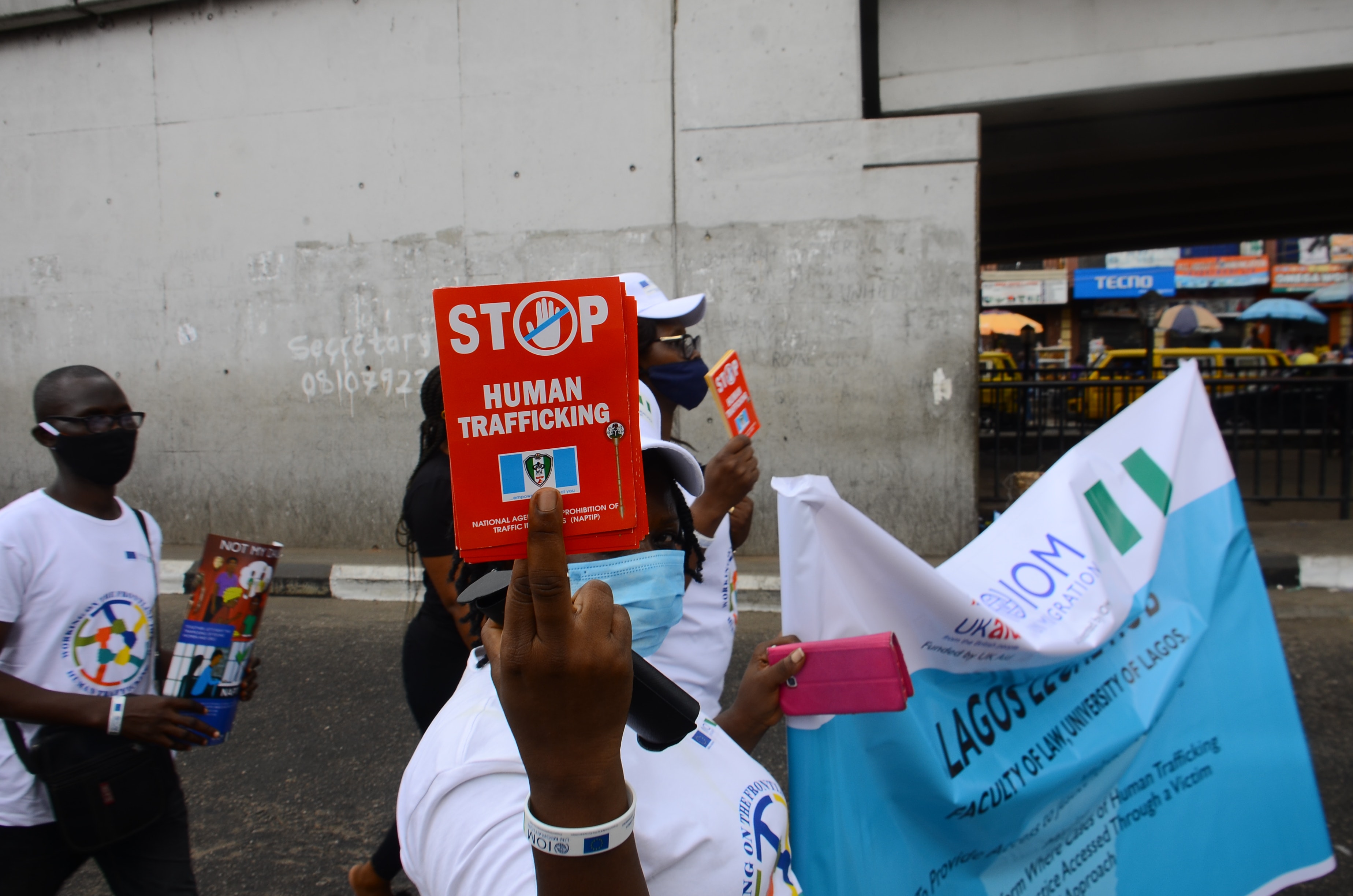
Most countries have anti-trafficking laws, policies and programmes to prevent human trafficking. There are also international treaties to address the problem. Yet it’s still thriving.
Human trafficking is the recruitment, transportation, harbouring and control of a person using force and other methods of coercion. The aim is to exploit them. It could be through prostitution or sexual exploitation, forced labour, forced marriage, indentured servitude, and the removal and sale of human organs.
It is also described as a form of modern slavery.
Human trafficking affects millions of people globally. Victims are vulnerable due to poverty, war and conflict, political instability, natural disasters, unemployment and gender inequality.
Human trafficking involves severe exploitation and inhumane ordeals. Victims may experience physical and mental torture, malnourishment, rape, physical confinement, forced drug abuse, forced abortion or poor labour conditions.
When people leave, or are freed, from these situations, they tend to have an array of physical and psychological needs. Neglect of their needs can hinder their reintegration into society. Survivors of human trafficking may suffer from fatigue, sexually transmitted infections, depression, anxiety, insomnia, post-traumatic stress disorder, suicidal thoughts, panic attacks and substance addiction.
Some countries offer rehabilitation and reintegration services to support survivors and promote their wellbeing.
Nigeria, for example, has done so. It sees rehabilitation as essential to protect the human rights of survivors and to help them recover after trafficking. Empowering survivors is a process in which they cease to be victims and start being in control of their lives.
Rehabilitation has become a core component of the Nigerian government’s anti-trafficking policies. But only limited efforts have have been made to assess these programmes and whether they help survivors in Nigeria. To address this gap, we did research into the experiences and perceptions of survivors.
We found that the Nigerian government’s rehabilitation efforts seem to simultaneously empower and disempower survivors. Understanding how well the programmes work is key to helping survivors and preventing re-trafficking.
The programmes
Nigeria’s rehabilitation programmes target the immediate, ongoing and long-term needs of people who have been trafficked. Their goal is to facilitate physical and mental recovery, empowerment and social inclusion.
Providing survivors with shelter, personal hygiene products, physical healthcare, mental healthcare and counselling are some of the ways to do this. Legal counsel, education, vocational training and employment are also part of rehabilitation.
Nigeria has a reputation as one of the major origin, transit and destination countries for human trafficking. The US State Department’s Office to Monitor and Combat Trafficking in Persons in 2017 placed the country in the “Tier 2 Watchlist” of trafficked people globally.
In response, the government enacted a law against trafficking in 2003. That year it also established the National Agency for Prohibition of Trafficking in Persons.
For our study, we examined the impact of the rehabilitation and reintegration programmes offered by the government and civil society organisations.
Our study is based on three months of ethnographic fieldwork in Lagos. We conducted in-depth semi-structured interviews with over 150 female survivors of trafficking aged between 20 and 46. They were all former beneficiaries of rehabilitation programmes at least one year before the study.
We also interviewed rehabilitation officials in the government and civil society who were directly involved in the design and execution of the programmes.
What’s working, what’s not
In our research, three main findings emerged.
First, various government agencies and local non-governmental and international organisations collaborate to provide services. This synchronised approach is useful, especially in a context of limited capacity. It allows for the use of core competencies of the different stakeholders.
We also found the rehabilitation and reintegration programmes in Nigeria simultaneously empower and disempower survivors. Service providers tend to see and treat trafficked persons as vulnerable victims without agency. And they fail to adequately address long-term needs.
Lastly, we found that regardless of the protection services that survivors could access, Nigeria’s socioeconomic conditions limit the reintegration of survivors into society.
Next steps
The Nigerian government and civil society stakeholders now lean towards a human rights approach in their efforts to protect trafficked persons. But the tendency to treat survivors as helpless victims is doing more harm than good for their reintegration.
An over-emphasis on reaction rather than prevention, and the poor socioeconomic conditions in the country, also limit the programmes’ effectiveness.
The result is that the government’s ability to support survivors is limited.
Moving forward, collaborative efforts among stakeholders should focus on operational and logistical priorities as well as rehabilitation outcomes. Crucially, investment is needed in monitoring and evaluation to assess the effectiveness of the programmes.
In addition, most of the support tends to be geared towards addressing immediate or short-term needs. Addressing long-term needs is crucial for survivors’ ability to avoid re-trafficking and for their full reintegration into society. A focus on long-term needs will give survivors better control over their lives.
Finally, service providers need to change their perception of survivors of human trafficking as passive, vulnerable “victims”. This perception accounts for the disempowering elements of the programmes. Survivors should rather be viewed and treated as rational people with the ability to make sound and beneficial decisions for themselves.


