Three-quarters of the world is covered by water and up to 90% of world trade is seaborne. Seaports and shipping are critical to the conduct of global trade.
Africa has relatively few natural harbours that offer shelter and are deep enough to take big vessels. Along the Atlantic coastline of West Africa, for instance, natural harbours exist only at Freetown and Lagos. Consequently, artificial ports have been carved out of lagoon and river ports, which dot the coastline from Morocco to South Africa. Considerable capital and engineering know-how have been applied since the late nineteenth century to make African ports accessible to ocean shipping.
Since the 1990s, African countries have engaged in a “ports race” to emerge as the shipping hub for their region.
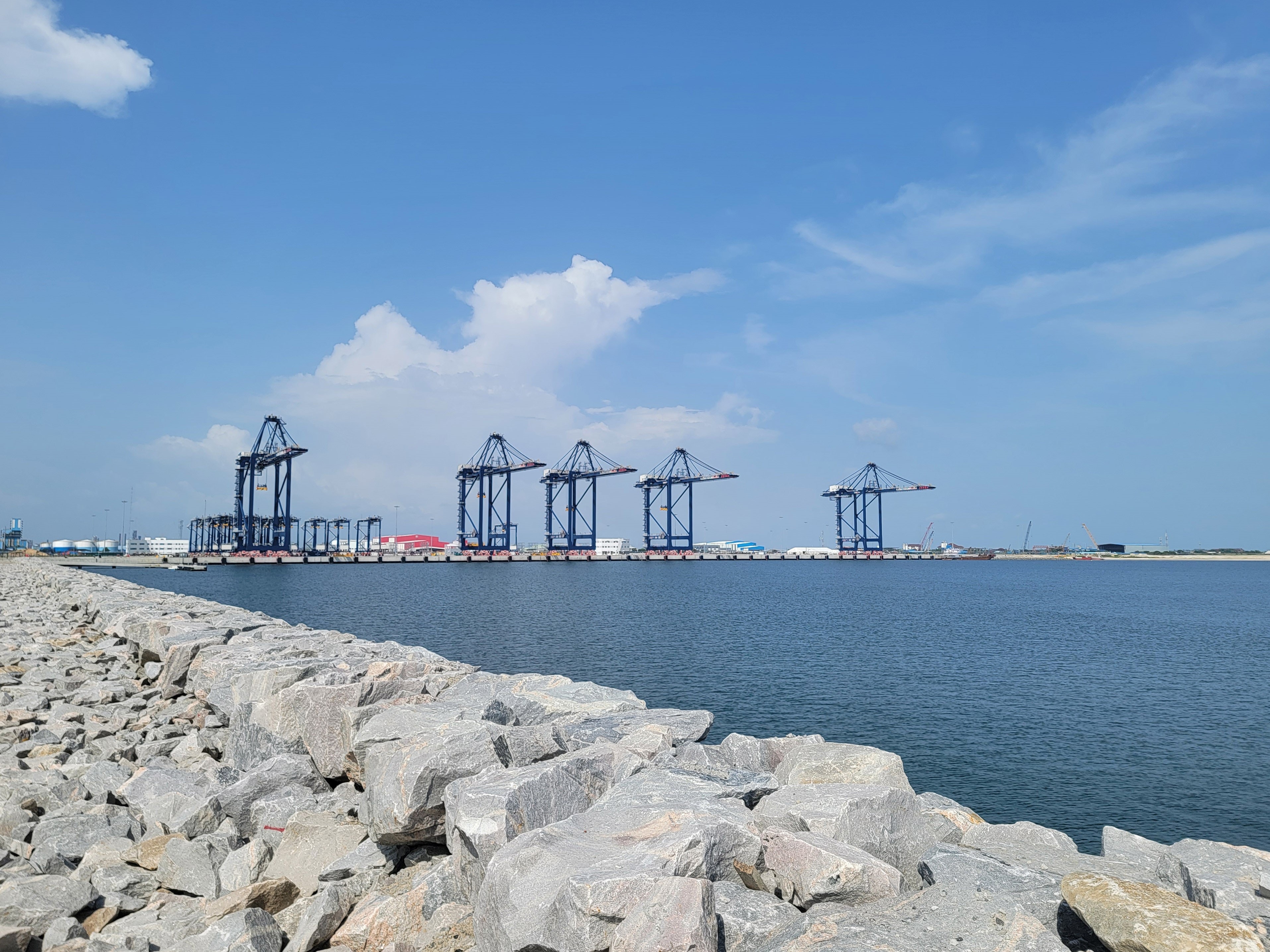
In this context, the recent completion of the US$1.5 billion Lekki Deep Sea Port in Lagos, Nigeria, is significant.
Lekki is one of Africa’s top six ports. It is Nigeria’s first fully automated port, and its largest. It has more than doubled the capacity of Lagos’ ports, which had remained the same for 25 years. It will accommodate the world’s largest cargo ships and is expected to reduce cargo wait times from over 50 days to two days.
Its modernity and efficiency are projected to make Nigeria a regional hub and boost the country’s GDP. It is envisaged to generate 170,000 direct and indirect jobs, billions of dollars in tax revenues for Lagos State and the host community, and a turnover of US$361 billion over the next 45 years.
My work on the economic history of African seaports supports the view that the Lekki Deep Sea Port could serve as a pivot of local and regional development. The project should have multiplier effects on commerce, industry, agriculture and small-scale enterprises connected to it by various modes of transport.
A combination of factors will determine its success. These include its capacity to meet the demands of shipping; its efficiency and competitiveness in the national and international contexts; the coordination of policies; the way transport modes work together; the state of the inland economies; and the application of technology.
Nigeria’s port history
In colonial Nigeria, significant port development took place between 1850 and 1950 for the economic benefit of Britain. Shipping was concentrated at a few ports during the world wars and the Great Depression (1929-33). But increasing imports and exports in prosperous times required more functioning ports to cope with the greater volume of trade.
Lagos and Port Harcourt gained prominence because they had railway links to the hinterland. Port Harcourt was created as an outlet for the coal exports from Udi, near Enugu in eastern Nigeria, and the tin exports of the Jos Plateau. Lagos had become the leading port in West Africa following extensive harbour works between 1892 and 1914 when it welcomed its first ocean liner. It handled the bulk of Nigeria’s foreign trade right into the independence period.
The civil war of 1967-70 compelled the adoption of a policy of port concentration at Lagos. Port congestion at Lagos was aggravated by the demands of post-war reconstruction. Massive oil revenues, following the 1973 Arab-Israeli conflict, funded massive imports.
Poor planning saddled Nigerian ports with an armada of cement-laden ships in the late 1970s. The congestion imposed huge demurrage costs on the country. And containerisation, which existing seaports were unsuited to handle, made it necessary to expand Apapa Port and create the Tin Can port in Lagos in 1977.
During the 1980s and 1990s, the growth of the national economy outstripped the installed capacity of Nigerian ports. At the same time, Nigerian ports attained increasing notoriety for inefficiency, decaying infrastructure, uncompetitive tariffs and systemic corruption. Other West African ports offered better services – so traffic went there instead.
The Nigerian government eventually in 2005 adopted the landlord model of port administration: state control was replaced by a system of concessions. This improved port services, but did not bridge the gap between capacity and volume of container traffic. Thus the idea of the Lekki Deep Sea Port was conceived.
Lekki port’s potential
Lekki is expected to generate direct and induced business revenue estimated at US$158 billion, a qualitative impact on the manufacturing, commercial and services sectors, and a multiplier effect over 230 times the cost of construction. It will attract a massive influx of people, businesses and investment.
The new facility will support the industrial and petrochemical complex, including the Dangote Refinery, the largest in the world, situated in the Lekki Free Trade Zone. It is poised to attract investment in the range of US$20 billion in the first few years. With an airport in the vicinity, the port will be a component of a Harbour City equipped with logistics infrastructure of various kinds.
Lekki port should reduce congestion at the older ports in Lagos and help recover the lost traffic of landlocked Chad and Niger, which had been diverted to more efficient ports in the sub-region.
The port also positions Nigeria to optimise the African Continental Free Trade Agreement.
Weak points
However, it appears that the project suffered from some lapses in planning. Provision for cargo evacuation by rail is non-existent, and the road infrastructure is inadequate for the anticipated volume of traffic.
The other challenge is the encroachment on land around the Lekki port and the future problem of congestion. Unless the state government takes drastic action under the Land Use Act to acquire land in the public interest for the future expansion of the port, it will be a repeat of the problems of older ports hemmed in by unplanned industrial, urban and commercial land use.
The project indicates that public-private sector partnership is the best way to plan and deliver landmark infrastructure projects. Lekki Port LFTZ Enterprise Ltd was created for the purpose, with investment by China Harbour Engineering Company Ltd, Singapore’s Tolaram Group and the Nigerian government.
But it has the potential drawback of idle capacity if the economic prospects that motivated it fail to materialise. Then the huge investment in the deep sea port project would become a huge burden of unpaid debts.


