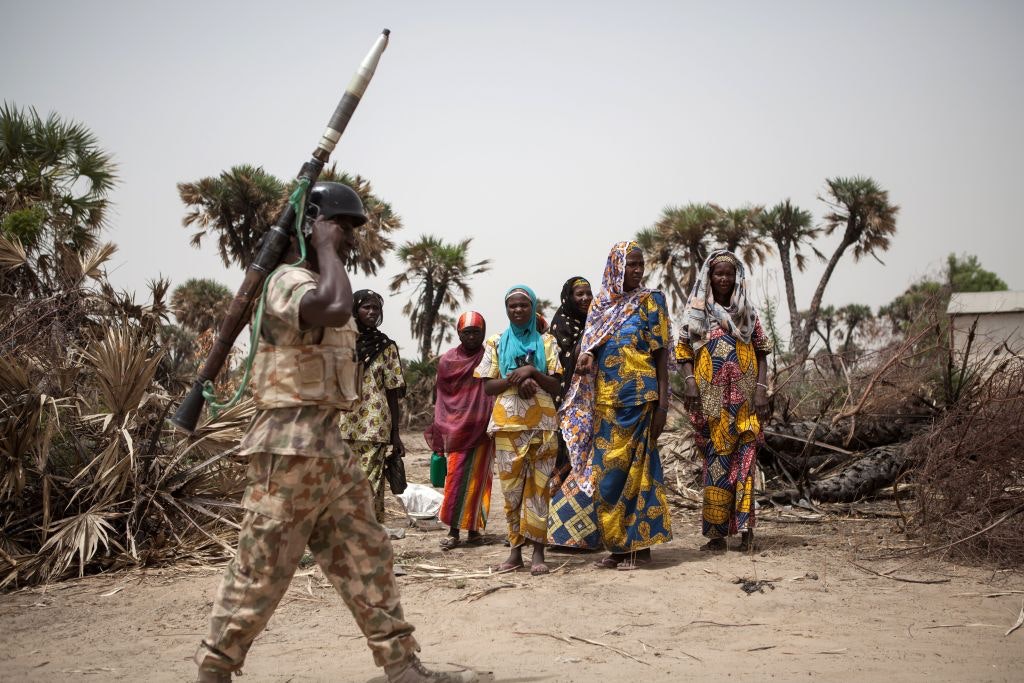
In recent times, security – or, more accurately, the lack of it – has been one of the most prominent items on the news agenda in Nigeria.
Hardly a week goes by without a report of a terrorist attack or cases of kidnap for ransom being reported in the media. Hundreds of civilians and members of the security forces have been killed.
The incidents have been labelled in various different ways. From terrorist attacks – such as the attack on Nigerian President Muhammadu Buhari’s convoy in July and the hijacking of an entire train in March – to targeted ambushes. There have also been multiple attacks on government facilities and churches over the past year.
But, whatever name they go by, the terrorists appear to be running free across the Nigerian landscape.
At The Conversation Africa, we have been working with academic experts to try to make sense of what is happening in Nigeria. Here are five essential reads that we’ve published on the country’s state of insecurity:
Where it all started
Banditry started as an isolated rural phenomenon in the late 2000s, notes political scientist Al Chukwuma Okoli, a senior lecturer and consultant-researcher at Federal University Lafia in Nigeria. With time, banditry grew into sophisticated violent criminality, characterised by syndicates with immense reach across regions and countries in the Sahel.
Read more: Toxic mix of bandits, arms, drugs and terrorism is alarming Nigerians: what now?
They are not unknown
At some point in the evolution of the violent gangs ravaging Nigeria, bandits and terrorists started being called “unknown gunmen”. The label was wrong and misleading, writes Sallek Yaks Musa, a lecturer in criminology and security studies at the University of Jos in Nigeria. The atrocities and motivation of bandits had assumed insurgent-type criminality and the Nigerian government’s reluctance to call them terrorists or insurgents was unhealthy. Eventually, a court order forced the government’s hand and the terrorist label got stickier.
Read more: Nigeria’s ‘bandits’ are not ‘unknown gunmen’: why the label matters
Who is at risk?
Nigeria now ranks among the kidnapping hotspots of the world. This practice has evolved among the bandits and terrorists of northern Nigeria, militants and cultists in the Niger Delta, as well as the ritual killers of the western and eastern parts of the country. Al Chukwuma Okoli explores the nature of the kidnapping threat, factors accounting for its upswing and who is at risk of being kidnapped in Nigeria.
Read more: Who’s at risk of being kidnapped in Nigeria?
Why government strategies have failed
Explaining why government efforts had failed to rein in the terrorists, Sallek Yaks Musa says the country first needs to tackle hunger, poverty and unemployment. He takes a critical look at five strategies to end banditry that the Nigerian government has tried – without success.
Read more: Nigeria’s banditry: why 5 government strategies have failed
Reintegration as a failed strategy
One of the strategies used by the Nigerian government to stem the tide of terrorism, especially from Boko Haram elements, is the idea of reintegrating repentant former combatants into society. This idea borrowed from the general amnesty deal the government has with Niger Delta militants. The idea appeared to have worked in the Niger Delta region but was not so successful with Boko Haram and bandits. Tarela Juliet Ike, a lecturer in criminology and policing at Teesside University in the UK, looks at the weaknesses of the Boko Haram reintegration process and suggests how they could be fixed.
Read more: Nigeria’s Boko Haram reintegration process: weaknesses and how they can be fixed


