Nigeria’s decision to suspend Twitter indefinitely could backfire for the government and cost the country economically in terms of new investments into its technology sector. The Nigerian government suspended Twitter on June 4. The official press release gave only a vague justification, citing threats to “Nigeria’s corporate existence”.
While only a minority of Nigerians use Twitter, they form part of the most vocal and politically active segment of the population. Many young people have used Twitter and other social media recently to organise anti-government protests. And Nigeria has been among the best-performining African countries in attracting investments for technology start-up business. The ban could threaten that status.
The government made little effort to hide the likely main reason for the ban: the social media giant’s decision to delete a tweet by President Muhammadu Buhari just days before. In the tweet, Buhari seemed to threaten violent retaliation against a southeastern secessionist group’s alleged recent attacks on government facilities and personnel. Twitter claimed the message had violated its rules against “abusive behaviour”.
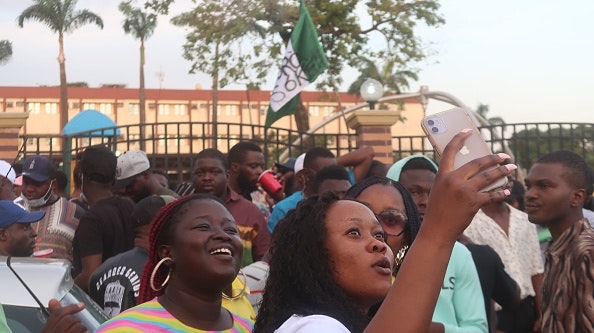
The move angered many in the Nigerian government. Information and Culture Minister Lai Mohammed criticised “double standards” and complained that Twitter had not deleted missives from a separatist leader. He also alleged that it supported the 2020 #EndSARS movement against police brutality. The potential that social media could help mobilise such a large, youth-driven protest movement sent shudders throughout the ruling establishment. Officials might hope a ban squelches a growing protest movement against rising insecurity.
The deletion of Buhari’s tweet also came on the heels of Twitter’s April 2021 announcement that it would be setting up its first African office in Accra, not Lagos. In its justification, Twitter cited Ghana’s support for “free speech, online freedom, and the open internet”. The choice came despite the fact that Nigeria probably has more Twitter users – 40 million, by one count – than Ghana has people.
The shutdown will be hard to enforce. It is also likely to be unpopular. And it could have have dire consequences for Nigeria’s fragile democratic institutions and COVID-battered economy.
The shutdown challenge
Shortly after the ban went into effect, traffic to the site was blocked on leading local mobile networks like MTN, Globacom, Airtel and 9mobile, though access was still possible through some internet service providers.
Nigeria’s attorney general, Abubakar Malami, promised to prosecute those violating the ban.
But the extent to which the ban will stop Nigerians who want to use the platform from doing so is open to question. Targeting users for punishment would be a gargantuan and costly task.
It might also not be technologically feasible. Within hours, internet searches for “VPNs” – virtual private networks, which allow users to disguise their online identity and evade country-specific limits – surged across the country. Multiple videos appeared on YouTube, explaining the ins and outs of VPNs to Twitter-hungry Nigerians.
Nigerians also have plenty of other digital options to share opinions and information, from the popular WhatsApp to the Indian microblogging service Koo, which quickly announced plans to expand into the country.
Not-so-hidden costs
The widespread use of VPNs would come at significant costs. Poorer Nigerians are likely turn to free VPNs instead of fee-based ones that are more secure. This will expose them to data theft and other forms of hacking.
And the use of VPNs can slow internet connectivity.
Beyond being an annoyance, this could significantly hamper economic productivity. Nigeria’s economy and even government have become increasingly reliant on digital media. Some noted the irony that the government announced its ban on Twitter with a tweet. NetBlocks, which tracks internet governance, estimated that each day of the Twitter shutdown will cost the Nigerian economy over 2 billion naira ($6 million US).
Digital media are essential for information exchange, marketing, customer service, and remote work, especially during public health and safety emergencies. Shutdowns can slow commerce, cut productivity and ultimately cost jobs.
In the longer term, the ban – even if only brief – could seriously harm Nigeria’s ability to attract investment to its otherwise-promising digital economy. Investors may turn to markets without the threat of sudden regulatory disruptions to the digital economy. In other words, Twitter’s choice of Ghana would only be the beginning.
Public reaction
Predictably, the ban generated widespread anger on the platform. But Twitter users constitute a minority of the Nigerian population and they are not representative of the general public.
A 2020 survey by the independent, Africa-based research organisation Afrobarometer found that:
-
35% of Nigerians reported using some social media service to get news at least a few times a week.
-
Men were marginally more likely to use it than women – 39% versus 31%.
-
More young people used it – 46% of 18-25 years old, versus 8% for those over 65.
-
Rates of weekly access were higher for Nigerians who lived in urban areas (54%, versus 18% for rural), had at least a secondary-level education (57%, versus 12% with a primary education or lower) and had the lowest levels of lived poverty (51%, versus 25% for those with the highest levels).
Nevertheless, Nigerians more broadly are unlikely to take the ban quietly. Afrobarometer research also shows that Nigerians, like most Africans, oppose government restrictions on media generally. Those surveyed were roundly opposed to restrictions on digital media. More than three-fifths (61%) said that internet and social media should be “unrestricted” versus only 23% who agreed that “access should be regulated by the government”.
Nigerians were also particularly fond of social media. Nearly two thirds (65%) of those who had heard of social media said the technology’s impacts were more positive than negative. This rate is the highest among the 18 countries surveyed in 2019/20.
Worrying trend
Nigeria’s move is part of a worrying trend of governments in Africa throttling the use of social media. So far this year Niger, the Republic of the Congo and Uganda have limited digital media around elections. Senegal also did so around anti-government protests.
These shutdowns are typically justified as necessary to ensure national security around sensitive periods. But they transparently serve incumbent interests, by limiting democratic freedoms around information, expression and assembly.
With its ban, the Buhari government has escalated a spat into something much more serious. The damage to economic and democratic development from shutdowns can be significant, even with short blockages. Lost productivity and commerce threaten Nigeria’s economic recovery, and the reputational harm to its ability to attract investment to its digital economy could be long lasting.
On the political side, the government risks angering the most vocal and engaged segment of the population, with the likelihood that even most non-users will oppose the ban.
Given these costs, it is not even clear the government will come out ahead.
As one Nigerian programmer and web developer put it:
In the long run, this might be a blow on the Nigerian government and not Twitter.


