Not all droughts are the same: here’s what’s different about them:
There’s growing concern in South Africa about what’s being portrayed as “a national drought disaster”. There have been anxious suggestions that drought could see many cities and towns facing their “Day Zero”. This happened during the water crisis in Cape Town as fears mounted that the taps would run dry.
Concerns were reinforced when it was announced that the tunnels that bring water from the Lesotho Highlands Water Scheme to the country’s economic hub, Gauteng, would be shut for a few months.
From a technical perspective, the threat has been exaggerated. In summer rainfall areas, there has been a slow start to the rainy season. And while dam levels are lower than they were last year, they’re not yet at critical levels. An analysis of the critical Integrated Vaal River System found that there was no need for water restrictions this summer. The system supplies Gauteng and the surrounds, including large users such as Sasol, an integrated energy and chemical company, and many of the power stations that belong to the country’s electricity public utility, Eskom.
The panicked reaction suggests though that many people don’t fully understand South Africa’s climate, or how it affects the way the country’s water supply systems work. In particular, there’s limited recognition of the different types of drought and how they affect different sectors of society.
For example, dry periods can devastate agriculture without necessarily affecting water supplies to cities and industries. Plants in fields and livestock grazing on natural pasture depend on moisture in the top layers of the soil. Cities and towns either have large reserves of water in dams or tap it from aquifers, which are effectively underground reservoirs.
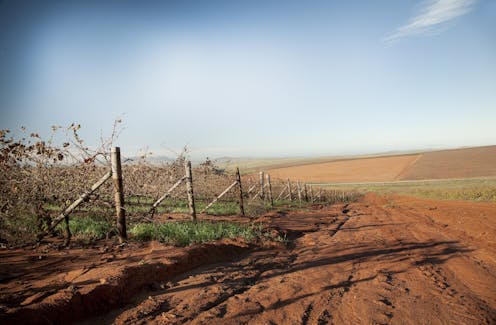
It would be wrong to suggest that there are no drought problems in the country at present. Parts of the Northern, Western and Eastern Cape are officially in drought conditions. This means that officials acknowledge that the prolonged dry conditions are now seriously threatening farming activities. And many farmers are battling to stay in business.
But across South Africa’s 1.2 million sq kilometres, there are also areas where rainfall has been well below average for a year or more.
Weather patterns
The South African Weather Service produces rainfall maps, which show this variation. The map for the 2015–2016 season shows a mixture of very dry and very wet areas, sometimes quite close to each other.
The 2018-2019 season showed a different pattern with the western half of the country much drier than the eastern, and parts of the Northern Cape receiving less than 25% of their average rainfall.
Climate scientists, hydrologists and disaster management specialists have traditionally distinguished between three different kinds of drought:
-
A meteorological drought occurs when rainfall is less than average over a significant period, often a month.
-
An agricultural drought is considered to be taking place when a lack of rainfall leads to a decline in soil moisture affecting pastures and rain-fed crops. A good way to visualise an agricultural drought is to show rainfall records and vegetation conditions on maps.
-
A hydrological drought occurs when a meteorological drought significantly reduces the availability of water resources in rivers, lakes and underground. Currently, except in a few places (Northern, Eastern and Western Cape and pockets of Limpopo) there is not yet a hydrological drought in South Africa.
So the immediate drought problems that need to addressed are those affecting the country’s farmers, not those affecting municipal water supply. Although there are places where domestic water supply is problematic, only a few of these are due to drought and most are due to mismanagement and poor planning.
Responses
A meteorological drought is usually simply an alert to warn farmers and water managers that they need to be ready to act, in case it continues.
Responses to an agricultural drought depend on the kind of farming that is undertaken. Livestock farmers are advised either to reduce their herds or buy additional feed, to compensate for lost grazing. Dry land crop farmers may delay planting or, if they are brave, space their crops more widely to give each plant a better chance of getting enough water. They may also take out insurance against crop failure due to drought.
When a hydrological drought occurs, water managers responsible for supplying towns and cities need to implement previously prepared plans to restrict water use as storage levels decline, since this determines how much water can continue to be reliably be supplied.
Going forward
A group of international academics think that we should change the way we think about droughts. They point out that human action has substantially changed the way that the water cycle works by damming and diverting rivers and pumping water from underground. They argue that:
We need to acknowledge that human influence is as integral to drought as natural climate variability.
For the scientists this means that they must change the way they look at drought:
Drought research should no longer view water availability as a solely natural, climate imposed phenomenon and water use as a purely socio-economic phenomenon, and instead more carefully consider the multiple interactions between both.
From this perspective, Cape Town’s “Day Zero” would fall into a new category: a “human induced drought”. And, if the citizens of Gauteng don’t heed the warning to reduce water use to what can be provided by the Integrated Vaal River System over the next five or six years, they should not be surprised if they too suffer a “human induced drought”.
The World Water Council has put it succinctly:
The crisis is not about having too little water to satisfy our needs. It is a crisis of managing water so badly that billions of people – and the environment – suffer.
This article is the third and final in a series on South Africa’s water challenges.
Read more: Panic over water in South Africa’s economic hub is misplaced
Read more: South Africa’s real water crisis: not understanding what’s needed

Mike Muller has received funding from the Water Research Commission and the African Development Bank for research and advisory work related to the subject matter of this article. He also advises a variety of organisations on water related matters including national, provincial and local government, and business organisations including BUSA, AgriSA and SAICA.
Source: The Conversation – Articles (AFRICA)
Read more on The Conversation.
Join the fun: Add Your event | Submit a Press Release | Add your listing.


