Obama’s Mandela lecture comes at an auspicious time for democracy:
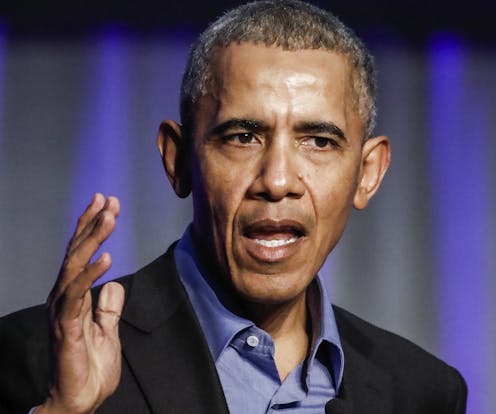
Former US President Barack Obama will aim high with his Nelson Mandela Annual Lecture in Johanesburg on July 17th. According to his close adviser and former speechwriter Benjamin J. Rhodes, Obama views this as the most important speech he has given since leaving the White House, one that will set the tone for his post-presidency.
Obama must deliver a more ambitious, activist, and forward-looking address than his eloquent remarks at Mandela’s memorial, in December 2013. That’s because much has changed politically in the five years since then. The world is in a much more precarious place.
Authoritative global indices portray dangerous trends of democratic decline. Principles of tolerance, inclusivity and the rule of law, abiding commitments that defined Mandela’s life, are under assault in other nations, from South Africa the US to Poland.
And, as Rhodes notes:
There’s an enhanced sense of tribalism in the world.
It is therefore an auspicious time for Obama to speak about the lessons of Mandela’s life and leadership. The centennial anniversary of Mandela’s birth provides the opportunity for someone of Obama’s standing to encourage awareness about Mandela’s enduring relevance in the endless struggle to sustain democracies.
Drawing on Mandela’s legacy, Obama can help the world better understand the nature of the threats to all democratic experiments. This includes correcting and preventing corruption and abuses of power.
A new book on state capture, published by the Johannesburg-based Electoral Institute for Sustainable Democracy in Africa, offers ample evidence of the threats facing countries. It includes country studies of South Africa, Kenya, Zimbabwe and Madagascar, plus chapters on state capture in post-communist European countries and in the US.
The diversity of case studies points to a common danger: The diversion of public funds for private gain. Dictators can do this at will. Those who are elected democratically face obstacles. They must subvert democratic norms and hollow out state institutions, all the while obscuring their real purposes, often exploiting populist fears and resentments.
Mandela, who survived apartheid to create a legitimate constitutional democracy where no one is above the law, with legal rights enshrined for all, embodies the values that are the only reliable protections against the subversion of the democratic project through state capture.
Democracies under threat
Justice Albie Sachs, one of the country’s first constitutional court judges, comments in the book’s foreward:
The South African Constitution not only aimed for perfection. It required us to guard against corruption. We needed to guard against ourselves.
As a transitioning democracy, South Africa proved vulnerable to “state capture”. But a more potent combination of a free press and independent constitutionally created institutions, including the Office of Public Prosecutor and Independent Electoral Commission, were effectively vindicated by the Constitutional Court. The electoral commissions’s capacity to ensure free and fair elections in which the ruling party might lose ins majority unless corruption can be credibly curtailed may have been the tipping point.
In Zimbabwe “state capture” became more entrenched and typical of authoritarian electoral states that threaten democratic transitions and consolidation in many post-colonial states. The Zimbabwean Electoral Commission violated electoral law and process with protection provided by the courts and the security sector, which had long ago been corrupted and captured by the ruling oligarchy.
But no democracy is ever secure, even the US. That case study points to historic and current examples of how oligarchs masked as patriots and democrats can exploit the fears and resentments of key constituencies to win elections, disarm democratic protections, and divert public resources to the privileged few.
Co-editors of “State Capture in Africa,” Melanie Meirotti and Grant Masterson, ask if the concept of state capture as it has come to be known in South Africa, the US and post-communist countries, is also useful in the modern African context. They conclude that it is. But sustainable democracy requires constant effort. The book ends with Abraham Lincoln’s timeless advice to Americans:
You have a democracy, if you can defend it.
Mandela’s service to South Africa exemplifies the same spirit. And I will be surprised if this idea is not at the core of Obama’s address on Tuesday.
New generation of leaders
Obama will use the occasion to motivate a new generation of political leaders. His primary audience will therefore be young people. As his speech writer notes:
Our unifying theory is that the best way to promote inclusive and democratic societies is by empowering young people in civil society.
The Obama Foundation will convene 200 young African leaders in Johannesburg during the week prior to Obama’s address to study and debate Mandela’s legacy and leadership attributes. Selected from among 10,000 applicants, they are a vital regional component in the foundation’s broader goal to help develop future leaders among Millennials – those aged 24-40. They must be ready to sustain democracies amid growing unrest created by uncontrolled migrations, epidemics, famine, state failures, and climate change.
One attribute of Mandela’s leadership Obama emphasised in 2013 will deserve repeating to this audience:
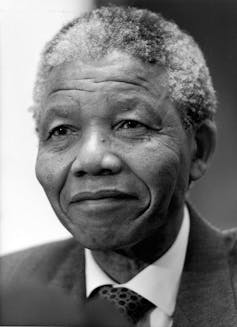
Madiba insisted on sharing with us his doubts and his fears; his miscalculations along with his victories. “I am not a saint,” he said, “unless you think of a saint as a sinner who keeps on trying”. And that’s why we learned so much from him, and why we can learn from him still. For nothing he achieved was inevitable.
Recipe for resilience
Obama emphasised in his 2013 memorial remarks:
Mandela taught us the power of action, but he also taught us the power of ideas; the importance of reason and arguments; the need to study not only those who you agree with, but also those you don’t agree with… Mandela [also] demonstrated that action and ideas are not enough. No matter how right, they must be chiselled into law and institutions. He was practical, testing his beliefs against the hard surface of circumstance and history.
We can expect Obama to propose practical ways to achieve this and for sustaining our democracies, ensuring that Mandela will inspire democrats of all ages everywhere.

John J Stremlau is a on the Board of the Electoral Institute for Sustainable Democracy in Africa (EISA) and authored a chapter in the EISA book cited in this article.
Source: The Conversation – Articles (AFRICA)
Read more on The Conversation.
Join the fun: Add Your event | Submit a Press Release | Add your listing.


