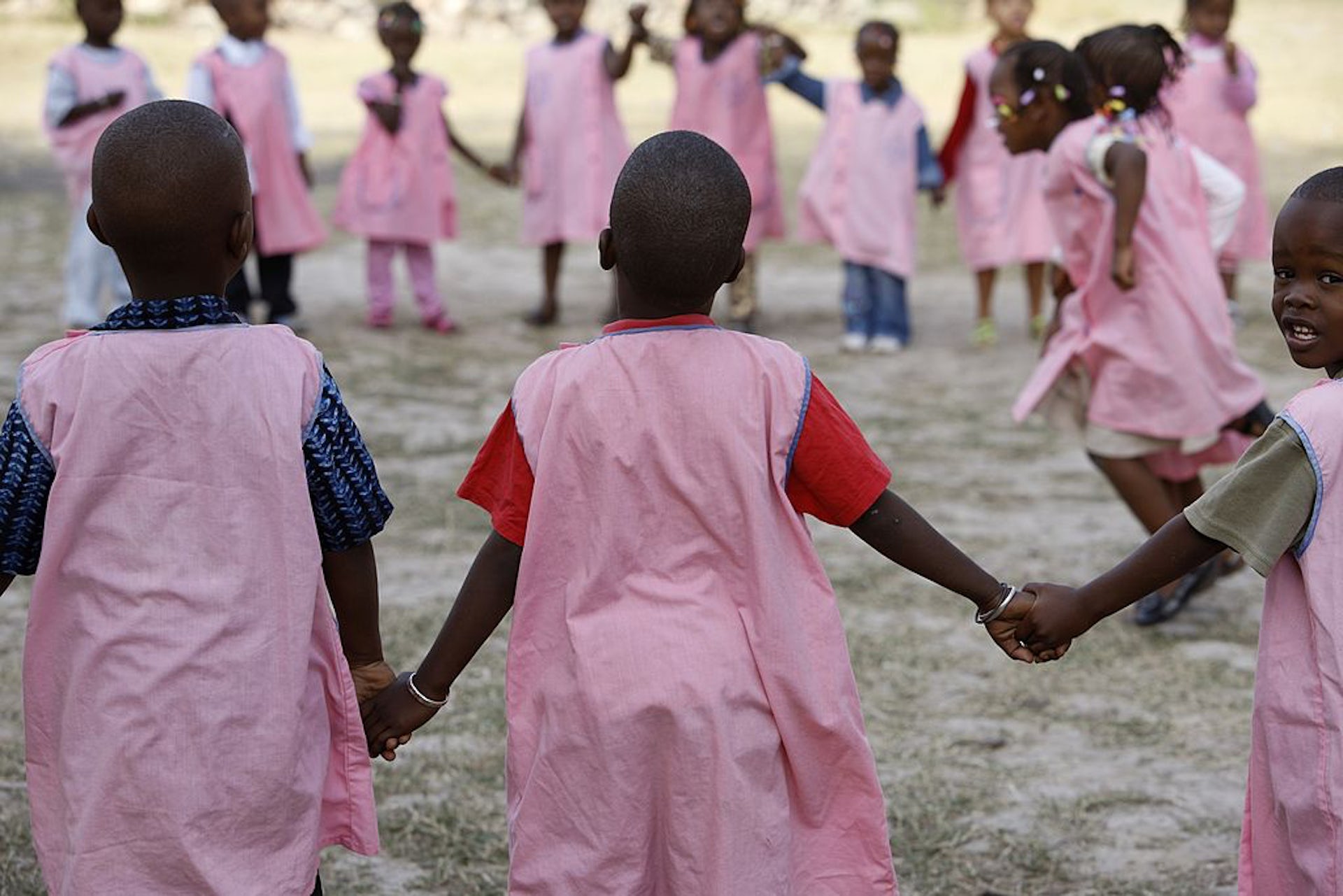
Senegal has a young population, with about half of its 18 million people aged below 19. This indicates a potentially high demand for education. Of those aged six to 11, however, 41% are out of school. In the age group 12 to 18, 43% aren’t in school. Statistics show, too, that the enrolment numbers of girls decrease as they advance in grades. To understand these dynamics, the African Population and Health Research Center carried out a two-year study on girls’ education and wellbeing in Senegal. The Conversation Africa asked Benta A. Abuya, a lead researcher on the study, to unpack the findings.
You found that only a third of girls enrol in a secondary school. Why is this?
The reasons begin in primary school. In Senegal, the official primary school entrance age is six. Primary school lasts six years, lower secondary lasts four years and upper secondary lasts three years.
Our findings were that in the last grade of primary school, the dropout rate was 26.7% for girls and 22.2% for boys.
We found that financial hardship in households is one of the obstacles to girls and boys completing school. About 39% of Senegalese live below the poverty line.
Despite the existence of government programmes – like free public school education until age 16 and the Girls’ Education Support Project, which provides school uniforms – the cost of schooling is still an obstacle for many families. They have to pay for learning materials and transport to school.
We also found a preference to educate boys over girls. In households with limited finances, boys are more likely to be sent to school even if girls would like to go.
Additionally, girls who are delinquent, lack interest in school or engage in unsafe sexual activities tend to be judged harshly by communities. They are viewed as bringing shame to their families. They are, therefore, withdrawn from school and married off early in an attempt to address this behaviour.
Deep-seated cultural beliefs and practices – such as female genital mutilation, forced child marriages and early pregnancies – also prevent some girls from making progress in school. They, therefore, lag in education and wellbeing.
The legal age of marriage in Senegal is 16 for girls and 18 for boys. But families decide when girls get married. For example, in the Kolda region in the south, 68% of girls get married before they turn 18. This is more than double the national average of 31%.
In a scoping review we did in 2019, we found that out of 1,321 adolescent girls, 78% got pregnant between ages 12 and 18. Of these pregnancies, 25.6% occurred before the girls turned 15. And in an exploratory study we did in 2021, teenage pregnancy was predominantly cited in Zinguinchor and Sedhiou regions in south-west Senegal, as leading to girls dropping out of school.
Some girls marry early because their families believe it makes them less likely to fall pregnant in a transactional sexual relationship. Others marry early if they see it as the only opportunity to make a life after dropping out of school.
Why is this a problem?
When girls don’t get into secondary school, they and their communities miss out on the social, economic and health benefits that accrue from education.
When more girls get to secondary school, this spurs communities to build more secondary institutions. This in turn spurs higher primary school enrolment. It also increases the chances of girls being near the schools they need to attend, which motivates parents to be more committed to supporting their schooling.
When girls get a secondary school education, the whole society benefits. Critical thinking skills enable girls to participate in civic duties and drive democratic change in their communities. Educated women are better placed to address some of the health challenges facing their children and their communities, as they are often primary caregivers.
Educated mothers increase the immunisation and nutrition intake of their children, reduce the likelihood of child mortality and stunting, have lower fertility rates, and have fewer unwanted pregnancies.
Lastly, going to secondary school reduces the likelihood that girls will contract sexually transmitted diseases, as they are able to access information to change their health behaviour when they are most vulnerable.
How can parents help turn the tide?
Parents can help increase the number of girls getting into secondary school if they:
-
give equal chances to girls and boys to attend school
-
refrain from marrying girls off early
-
stop using the excuse that girls are bound to “end up in the kitchen”
-
register all their children, including girls, at birth so that they have birth certificates.
We found that a failure to follow up on the issuance of birth certificates for girls hinders their education beyond primary school, as they are unable to sit for final exams.
The government and education stakeholders need to encourage parents to get more involved in programmes to keep girls in schools. For instance, parents are needed to drive the fight against early marriage and female genital mutilation.
The government should also ensure that the Coordinating Framework of Interventions on Girls’ Education in Senegal works with communities.
Men and boys should be involved in intervention programmes. This has the potential to shift power dynamics by challenging gender norms and patriarchal beliefs that men and women aren’t equal.
In the regions where cultural and religious factors hinder girls’ education, parents should be at the forefront of addressing these barriers. They can do this by speaking up against early marriage and keeping girls in schools.


