OPINION PIECE | Why plantations are NOT green deserts:
Johannesburg, March, 20, 2020 – Ahead of the United Nations’ International Day of Forests on 21 March, Forestry South Africa research and protection director Dr Ronald Heath talks about how the commercial forestry industry is leading the way in conserving and rehabilitating areas of high biodiversity value. He also challenges people to think differently about plantations.

Oribi. Southern Ground Hornbill. Southern Banded Snake Eagle. Cape Batis. Spotted Eagle Owl. Karkloof Blue Butterfly. Hewitt’s Ghost Frog. Pepper Bark Tree. Cycads. These are some of the species that have found a home within the South African commercial forestry landscape.
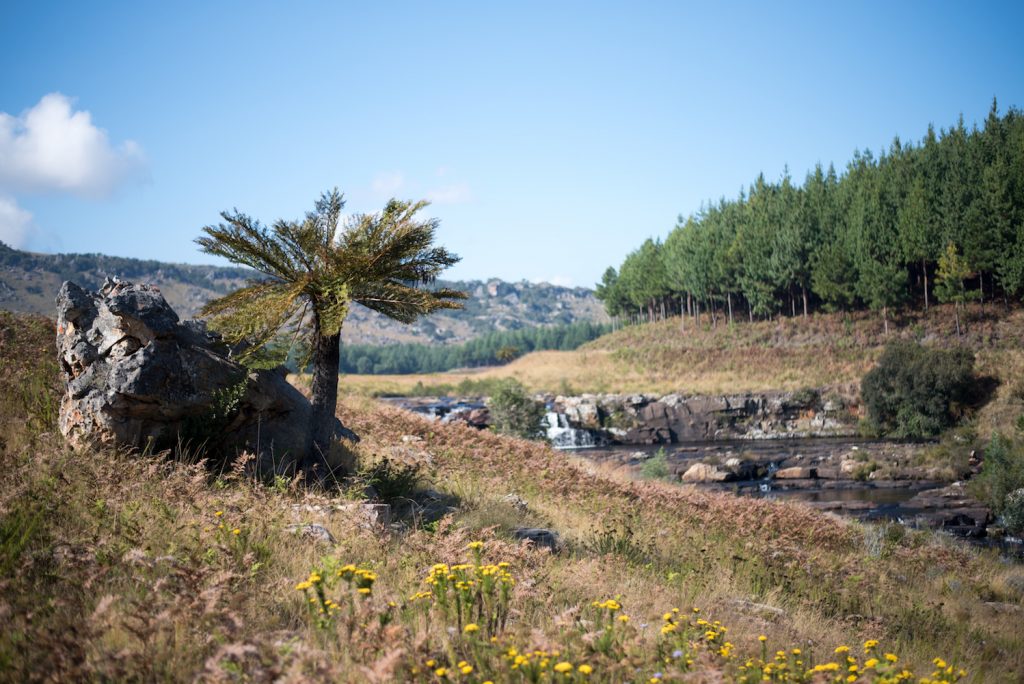
Local forestry landscapes are a tapestry of commercial timber compartments – or crops – interwoven with tracts of natural vegetation, which enhance and conserve biodiversity in these grasslands, wetlands and indigenous forests ecosystems.
Approximately 1.5 million hectares of forestry-owned land (1.2 million hectares of timber plantation and 300,000 hectares of conservation area) stretch from Limpopo and Mpumalanga to KwaZulu-Natal and the Eastern and Western Cape. The country boasts the highest forest certification rate in the world, with some 80% of South Africa’s forestry landscape certified by the Forest Stewardship Council (FSC), ensuring that land is managed and timber is produced in line with global environmental and social sustainability standards.
From big birds to blue butterflies
Through various research projects, ranging from public bird surveys to camera trap studies, our sector has identified more than 30 mammal species, 502 bird species and countless reptile, amphibian and insect species that call forestry-owned land home. This includes a number of rare, endangered and Red List species. One of these is the “Thunder Bird” or Southern Ground Hornbill. The patchwork nature of forestry with the mixture of insect-rich grasslands and tall trees for nesting lends itself as the ideal habitat for these birds.
Researchers are now interested to see whether the forestry landscape would offer the potential to create conservation corridors between Mpumalanga and KwaZulu-Natal, the birds’ last great strongholds. Karkloof Blue (Orachrysops ariadne), one of South Africa’s rarest butterflies, has been protected by conserving important breeding grounds and paying careful attention to site disturbances such as harvesting and burning regimes, and creating a better environment for the host plant (Indigofera woodii) upon which the butterfly lays its eggs. There is also a mysterious but symbiotic relationship between the butterfly larvae and an ant species (Camponotus natalensis) which means that the ant species also requires protection.
Apart from being a significant contributor to the local economy, forestry contributes to the conservation of the country’s natural forests, grassland ecosystems and their associated wetland systems along with a number of treasures for the ecotourism industry. Managed properly, this network of natural areas contributes towards the achievement of South Africa’s biodiversity targets.
A number of our members are working to have the species-rich pockets of natural vegetation found within the forestry landscape formally protected under long-term conservation agreements.Sites like Clairmont Mountain Nature Reserve, Sappi’s first proclaimed nature reserve, which is home to numerous endangered and Red Data List species. It is clear that forestry is a pioneer, leading the way for other land users.
Saving forests and reducing our footprint
South African forestry adopts a responsible forest and land management approach which requires sustainable, efficient and effective land management practices that have the lowest environmental impact and yield the greatest social and economic benefit.
Apart from employing more than 150,000 people and supporting rural communities, plantations are the source of an array of carbon-storing, renewable and versatile products that we use every day – without so much as a second thought: sawn timber for roofing and pool decks, pulp for toilet tissue, paper packaging, labels on new clothing and writing paper, extracts for adhesives and resins, cellulose for pharmaceuticals, cosmetics and even food-grade additives and biochemicals. And this is just a short list.
We have come a long way since the early days of afforestation which often involved planting trees without considering the ecological consequences. In the 1990s, the sector voluntarily withdrew 80,000 hectares of planted compartments for the conservation of water and to better manage our water resources. It has also instituted a number of strict planting regulations in line, and going beyond, with legislation and international standards that help reduce the industry’s environmental footprint.
The forestry industry was established by the South African government to meet the country’s timber needs, while preventing the eradication of our natural wooded areas. It simply would not have been environmentally sustainable, commercially viable nor practical to make use of indigenous wood for industrial purposes, especially in the early years of South Africa’s establishment as a mining and agricultural economy.
Today, the forestry landscape is now home to some 649 woody and 636 herbaceous plant species; these form part of the country’s half a million hectares of indigenous forests, which would be even smaller if it were not for commercial timber plantations.
ENDS
Various biodiversity-focused resources are available on Forestry South Africa’s website:
- Raptor Refugia
- Answer the call of the Thunder Bird
- Saving a species – Oribi
- Hewitts Ghost Frog
- Caterpillar custodians
- Clairmont Mountain Nature Reserve
About International Day of Forests
The United Nations General Assembly proclaimed 21 March the International Day of Forests in 2012. On this day, we celebrate and raise awareness of the importance of all types of forests. Countries are encouraged to undertake local, national and international efforts to organise activities concerning forests and trees. The central theme for the International Day of Forests 2020, chosen by the Collaborative Partnership on Forests, is ‘Forests and Biodiversity: Too precious to lose’. www.fao.org
About Forestry South Africa
Forestry South Africa represents 11 corporate forestry companies, approximately 1 100 commercial timber farmers and some 20 000 small-scale growers. Collectively, these growers own or control no less than 98% of the country’s total plantation area of 1.2 million hectares. It supports the industry in common and precompetitive areas such as research and protection against pests and disease, environmental issues, education and training and legislation. www.forestrysouthafrica.co.za.


Video: OPINION PIECE | Why plantations are NOT green deserts:
CLICK HERE to submit your press release to MyPR.co.za.
More Info on OPINION PIECE | Why plantations are NOT green deserts here: http://www.forestrysouthafrica.co.za/conservation/
Twitter:
Facebook:
Source: MyPR
Submit your own Press Release or get free content for your publication.
Video – How to post your Press Release on MyPR:
My Press Release (MyPR) provides free South African targeted content and press releases for on and off line publishers and media. Registering on MyPR enables public relations companies and practitioners to post articles under their own author name. Public Relations Companies and practitioners, event organisers, sports and political writers use MyPR as a distribution mechanism for their press releases, content, images and news. A forever free subscription allows publishers and media free access to all press releases, content and images on MyPR.
This press release is courtesy of MyPR.co.za and was automatically curated and published with WP Robot plugin – CLICK HERE to learn more about WP Robot for WordPress – a massive time and money saver.


