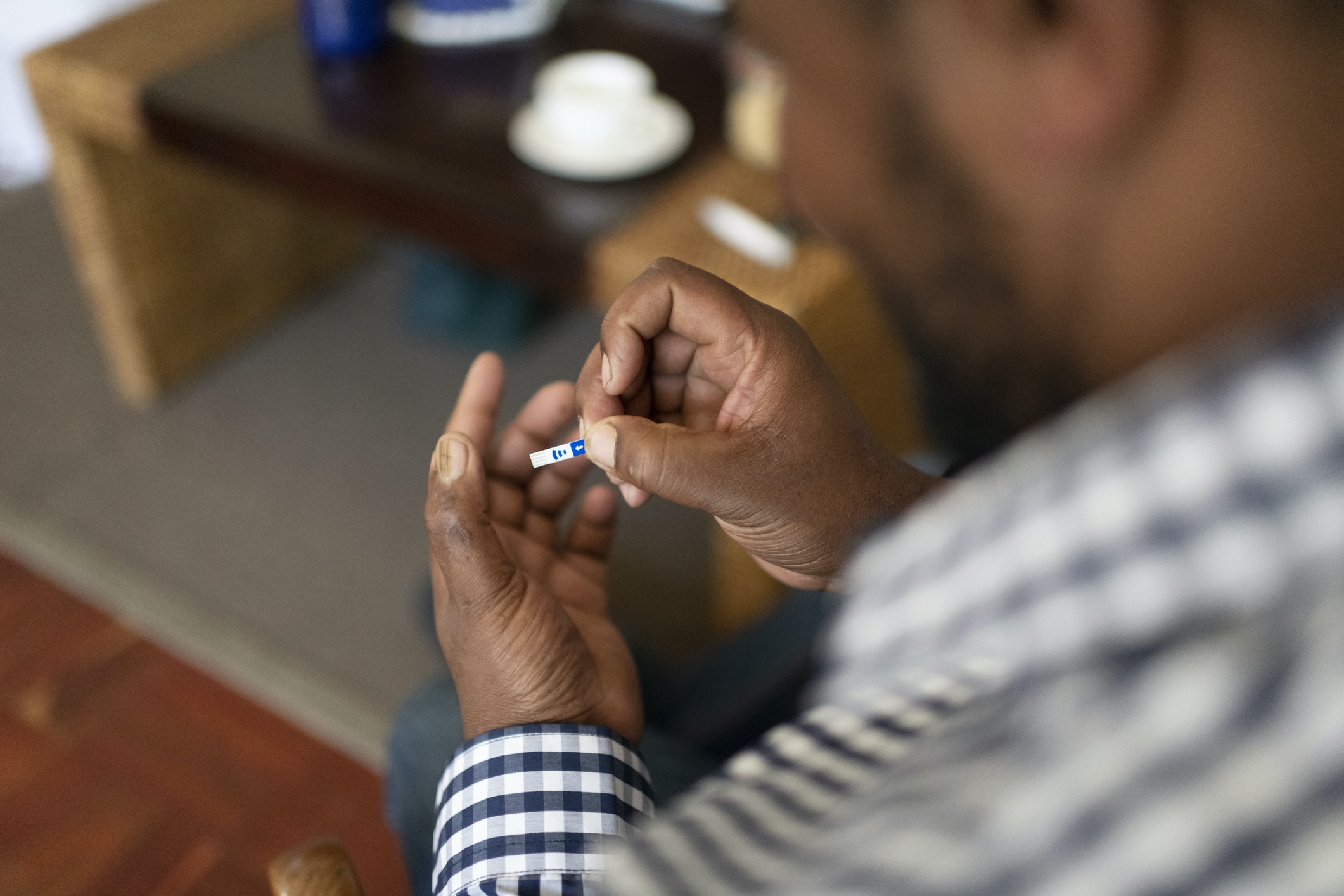
Diabetes is currently the ninth most common cause of death in the world. Around 420 million people or 6% of the world’s population is affected. This number is expected to rise beyond half a billion by the end of the decade with the biggest increase occurring in low- and middle-income countries.
Most people with the condition have type 2 diabetes. This type of diabetes is the result of excess body weight and physical inactivity.
In South Africa, diabetes affects approximately 4.5 million people. The proportion of the adult population living with the condition is estimated at 12.8%. It’s the leading cause of death among women. In 2019, 89,834 people died of diabetes. This number exceeds the capacity of Soccer City, the biggest football stadium in South Africa.
Most people living with diabetes in South Africa access treatment and care in primary healthcare facilities. Unfortunately, the clinics are often congested and patients have to wait in long queues to receive their medication during their monthly visits. To address these challenges, the National Department of Health initiated a programme in 2014 to improve access to medication and patient adherence.
The programme gives patients with controlled diabetes the option of collecting their medication at pick-up points of their choice such as shops, places of worship, community halls or schools.
But our recent research found that only a minority of patients enrolled in the programme achieved the treatment targets at the time of the study. We audited the files of patients who had been on the programme for an average of two years (minimum of one year and maximum of five years). Our findings suggest that the criteria used to select people with diabetes for the programme should be revised. In addition, healthcare managers should explore strategies to incorporate diabetes education into the programme.
Better access to medicines but suboptimal management
The centralised chronic medicine dispensing and distribution programme was launched in February 2014. The service is free and benefits the patient in a number of ways. These include:
- fewer clinic visits,
- taking less time off work,
- not having to travel long distances,
- not waiting in queues, and
- collecting medication at any time and place.
By definition, patients who are on the programme are stable – meaning that they are doing well.
The clinic nurse or doctor measures the levels of sugar in the blood with a test called Fasting Plasma Glucose. If two consecutive tests are normal the patient qualifies for the programme. Once enrolled, the patient does not have to come to the clinic to collect medication. Patients on this programme visit the clinic every six months to get checked.
We conducted an audit of the medical records of people with type 2 diabetes who were enrolled in the centralised chronic medicine dispensing and distribution programme at 23 primary healthcare facilities in the Tshwane District of the country’s capital city. The aim was to assess how well the patients were doing at the time. We looked at the most recent test results recorded in their files, namely haemoglobin A1C or HbA1c, blood pressure and blood cholesterol. Test results were missing from some patient records, suggesting that patients are not always receiving the tests they are entitled to.
Only 29% of patients in the study had acceptable blood sugar levels. This is concerning because to be eligible for enrolment in the programme, these patients should have been stable controlled patients. Our findings suggest that some patients enrolled in the programme were not stable to begin with.
The suboptimal management of people with type 2 diabetes is worrying especially in the era of the COVID-19 pandemic because people living with diabetes are more vulnerable to becoming ill or dying from COVID-19. The consequences of high levels of sugar in the blood include blindness, kidney failure, heart attack, stroke, and leg amputation. These complications result in reduced quality of life and higher healthcare costs, and place unnecessary stress on families.
To ensure that patients benefit fully from this programme, the selection criteria should be revised. Instead of using Fasting Plasma Glucose to determine whether a patient qualifies, the HbA1c should be used. Fasting Plasma Glucose is not a reliable indicator of how well a person with diabetes is doing because it measures blood sugar levels at a single point in time. In contrast, HbA1c provides an indication of blood sugar concentrations over the previous two to three months. The benefit of measuring HbA1c is that it gives a more reasonable and stable view of what’s happening over time (three months). And the value does not vary as much as finger-prick blood sugar (Fasting Plasma Glucose) measurements.
This programme limits a patient’s contact with healthcare providers. An unintended consequence is that the person has limited opportunities to be informed about the condition and to be educated on how to best manage diabetes.
For people with chronic conditions such as diabetes, education and empowerment are crucial to ensure better outcomes. The person with diabetes should be equipped to eat well, get enough physical activity and take the correct amount of medication at the right time.
Addressing the gaps
Authorities have claimed the success of the programme. But our study identified some gaps that should be addressed.
The centralised chronic medicine dispensing and distribution programme should consider revising how people with type 2 diabetes are selected. It should also include additional measures for patient empowerment and education.
Improving the management and care of people living with diabetes requires innovative evidence-based interventions. Strategic public-private partnerships are key to ensure that the South African government reaches its objectives in terms of providing better lives for people with diabetes. One such initiative is our Tshwane Insulin Programme at the University of Pretoria.
Our programme is a partnership between the University of Pretoria and the Lilly Global Health Partnership. We work closely with the national, provincial and local health authorities to develop sustainable solutions to improve the management and outcomes of people living with diabetes in South Africa.


