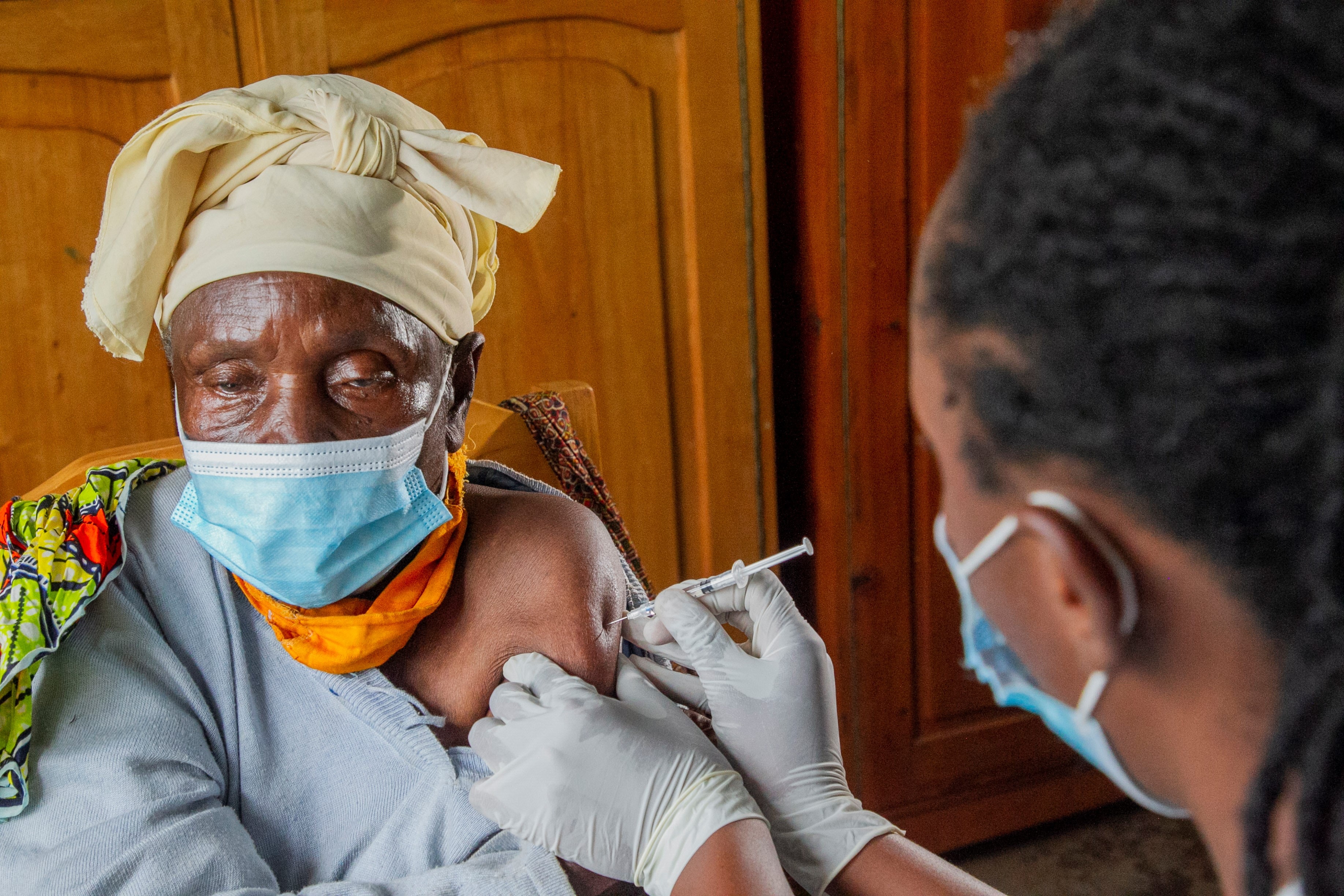
In 2015 the United Nations General Assembly adopted universal health coverage as one of the sustainable development goals. The aim of universal health coverage is to ensure that every person and community, irrespective of their circumstances, has access to the health services they need, at the time and place they need it, without the risk of financial devastation. Many countries have committed to the concept, which has resulted in numerous health reforms. The World Health Organization recognises Rwanda as one of the countries that are performing well on the goal of universal health coverage. The Cochrane Centre summarises and disseminates information on what works and what doesn’t in health care. Professor Charles Shey Wiysonge, director of Cochrane South Africa and senior director at the South African Medical Research Council, spoke to Rwanda’s health minister, Dr Sabin Nsanzimana, about the road map for universal health coverage in the country.
Charles Wiysonge: What does universal health coverage look like in Rwanda?
Sabin Nsanzimana: In the last decade, calls for increased efforts to achieve universal health coverage have grown. Many countries have committed to universal health coverage – particularly in Africa. This has resulted in numerous health reforms.
Rwanda’s President Paul Kagame was appointed by other African heads of state as the leader on domestic health financing in the AU Assembly Declaration in February 2019. The aim of the declaration was to increase investment in health and have member states spend efficiently and effectively to achieve better health outcomes.
In the last couple of decades Rwanda has improved the health and well-being of all its people. This was done through a combination of evidence-based and people-centred strategies and interventions. The country has been able to make the following substantial progress:
-
On the supply side, the country has built a healthcare delivery system on primary healthcare. Individuals and communities are at the centre of our actions. The increased number of health facilities (from 1,036 in 2013 to 1,457 in 2020) has improved the geographical accessibility of care. It’s also contributed to the reduction of the average time used by a Rwandan citizen to reach a health facility. The average time used to reach the nearest health facility has fallen from 95.1 minutes in 2010 to 49.9 minutes in the past 10 years.
-
On the demand side, the risk pooling has been greatly improved as a result of the extension of Community-Based Health Insurance schemes. These give the majority of the population access to healthcare services, and improve access to quality services. Insurance has also reduced out-of-pocket expenditures (which are 4% as a share of total health expenditure) in particular for the poor and most vulnerable people. Community-based health insurance covers over 85% of the population. The percentage of the population with some kind of health insurance has increased from 43.3% in 2005 to 90.5% in 2020. This has helped to protect households against financial risks associated with sickness.
-
The government spending on health (15.6% as of the 2019/2020 financial year) has surpassed the 15% required under the 2001 Abuja Declaration. This shows the country’s high commitment to the development of health sector financing.
Charles Wiysonge: Where are the gaps and why do they exist?
Sabin Nsanzimana: Progress towards universal health coverage is a continuous process. It responds to shifts in demographic, epidemiological and technological trends as well as people’s socio-economic status and expectations. If Rwanda is to meet the goal of achieving universal health coverage by 2030, we need to be far more ambitious to leave no one behind.
Additional health financing reforms and actions to maintain achieved gains and improve further health outcomes are needed. The fact that the country has achieved close to universal population coverage is in itself a great achievement. But there are still some people who are uninsured. We need to identify policy options to expand coverage to the hard-to-reach population in the informal sector. Health insurance has positively affected the use of services and equity. But further improvements are needed. We must extend the service coverage based on the need and reduce cost-sharing, especially for secondary and tertiary care.
Sustainability of health financing is also a critical issue. It requires finding innovative ways to mobilise domestic resources, adopting better resource pooling mechanisms and an effective strategic purchasing mechanism. These must ensure equity and efficient use of available resource and value for money.
Charles Wiysonge: What else is needed?
Sabin Nsanzimana: To move further and deeper towards universal health coverage calls for evidence-based policy reforms that would provide direction for a long-term model for service delivery (focusing on the primary healthcare level) and health financing in Rwanda. This will require adequate awareness among policy decision makers, and increased capacity in those areas and shared understanding of universal health coverage to support the necessary reforms.
Charles Wiysonge: What can other countries on the continent learn from Rwanda’s experience?
Sabin Nsanzimana: Strong leadership that sets a clear vision for the future is imperative. Countries need a development model that is inclusive. Such a model must consider gender equality, pro-poor policies, unity and solidarity.
Most important are robust institutions and legal frameworks driven by good governance, with:
-
accountability, citizen participation, decentralisation
-
results orientation – performance contracts
-
investment in human capital – mainly capacity building.


