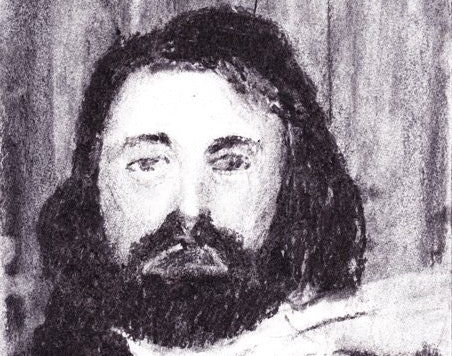
Neil Aggett, the trade unionist and anti-apartheid activist who died in detention at the hands of police 41 years ago, was one of very few white South Africans who actively fought apartheid. He was only 29 when he died.
He came from a community enjoying one of the most privileged existences on earth, with a black servant class attending to their every need. Yet he gave that all up because he believed every person – regardless of their “race”, religion, gender or sexuality – had the right to justice, the right to liberty, the right to equality of opportunity.
He was selfless, fighting for others. He lived according to Nelson Mandela’s guidance:
What counts in life is not the mere fact that we have lived. It is what difference we have made to the lives of others.
Neil was a role model, winning numerous awards and certificates at Kingswood College in Makhanda, Eastern Cape, before studying at the University of Cape Town and completing his medical degree in 1976.
He became a doctor working mainly in overcrowded and desperately under-resourced hospitals reserved for black people across the country. At the same time, he was a champion of workers’ rights and workers’ health and safety. He became a volunteer organiser with the African Food and Canning Workers’ Union, working without pay, taking additional weekend hospital night shifts to support himself.
But his passionate trade unionism proved fateful. It made him a target of a brutally repressive apartheid police state. He was arrested in late 1981, ending up in Johannesburg’s notorious police headquarters, John Vorster Square. He emerged from there in a coffin.
Read more: Ahmed Timol inquest: why uncovering apartheid crimes remains so important
The apartheid security police who had brutally interrogated Neil maintained he had “hung himself with a scarf” – just as they claimed others who died in prison had “slipped in the shower” or “fallen out of a window”. He was the 51st person to die in detention under apartheid. The total later escalated to over 70.
He was the first and only white person to die in detention from torture. No one has ever been convicted for any of those 70-plus murders.
Sacrifice and betrayal
Today it is taken for granted that Nelson Mandela walked to freedom in February 1990 after 27 years’ imprisonment, and four years later was elected president. Today it is taken for granted that, however serious South Africa’s problems of poverty, unemployment, homelessness, corruption, power and water cuts and mafia-like crime, each South African citizen has human rights protected by their constitution.
But none of that was achieved without a bitter fight against merciless opponents. My family’s story was a small part of that. The apartheid security forces dispatched my parents, me, my brother and two small sisters unwillingly into exile.
Not because my mom and dad had committed the sort of “normal” crimes in democratic societies policed by the rule of law – such as theft, fraud, violence, rape or murder – but because they stood up and fought apartheid: the most institutionalised system of racism the world has ever seen.
In exile, the apartheid security service tried to kill me in June 1972 with one of their specialities, a lethal letter bomb, sent to our family’s London address. It would have blown up our family and our home except for a fault in the trigger mechanism.
Other anti-apartheid campaigners weren’t as fortunate as I was. A letter bomb killed Ruth First in Maputo in 1982 and Abram Tiro in Botswana in 1974. Neil Aggett also paid that ultimate price. In any civilised society he would have lived a full life, protecting people’s health as a doctor or protecting food workers’ rights as a trade unionist.
But today, tragically, the many thousands of freedom struggle activists like Neil have been betrayed by the governing African National Congress (ANC) politicians who have looted and brought the country nearly to its knees. Similarly betrayed have been the heroes of the liberation struggle, the leaders such as Mandela, Oliver Tambo, Walter Sisulu, Ahmed Kathrada, Robert Sobukwe, Steve Biko and Lilian Ngoyi who gave up the prime of their lives to serve harsh jail sentences.
Read more: Multiparty democracy is in trouble in South Africa – collapsing coalitions are a sure sign
South Africans from every walk of life, black and white, young and old, tell me they feel helpless, feel they cannot do anything about power cuts, water cuts, or about dysfunctional or non-existent postal or local municipal services, feel politics doesn’t serve them anymore, feel their vote is worthless – even though it took a momentous fight to get it for everyone.
My message to them, my message to you all, is: learn from South Africa’s struggle history.
Need for active citizenship
The struggle giants, the Nelson Mandelas and Oliver Tambos, the Neil Aggetts and Joe Slovos, didn’t defeat apartheid on their own. They were leaders of a mass movement of many tens of thousands of ordinary people who, in the most oppressive of conditions, threw themselves into activism.
Many made sacrifices, some small, some big. Some did a little, others did a lot – but they all did something. And they each contributed in whatever way they could to one of the most successful movements for change ever in modern history.
They defeated a powerful police state. They refused to be subjugated by an economic system feeding profitably in a trough of racism. And they beat apartheid.
Back in the 1950s, the 1960s, the 1970s, people said, people feared, that could never happen, might be impossible.
But it was made possible because enough ordinary citizens rose up together and campaigned, and struggled and fought for change.
Courageous school students in Soweto lit a fuse in June 1976. They were gunned down by police for protesting peacefully, but refused to be cowed, and their defiance triggered a fresh wave of resistance.
Today South Africa must be changed again – radically, and soon. But history teaches us that big change doesn’t normally come from the top.
Looking forward
I don’t know if the ANC can be saved from itself. I don’t know if the good people still in the ANC can fully reclaim it from the corrupt ones who riddle the party from top to bottom.
Read more: ANC in crisis: South Africa’s governing party is fighting to stay relevant – 5 essential reads
But meanwhile, every South African can do their bit. First by doing your very best, driven by the vision of an inclusive and united South Africa propagated by democracy’s founding mothers and fathers.
And also saying “No!” to paying a bribe or a backhander for a contract, for a job, for a permit, for a licence, for starting a business, for building a home. Often it’s very difficult to say “No!”. But until everyone unites to say “No!”, nothing will change. Until a mass uprising said “No!” to apartheid, it didn’t change, and never would have.
South Africans can join a popular uprising to say “No!” and demand change, and stop their beautiful, special country from becoming a failed state.
This is an edited version of the Neil Aggett lecture delivered at Kingswood College, Makhanda, on 7 March 2023.
Peter Hain’s memoir A Pretoria Boy: South Africa’s ‘Public Enemy Number One’ is published by Jonathan Ball, as are his thrillers The Rhino Conspiracy and The Elephant Conspiracy.


