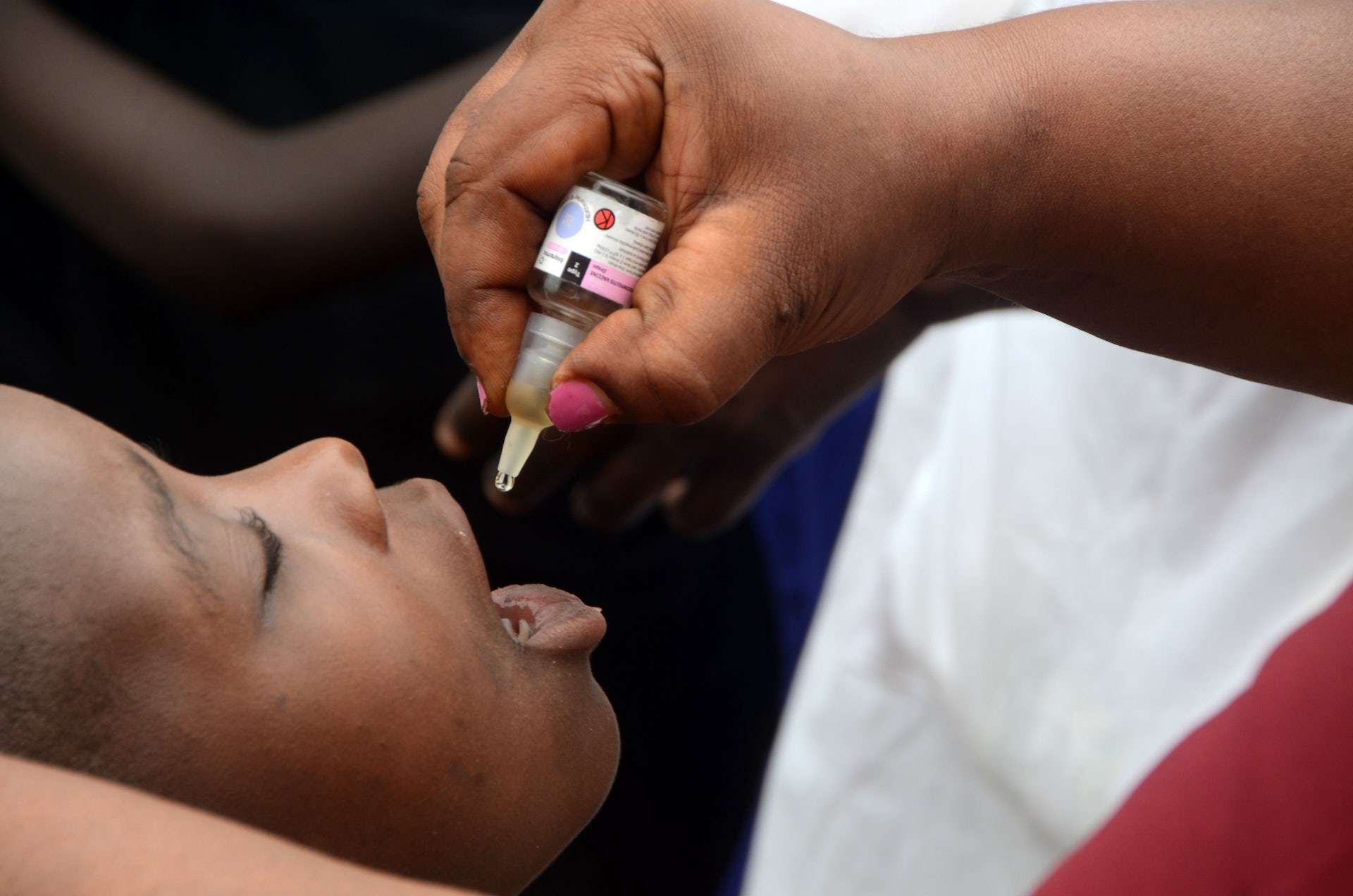
On 17 March 2023, the World Health Organization (WHO) announced that health officials in Burundi and Democratic Republic of Congo (DRC) had detected cases of vaccine-derived poliovirus. The WHO said the Burundian government had declared the detection of the virus a national public health emergency after three cases were confirmed. The Conversation Africa’s Wale Fatade spoke to virologist Oyewale Tomori, who maps out the terrain of polio viruses, and their mutations, as well as what’s happening on the vaccine front.
Can you talk us through the various polioviruses?
There are two types of polioviruses that can cause paralysis in humans. These are the wild poliovirus and the vaccine-derived poliovirus. Wild poliovirus is the most commonly known form of the poliovirus, with three serotypes 1, 2 and 3. Global efforts since 1988, using oral polio vaccine to immunise children, have reduced wild poliovirus cases by 99.9%. Of the three wild poliovirus serotypes, only one – the wild poliovirus type 1 – remains in circulation, and in only two countries (Pakistan and Afghanistan).
However, there is another form of poliovirus that can spread within communities: circulating vaccine-derived polioviruses, or cVDPV. While they are rare, they have been increasing in recent years due to low immunisation rates.
In the last 20 years mutated forms of the virus contained in the vaccine have emerged in people who have been vaccinated. This is what has been detected in the most recent cases in Burundi and the DRC. The mutations are different from the wild poliovirus, though they too can cause paralysis. A vaccine has been developed to manage the mutated variety.
Can you explain the differences? And the link to vaccines?
There are two types of polio vaccines – the oral polio vaccine and the inactivated polio vaccine. The use of the oral polio vaccine containing attenuated or weakened virus, has brought the wild poliovirus to the brink of eradication. The oral vaccine is safe and provides better immunity in the gut (where polio replicates), than the inactivated vaccine.
However, the weakened or attenuated virus in the oral polio vaccine can be excreted in the stool. This is of advantage in communities with low-quality sanitation, where the vaccine virus can spread from person to person and help protect the community. That’s if it doesn’t have time to mutate first.
But in communities with low immunisation rates the vaccine virus can spread from one unvaccinated or under-vaccinated child to another over a long period of time – often over about 12-18 months. During this period, the virus can mutate and take on a form that can cause paralysis just like the wild poliovirus. This is called vaccine derived poliovirus. When it spreads in communities, we have what is called circulating vaccine-derived poliovirus.
More than 10 billion doses of oral polio vaccine have been given to nearly three billion children worldwide since 2000. About 2,500 cases of paralysis from circulating vaccine-derived poliovirus paralysis have been registered.
It’s important to note that vaccine-derived poliovirus and circulating vaccine-derived poliovirus are not indicative of a re-emergence of wild poliovirus.
Since vaccine-derived poliovirus was first reported in Hispaniola in 2000, three types of circulating vaccine-derived poliovirus have been identified in over 50 countries in every region of the world, except Antarctica. They have been named cVDPV type 1, cVDPV type2, and cVDPV type 3.
This is what’s known about the reach of each of them:
-
cVDPV type 1: Between 2000 and mid-March 2023, 213 (53.4%) of 399 reported isolates were associated with paralysis in humans. The remaining 186 isolates were recovered from healthy contacts and community samples, as well as environmental sewage samples.
-
cVDPV type 2: It is the cause of 2,407 cases of paralysis in humans, representing 53.4% of 4,507 isolates during the same period. Contacts of cases, other people in the community, and environmental sewage samples were the sources of the remaining 2,094 isolates of type 2.
cVDPV type 3: Only 53 isolates were reported between 2020 and March 15, 2023. Only one case has been associated with human paralysis. Environmental samples yielded 52 (98.1%) of all cVDPV type 3 isolates.
What’s being done? And what more needs to be done?
The Global Polio Eradication Initiative and its partners have introduced a novel oral polio vaccine type 2 (nOPV2), to minimise the risk of the vaccine virus mutating and causing polio in under-immunised children.
It’s a modified version of the existing monovalent oral polio vaccine type 2 (mOPV2), currently in use to respond to circulating vaccine-derived poliovirus type 2 outbreaks.
The new vaccine has been shown in clinical trials to provide protection comparable to the older oral vaccine against poliovirus. In addition, it is more genetically stable and less likely than the earlier vaccine to revert to a form which can cause paralysis.
The genetic stability will reduce the risk of seeding new mutations into the community.
Field use of oral polio vaccine type 2 started in March 2021. By March 2023 close to 600 million doses of the vaccine had been administered across 28 countries. Its introduction has resulted in the interruption of further transmission of circulating vaccine-derived poliovirus type 2 after two immunisation rounds. In 14 of the 17 countries, where two rounds of nOPV2 vaccine have been used to control circulating vaccine-derived poliovirus outbreaks, there has been no reported breakthrough cases
In Tajikistan, the new vaccine was used at the peak of transmission. And after two big campaigns and a smaller one, the transmission was interrupted.
However, in northern Nigeria local transmission continues despite several campaigns with the new vaccine. And the recent reports of circulating vaccine-derived poliovirus type 2 in Burundi and DRC are the first instances of vaccine-derived poliovirus since roll-out of the new vaccine began in March 2021.
While the affected families and communities will find the outbreak of polio difficult to understand and see the outbreak as a tragedy, especially as Africa has been declared free from wild poliovirus. It is important to make the populations aware that with vaccine-derived poliovirus in circulation, and the widespread use of OPV2 vaccines, such instances of polio cases are expected.
The outbreaks in Burundi and DRC, as well as the situation in Nigeria, suggest that it is not only vaccines that are important to stop local transmission. Reaching vulnerable and under immunised children with the vaccine before it mutates is also key.
The use of the new vaccine is another supplementary activity to enhance immunisation and protection against outbreaks of circulating vaccine-derived poliovirus.
Countries must ensure adequate and full immunisation of every child to prevent the outbreak of vaccine-preventable diseases. There is no shortcut to full and adequate immunisation of every child.


