It is a few months to Kenya’s August 2022 general election. That means it is time for the theatrical, skeleton-revealing spectacle also known as the political debate.
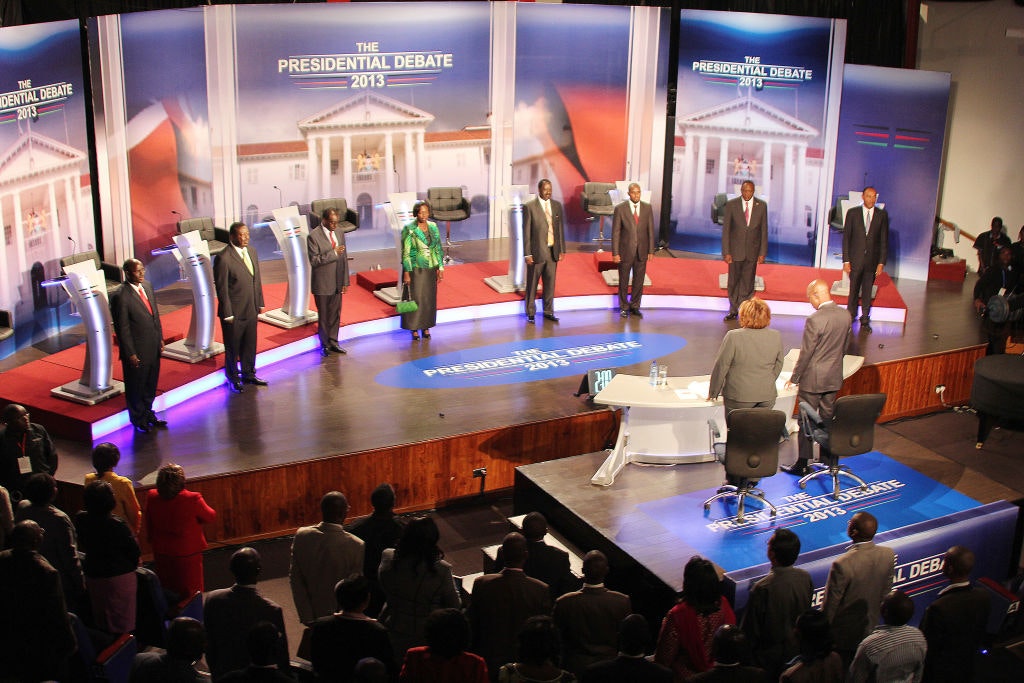
Televised political debates in Kenya started in 2013 and have had a chequered history.
In the first debates, eight presidential aspirants met over two sessions that were broadcast on multiple television and radio stations. The sessions drew in millions of listeners and viewers.
However, one study argued that the debates were more a performance that failed to provide the electorate with enough information on which candidate to elect.
In 2017, there was a televised debate between the eight candidates for governor of Kenya’s capital city, Nairobi. They traded barbs, accusing each other of corruption, shady business deals, crime and weak leadership.
The live audience loved it, laughing at the particularly potent allegations.
Nairobi voters eventually elected Mike Sonko, a controversial, flashy politician whose popularity can partly be traced to his public displays of generosity. These include providing free public services, such as garbage collection, that are otherwise the role of local government.
During the televised debate, Sonko was accused of having a criminal record. Over the course of his five-year term, he was charged with gross misconduct and faced several corruption allegations. He eventually handed over the running of key functions in the county to the national government.
Political debates have become part of the election calendar. They are organised, moderated and broadcast mostly by commercial news media. These platforms have played a leading role in proposing, organising and broadcasting them.
Their stated intention is to enable citizens to access comprehensive information that will help them decide whom to elect.
As the 2017 Nairobi gubernatorial race showed, a political debate is helpful in presenting candidates to the citizens, and allows some exposure of their backgrounds, plans, possible strengths and weaknesses.
But, useful as the political debate was in subjecting the Nairobi gubernatorial candidates to citizen scrutiny, it was not enough to change residents’ minds about Sonko potentially being a bad bet.
If a debate is the citizen’s primary source of information about the candidates running for a particular seat, that is too much weight for a two-hour event to carry.
Debates are culminating events, held as an election season comes to an end. They cannot replace the electorate’s need for the granular, mundane, day-to-day information about candidates and what they stand for.
What can go wrong
Election cycles around the world are seen as tangible evidence of democracy. They allow citizens to elect leaders whose policies, views and experience will enable accountable and useful representation.
In principle, the political debate is a forum to showcase these aspiring leaders’ visions.
It is a lofty goal, however, given that in every general election, the Kenyan voter elects six representatives. These are the president, governor, senator, women’s representative, member of parliament and ward representative.
In 2013, the political debates focused on presidential and deputy presidential candidates. The presidential debate was organised and broadcast by leading commercial media houses. The debate between deputy presidential candidates was co-organised by a coalition of churches and a private university.
In 2017, more political debates were planned as independent players got involved.
The Kenya Alliance of Resident Associations, for instance, partnered with other organisations to organise a series of debates among aspirants for seven county governor seats.
This year, attempts were made to assess the ability of community and local language media to get involved in carrying out debates. The idea was that these forums would focus on bringing together aspiring governors, senators and women’s representatives from more of Kenya’s 47 counties.
Community and local language media platforms tend to provide information for particular geographic or ethno-cultural zones. Their regional reach works for the seats for which they are being assessed.
But the idea has run into trouble, provoking a spat between sections of Kenya’s mainstream media and the cabinet secretary in charge of information and communication, Joe Mucheru.
The issue revolved around the government’s appointment by gazette notice of a working group. They were given the job of assessing the ability of community and local language media to hold political debates.
Beyond the differences of opinion over the setting up of the working group, a number of issues arise.
First, who will accommodate the need for information about MP aspirants in Kenya’s 290 constituencies? Or the thousands who will vie for the 1,450 ward representative seats, particularly just months to the elections?
Second, as dramatic and exciting as the debates are, candidates don’t always participate. In 2017, there were gubernatorial candidates in several counties – among them incumbent holders of the seat – who didn’t show up.
That same year, the incumbent president and his main opponent declined to attend their debates, citing event format concerns. This denied citizens the opportunity to ask questions or hear aspirants’ plans.
Third, debates are usually held at the end of the political campaign season. The number of political candidates and the format of debates don’t usually allow citizens to gain sufficient understanding of each aspirant’s agenda.
Making it right
As governance researcher John Ahere observed, democracy in East Africa is nuanced. The appearance of democracy is not always the same as its lived reality.
Citizens are often treated as bystanders in democratic governance – valuable once every five years when aspiring leaders seek their votes. The rest of the time, citizens have little say over why poverty is widespread, for instance, or why theft of public resources remains pervasive.
The performance of elected officials, therefore, needs sustained coverage beyond the election. This needs to be done by the media. Once the election is over, there is an opportunity for all media – commercial, community and public – to commit to extensively covering the work of all legislative and executive leaders during their five-year terms of service.
By doing this, news media would be showing its value as an institution within Kenyan democracy, as described by journalism scholar Mwangi Michael Kamau.
Under this scenario, future political debates could cement the electorate’s knowledge of whom to elect.
This would be based on a grounded understanding that as citizens, they are central actors – rather than peripheral observers – in the evolution of their democracy.


