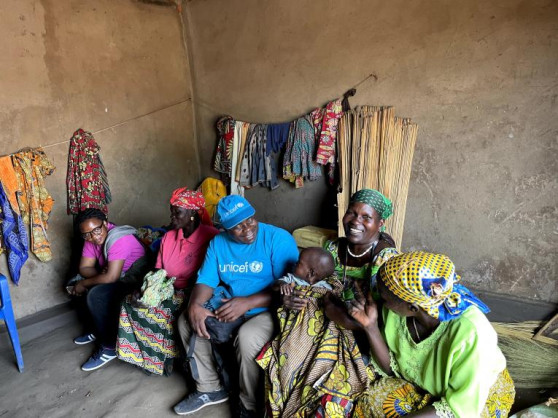
UNICEF is increasingly concerned about the impact on children of a resurgence of Bubonic plague in the eastern province of Ituri in the Democratic Republic of the Congo.
New research, supported by UNICEF, in three health zones of Ituri shows that children are especially at risk of contracting plague, which in recent months has been making a comeback for the first time in more than a decade.
Figures released for the three health zones of Biringi, Rethy, and Aru – where UNICEF focused its research – show that there were 490 plague cases between 2020 and 2021, with 20 fatalities. The figures show that over the same period there were 578 cases and 44 plague-related deaths throughout the entire Ituri province.
Ituri is one of only a handful of places in the world – including Madagascar and Peru – where plague cases continue to be reported. The latest outbreak differs from previous ones because both bubonic and the highly infectious pneumonic form of plague – transmitted from person to person through the air – have been reported in areas previously free of the disease near the border with South Sudan and Uganda to the east of the province. Frequent population displacement and insecurity in the region creates a considerable risk of cross-border transmission.
Plague outbreaks are often blamed on poor sanitation and hygiene practices which attract rats carrying fleas to villages in search of food, infecting people in their homes.
“The really worrying thing here is that we’ve got plague reported in areas which had not seen a case for more than 15 years, and many more cases in areas where they had very few or none previously,” said UNICEF Social Sciences Analytics Cell (CASS) Field Supervisor Izzy Scott Moncrieff.
“There are grave consequences for children because they are more exposed to the risk factors of plague,” she said.
Ms Scott Moncrieff said that the plague is mostly transmitted in rural areas by fleas carried by wild rats. The rodents come into villages looking for food, allowing the fleas to infect domestic animals and livestock before the disease is eventually passed on to humans through flea bites.
Plague can hit poorer families especially hard. Many who are also vulnerable to diseases such as malaria – lacking the finances to buy mosquito nets – are especially at risk.
Yako Adhiku, 40, lives in a round, mud house with a thatched roof in the town of Aru. She first realised that her two-year-old daughter, Asizu, had caught the plague when the lymph nodes on her neck started to swell.
“She also lost her appetite, had a fever and her gums were very red,” Yako said. Fearing that her daughter would die, she hurried her to the health centre and was given pills for the girl and for the whole family in case they too had been infected.
Plague is easily treatable with antibiotics, which are available in most health zones of Ituri. But it’s important to seek treatment quickly after noticing symptoms that are harder to treat the more the disease spreads through the body.
Yako told researchers that she often saw rats scuttling around her home and borrowed a cat to try and keep them out of her house.
“The very existence of the plague here is making us poor,” she says, “I have to look after my sick child so I do not have time to go to the fields and farm anymore.”
A recently published CASS report in the three targeted health zones in Ituri province found that although communities are aware of aggravating factors which increase their exposure to plague, poverty, conflict and displacement have meant they are not able to take action to protect themselves and their children. The problem is exacerbated by:
- A lack of resources, forcing many people without beds to sleep on the floors of their homes, unsafe funeral practices and poor waste disposal;
- People seeking medical care through traditional methods rather than through recognised health centres;
- A lack of secure options to stock food and livestock – forcing families to keep animals and harvested crops in their homes to stop theft rather than in outside buildings;
- Climate change, poverty and regional insecurity, which have made conditions on the ground more prone to the spread of various diseases in a province where numerous armed groups are active and thousands of people are internally displaced;
- The broader impacts of COVID-19, which have left families poorer and less capable of meeting basic household needs such as the provision of water and sanitation;
- Limited plague testing capacity, restricting the ability of doctors to provide laboratory diagnosis and making it difficult to accurately track progression of the disease.
UNICEF is appealing for help to support plague-affected communities through a rat and flea eradication campaign and the construction of houses that are more resistant to rodents and dangerous insects, including the provision of beds for children made from locally available materials.
“We want to give parents the means wherever possible to provide children with beds and stop young people from having to sleep on the ground where they are more exposed to plague through flea bites,” Ms Scott Moncrieff said.
“At the same time, we want to ensure that householders and subsistence farmers can live in a secure environment with the resources to keep their food and livestock safely in separate buildings from where they live and sleep.”
Distributed by APO Group on behalf of United Nations Children’s Fund (UNICEF).


