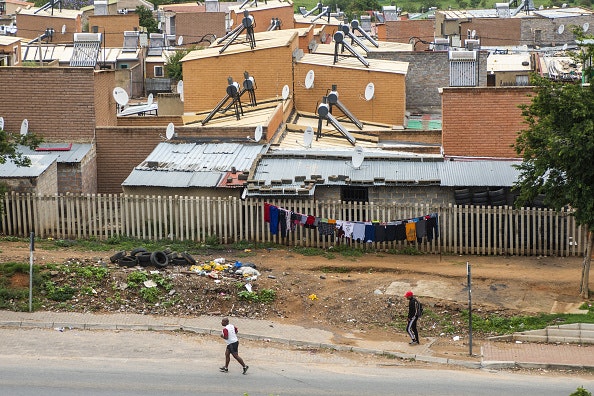
South Africans have been battered by power shortages for several years. These have worsened to the point that towards the end of 2022 the country’s electricity utility, Eskom, had only half of its power generation capacity operational.
This has forced Eskom to escalate its rotational power cuts. By mid-January 2023, users were typically without electricity for 8 to 10 hours a day. The situation is unlikely to improve much in the short to medium term. It’s expected that this year, especially as power demand increases in winter, the country’s electricity supply will decline to the point where power may sometimes be available for only 12 hours a day.
Nor is the situation expected to improve in the medium to long term. The national electricity utility is in a precarious financial situation.
The result is that South Africans are increasingly being forced to explore alternative sources of electricity. From big companies down to small households, entities are even considering whether it is possible to disconnect from the Eskom grid entirely and produce all their electricity in-house.
Fifteen years ago South Africans had access to abundant electricity at some of the cheapest pricing in the world. But since then electricity tariffs have skyrocketed at an average of four times the inflation rate.
Factories, mines, farms, businesses and individuals are now choosing to reduce their dependence on Eskom’s network by supplementing their electricity with in-house power generation. While this lowers demand on the Eskom power supply, the level at which this has been happening so far is insufficient to substantially reduce power cuts. The construction of larger private solar plants, already initiated by some bigger entities, as well as the growing interest in rooftop solar in residential areas, will gradually be felt. But this too will not stop power cuts completely.
Some entities may go as far as cutting themselves off from Eskom entirely. How feasible is this?
The obstacles
Getting by without a connection to the national electricity grid is not new to many South Africans. The apartheid government deliberately slowed electrification of black residential areas and especially of the country’s rural areas. Where there was electricity supply far from the urban centres, it was largely arranged for the benefit of mining operations and white farming communities.
In the 1990s under the new democratic government, Eskom made concerted efforts to expand its supply and services to some of the most remote rural areas. This garnered wide praise and even yielded the Financial Times Global Energy Award. The result was that the bulk of the country’s population began to enjoy access to what was then unlimited electricity. It was also relatively cheap.
But this had unintended consequences. Even when individuals felt drawn to the notion of carbon-free renewable energy, the simplicity of sourcing reliable, low-cost power from Eskom made all alternatives uncompetitive.
The second biggest obstacle has been that until about ten years ago solar was expensive. The cost then dropped dramatically between 2011 and 2021: in line with international trends, by a factor of 10.
The frequent Eskom power cuts accompanied by large price increases, and the drop in the price of solar electricity coupled with better storage options, have changed the equation completely.
The alternatives
Three on-site power options are briefly discussed.
Diesel generators: This well-established technology is already common in rural communities, and was adopted by many households and businesses during the earlier waves of power cuts. But the diesel option isn’t cheap and fuel is subject to price fluctuations. On top of this generators require maintenance, they tend to be noisy and they emit fumes.
Biogas: This is produced from rotting agricultural leftovers or organic waste that collects in municipal landfills. South Africa’s agricultural sector produces ample fuel for this technology, so it is likely to see wider application in farming communities. But it’s impractical for residential and business use.
On-site solar installation: South Africa has ample sunshine. In addition, solar panel prices have dropped massively over the last decade. Efficient large-scale battery storage options have also become increasingly feasible. The persistent downside of solar installations is that they won’t bridge lengthy cloudy spells.
The initial impetus for the grand move to solar rooftop has been provided by large enterprises with the financial capacity to invest in what amounts to full-blown private solar farms. These include mines, factories, shopping malls and agricultural estates. These enterprises expect to recover their investment costs in just a few years.
Smaller entities, including typical households, are beginning to follow this trend.
Exiting the grid, or not
While it’s possible in theory to install enough solar panels and battery storage to see a household through a week without sunshine, this is still far from a financially optimal solution.
Those that have invested in in-house solar capacity currently retain their access to Eskom electricity for periods when solar power is unavailable or not sufficient. Their primary aim is to lower their electricity bills and to have some backup power during the temporary Eskom blackouts.
Panel numbers and battery capacity can in theory be increased until it becomes possible to have electricity for days. In this way they can bridge lengthy periods of cloudiness. But it’s costly to acquire equipment.
South Africa is, however, a country that enjoys unusually many sunshine hours. This may well tempt those that are able to get by with occasional power interruptions to abandon the Eskom grid entirely, especially if punitive tariffs are imposed on those seeking only occasional Eskom backup power.
Medium and large companies requiring interruption-free power are however likely to opt for the hybrid model of self-generated electricity with Eskom backup. This trend has started and will grow. But it is clear that the past paradigm of complete reliance on Eskom is going to change forever.


