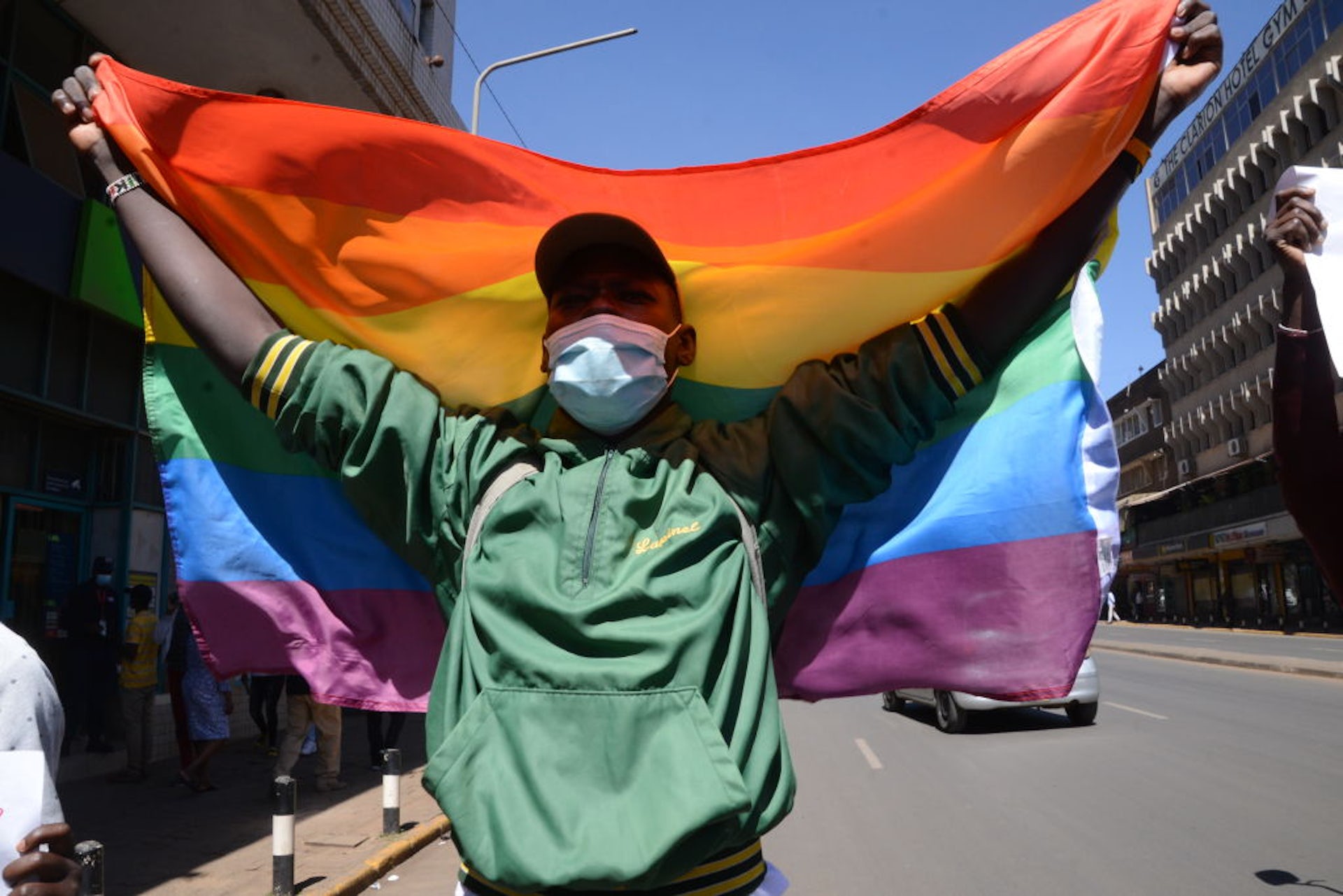
The Kenyan supreme court recently struck down a government decision to ban the registration of an LGBTIQ+ community rights organisation, sparking new homophobic rhetoric in the country. Kenya is one of 32 African countries that criminalises homosexuality. Those who identify as part of the LGBTIQ+ community are often discriminated against, harassed and assaulted. Lise Woensdregt and Naomi van Stapele, who have researched queer experiences in Kenya for nine years, explain the impact of this ruling.
What is the significance of the recent Kenyan supreme court ruling on a gay rights organisation?
The Kenyan supreme court ruled on 24 February 2023 that the government was wrong to ban the LGBTIQ+ community from registering the National Gay & Lesbian Human Rights Commission. The commission provides legal aid, and works to change the law and policy around LGBTIQ+ persons in Kenya. The commission celebrated this court ruling as a small but significant affirmation of its place in Kenyan society.
The ruling, however, didn’t alter the Kenyan penal code, which criminalises sexual acts “against the order of nature”. This, in effect, criminalises same-sex sexual acts. Those found guilty face up to 14 years in prison.
The law has fuelled stigma and discrimination against queer individuals, making them more vulnerable to violence.
We have been studying queer experiences in Nairobi, working closely with LGBTIQ+ self-led organisations. Those involved in our research have been experiencing mounting violence in recent years. The ruling triggered fears among members of the LGBTIQ+ community across Kenya of increased violence.
What have the political responses been?
A backlash against progress in gender and sexual rights is not uncommon. Pushing for progress in these areas can evoke hate and counter-offensives.
The Kenyan government has joined churches and mosques in their vitriol condemning not only the supreme court judges, but also LGBTIQ+ activists, organisations and citizens. For example, a member of parliament declared that being LGBTIQ+ is worse than murder. He described homosexuality as
a foreign practice from the West that’s not aligned with African cultures and as such, severe punishment should be meted out on offenders.
Kenya’s deputy president Rigathi Gachagua added that the government wouldn’t “condone” same-sex relations, a sentiment shared by president William Ruto. The president has previously said that unemployment and hunger are the “real” issues, not LGBTIQ+ concerns, and that tradition must be respected.
Kenya’s first lady, Rachel Ruto, has also claimed that LGBTIQ+ people are a threat to the institution of the family. Another member of parliament, Peter Kaluma, recently submitted a family protection bill that includes provisions to criminalise LGBTIQ+ organising, funding and, what is ominously termed, “behaviours”.
Read more: Kenya should decriminalise homosexuality: 4 compelling reasons why
Amid all this, LGBTIQ+ self-led organisations have struggled to offer a safe space for individuals to find belonging, acceptance and recognition, and to work towards social, political and economic justice collectively. Some, including those that provide HIV services, have had to close for fear of attacks.
Based on your research, what have you learnt about what it’s like for LGBTIQ+ people in Kenya?
Over our nine years of research into queer experiences, we’ve worked closely with grassroots LGBTIQ+ organisations and activists. We are continuously in touch with queer activists, who we speak with as part of our ongoing engagement with and support for queer self-led organisations in Kenya. They have told us that the recent supreme court decision was a step towards decriminalising same-sex sexual acts and was cause for celebration.
Unfortunately, the ruling unleashed vicious anti-LGBTIQ+ attacks targeting organisations, activists and citizens. One young queer activist* told us:
It is more dangerous now. Our friends are evicted (from their houses). Some have been beaten in the streets. In WhatsApp groups with family or work, people write anti-queer things, and you need to stay silent not to out yourself. You can lose everything if you are found out.
Another queer activist* told us:
In the WhatsApp group with parents from school, parents write how to warn our children (against) recruitment by LGBTIQ+ people, and I am in that app. I can’t say anything because it will harm my son.
*Those we interviewed are anonymous for safety reasons
What can be done to empower queer individuals and groups in Kenya?
Many Kenyan LGBTIQ+ self-led organisations collaborate with government agencies – such as the National Syndemic Diseases Control Council and the National AIDS and STIs Control Programme. They also work with several national and international civil society organisations on health, women rights, sexual and reproductive rights, and social justice. The silence of LGBTIQ+ partners is deafening. As one queer activist told us:
They eat with us, but when things get tough, we stand alone.
Eating together here refers to the funds many such organisations receive from donors to work with LGBTIQ+ self-led organisations.
The silence of civil society, including those who collaborate with LGBTIQ+ groups in Kenya and receive funding for this, and the international media is concerning. This silence sends a dangerous message to the government and religious organisations: they can freely target queer individuals and groups without facing resistance or solidarity from the broader community.
The fight for equality and safety for the LGBTIQ+ community requires sustained effort from national and international organisations and governments. On an individual level, financial support is needed as it can empower individuals who identify as LGBTIQ+, providing them with resources, such as the ability to relocate to safer locations.
In our research, several members told us of the risks they face in Nairobi’s low-income settlements where they live. In these settings, traditional patriarchal masculinity practices – breadwinner-ship, heterosexuality and dominance over women – are celebrated. Not being able to pass as heterosexual is perceived as risky.
Promoting safe spaces and access to stable incomes on a collective level can create a foundation that empowers queer individuals and groups to fight for dignity and respect.
The voices of those affected by anti-LGBTIQ+ violence must be heard and amplified by those who seek a more just and equal world. Only through collective action and solidarity can the LGBTIQ+ community be protected, valued and celebrated.


