Humans’ relationship with nature is broken. We’re transforming the Earth so dramatically that almost one million plant and animals species face extinction. Losing species unravels the tapestry of nature, changing how ecosystems function and, ultimately, damaging society too.
Nature brings huge benefits to people. Some are tangible. In South Africa alone, the value of these benefits to people is estimated at R275 billion annually (about 7% of the country’s gross domestic product). That value includes providing the country with crops, wood, water and fuel. There are other, less immediately tangible benefits, too: air purification, water regulation, water purification, recreation, tourism, and cultural and heritage value.
One of the things that contributes to ecosystem degradation in South Africa is invasion by alien plants. This is estimated to cost the nation R6.5 billion annually in damages and the government spends over R400 million annually clearing alien trees. Despite this investment, alien tree invasions continue to increase across the country.
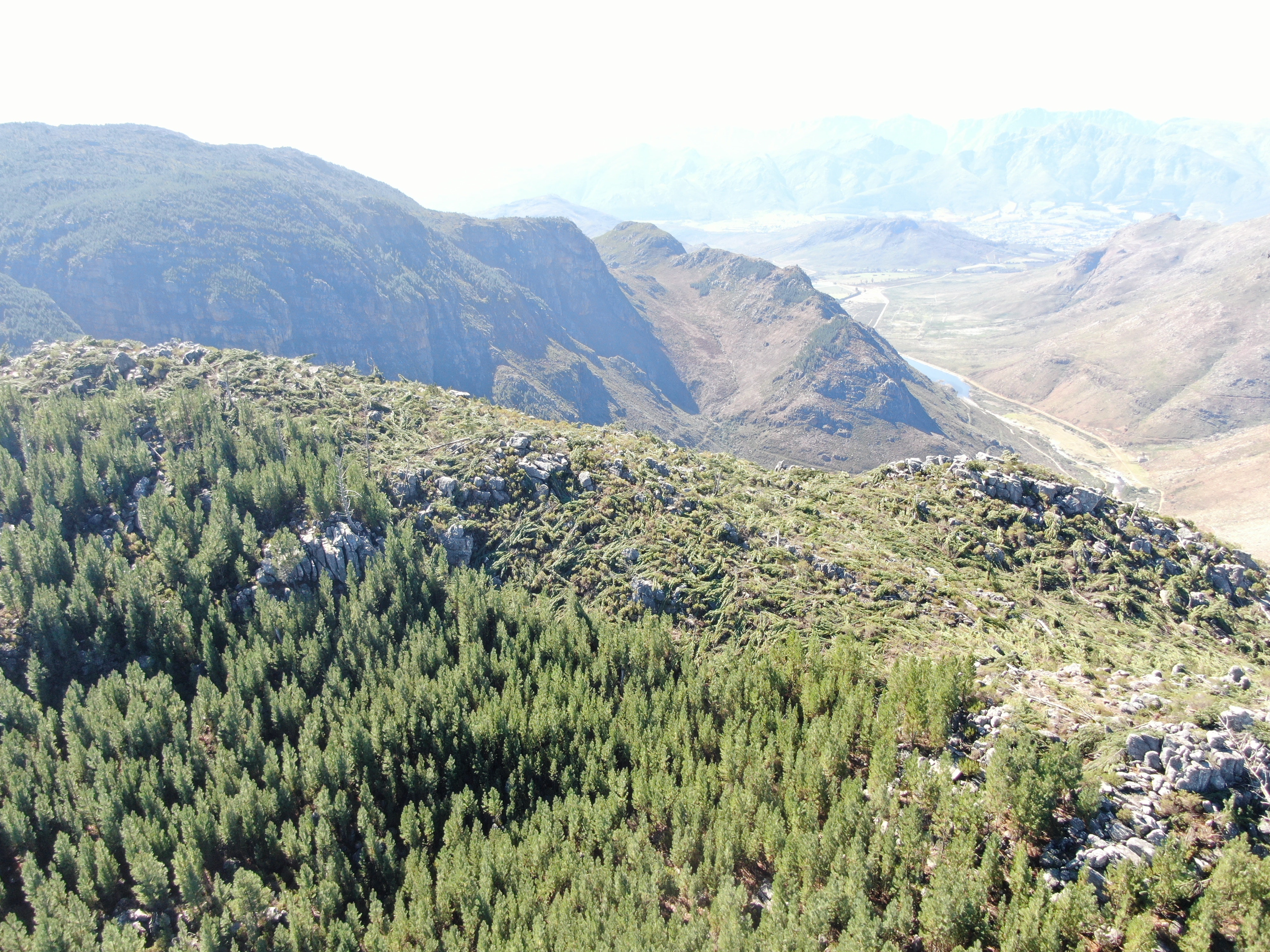
Alien trees threaten biodiversity, increase the risk of more intense and frequent wildfires and also guzzle water. This is an important factor in water scarce regions, like South Africa, that experience droughts.
Alien trees are invading mountainous areas across South Africa. These are important water generating regions and the trees threaten water supplies in several cities, among them Cape Town and Gqeberha. Both have experienced water shortages in recent years.
To find out just how much alien trees threaten water supply, we conducted a hydrological study. The research set up the most fine-scale, detailed models possible to try and estimate how alien trees affect streamflow in four small mountains catchments above some of Cape Town’s major dams. This study also used satellite imagery to input accurate information on the types of alien trees and where they are.
Key findings
The models predicted that clearing catchment areas fully infested with mature invasive alien trees can increase streamflow by between 15.1% and 29.5%. Although the catchments modelled are currently not fully invaded, this presents a strong argument for preventing full invasion.
The study also found that streamflow gains from clearing alien trees from rivers were almost twice as high as clearing the alien trees from the surrounding land. That’s because alien trees in rivers have access to an almost endless water supply and so use more.
Another interesting finding was that clearing alien trees seemed to have a greater impact on the mid to low flows – in other words during the dry season when the river flow is low, rather than the high flows – during rainfall events in the wet season when the rivers are full.
This makes sense: during rainfall events there is so much water that the negative effects of alien vegetation become less evident. But it is important because it implies that clearing alien trees makes more water available in between rain events, and especially in the dry season. This is useful to improve water security during droughts.
The positive effect of clearing alien trees was also predicted to be higher in dry years compared to wet years. This suggests that clearing alien trees is a viable measure to ensure there will be more water when it is most needed.
It is useful to explain what the savings predicted by our models mean to Cape Town’s overall water supply – and to consumers. For instance, we found that clearing the current levels of invasion in the catchments above the Berg River Dam (currently 9% invaded) could increase streamflow by over 1%. This doesn’t sound like a lot, but it could mean an increase in mean annual volume of as much as 1.5 million m³, or 4.1 million litres per day.
According to the 1:50 year yield model for the Berg River Dam, this equates to a 0.2% increase in yield. Putting this into perspective with a quick first order calculation, from the City of Cape Town’s Water Strategy, we have a value of R9 per kilolitre for the operating costs of desalination. If we multiply this by the 0.2% increase in yield each year from clearing alien trees above the Berg River Dam, we get to an estimated annual equivalent value of that water of around R2 million.
However should the Berg River Dam catchment become fully invaded with alien trees, this would reduce the 1:50 year yield by 4.3%, costing us about R38 million each year if we had to source this water elsewhere.
Reversing the damage
Our findings are important for several reasons. First, they can be used to encourage society to redouble its work clearing alien vegetation. Second, they confirm that improved water security is possible for South African cities during their dry seasons or droughts.
It is critical that more work be done to halt and reverse the degradation of ecosystems. This is especially urgent in what the United Nations has dubbed the Decade on Ecosystem Restoration. We all have a chance to undo some of the damage we have wrought – and, as our research shows, clearing alien trees must be part of these efforts.
Jason Hallowes contributed to this article. We thank Dr James Cullis for help with the yield calculations and cost estimations.


