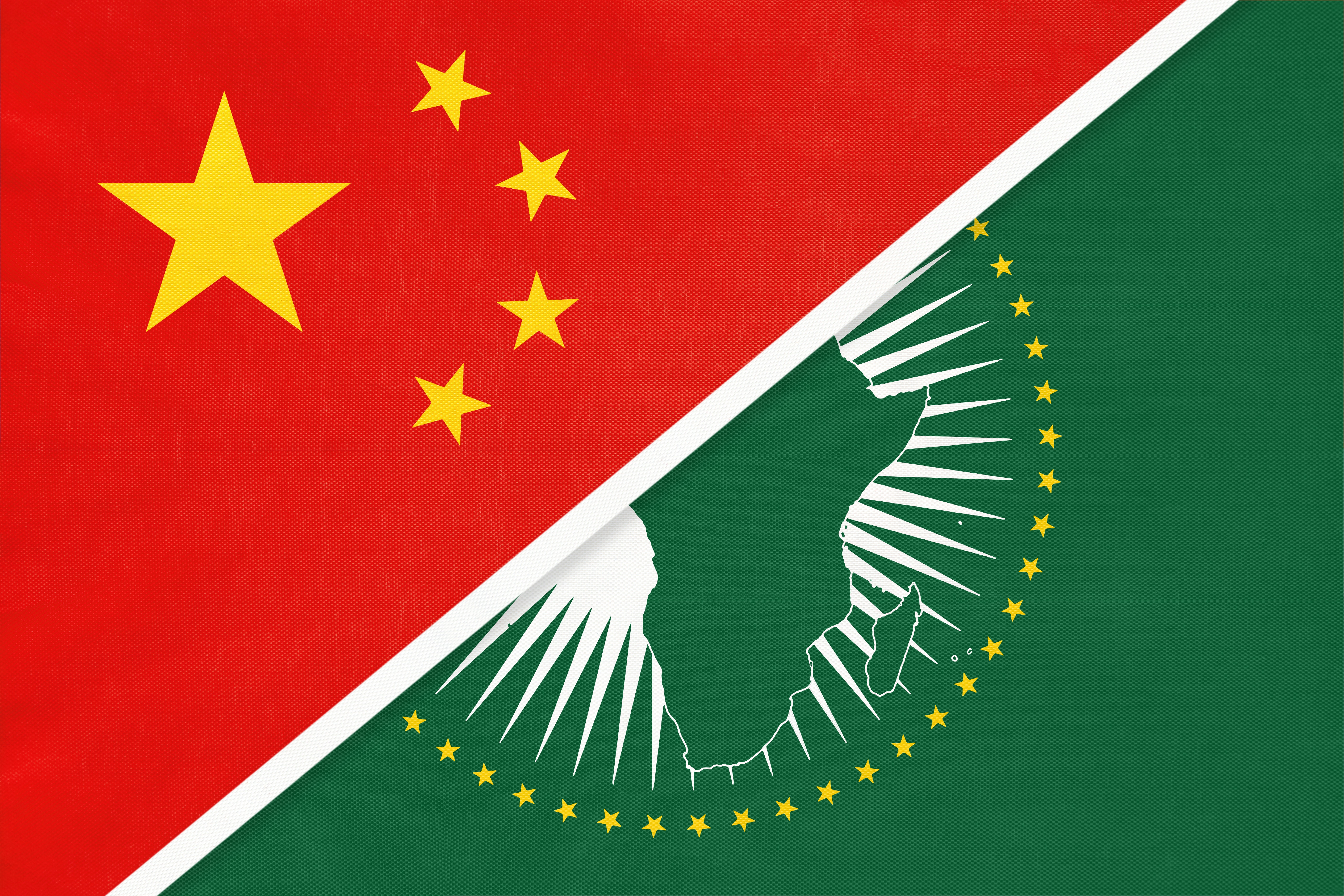
The topic of China-Africa relations presents an opportunity to rethink the territorial parameters of African studies. In particular, it can help shift attention away from the Atlantic world as the dominant focal point of connections between Africa and the wider world.
The problem is that current scholarship and public opinion have often drifted into old frameworks and colonial motifs.
To take one example, China’s ambitions have frequently been construed as part of a new ‘Scramble for Africa’ with African countries falling victim once more to an outside global power. Another example is the uncritical use of the Orientalist stereotype of ‘dragon’ to symbolise China and its perceived aggressiveness.
I explore these issues of framing, narration and analysis in a recent article. I argue that these approaches have created problematic misrepresentations that have resulted in different parts of the continent’s long history with China being ignored.
More specifically, the Cold War was a robust period of Afro-Asian networking and solidarity against Western neo-colonialism. Older still are local histories of Chinese immigrant communities on the continent in countries like South Africa. These experiences need to be better integrated into our understandings of China-Africa relations in the present.
The uses of history
History can be a useful reference for understanding what is happening today. But simply rehashing imperial narratives as a guiding framework can obscure local perspectives and alternative histories.
In the case of China-Africa relations, the repackaging of old paradigms can conceal a more layered set of foundations and archives.
One example of this more complex history is that of the Cold War. During this period China became a supporter and ally of African liberation movements and postcolonial states. Diplomatic meetings like the 1955 Asian-African Conference in Bandung, Indonesia, set the stage for these relationships. The conference triggered a long history of transnational interactions during the latter half of the twentieth century, reaching high points with Premier Zhou Enlai’s tour of ten African countries in 1963 and 1964.
The best known example of China’s influence during this period was the popularity of Maoism, which gained traction as a revolutionary and development ideology. With its emphasis on the peasantry as a vanguard for political and economic change, Maoism resonated with African activists and intellectuals. They saw themselves as confronting a similar set of conditions across the continent. Julius Nyerere’s Maoist-influenced Tanzanian state and ujamaa program demonstrated how Chinese approaches to development could inspire African economic projects.
Yet it is also important to recognise the long-standing presence of Chinese communities on the continent. Chinese immigration to southern and eastern Africa began over a century ago. South African journalist Ufrieda Ho has addressed this history in her memoir, Paper Sons and Daughters. Her multi-generational account describes her family’s experience in South Africa before, during and after apartheid, capturing both the presence and marginality of Chinese South Africans, who have been left out of mainstream historical narratives. These social histories have also largely been absent from discussions of China-Africa relations.
A new approach
The invisibility of these local histories is partly due to prevailing academic definitions of ‘African’ identity. This identity remains deeply racialised with ‘Africanness’ and ‘Blackness’ seen as synonymous.
However, the problem with this type of race-territory correspondence becomes clear when ‘European’ identity, for example, is always assumed to be ‘white’. Indeed, this logic betrays a lingering colonial worldview and taxonomy that fixed race and place together.
A more expansive, decolonized understanding of ‘African’ identity could remedy these engrained habits of perception. A number of communities that have deep histories on the continent, whether Chinese South Africans, Indian communities in East and southern Africa, or Lebanese communities in West Africa, point to other racial and cultural ways of being ‘African’.
Specific to China and Africa today, this rethinking of ‘Africanness’ can provide a way of repositioning China-African relations beyond the diplomatic rhetoric of trade and development to emphasize instead local histories of African-Chinese communities that long precede our global present.
Returning to the Cold War, the idea of ‘Afro-Asianism’, which first surfaced during the mid-1950s as a result of the Bandung conference, offers another usable past that can contribute to this new orientation.
Afro-Asianism was sustained in different ways by the Afro-Asian People’s Solidarity Organisation founded in Cairo in 1957, the Afro-Asian Writers Association established in Tashkent in 1958, and the Non-Aligned Movement that started in Belgrade in 1961. As an ideology, it promoted self-determination and the moral ideals of liberation struggles, including racial and gender equality, human rights, and economic justice.
Reviving this idea could open the door to a new form solidarity against the exploitation and abuses witnessed on both sides of the ‘China-Africa’ equation. These problems can be seen in land agreements by African governments that do not benefit pre-existing residents. It can also be seen in anti-Black racism in China.
A refurbished ethos of Afro-Asianism could provide an antidote to such problems and foster new forms of community and internationalism. Furthermore, redefining African identity to include the historical presence of Chinese communities could encourage and sustain more meaningful understandings of transnational connections over a longer period of time.
To rethink how we look at Africa’s relationship with China requires that we move beyond historical cliches, with African countries always falling victim to outside powers. Fortunately, there are multiple histories of substantive networking and cosmopolitan conviviality between Africa and China to make this possibility happen.


