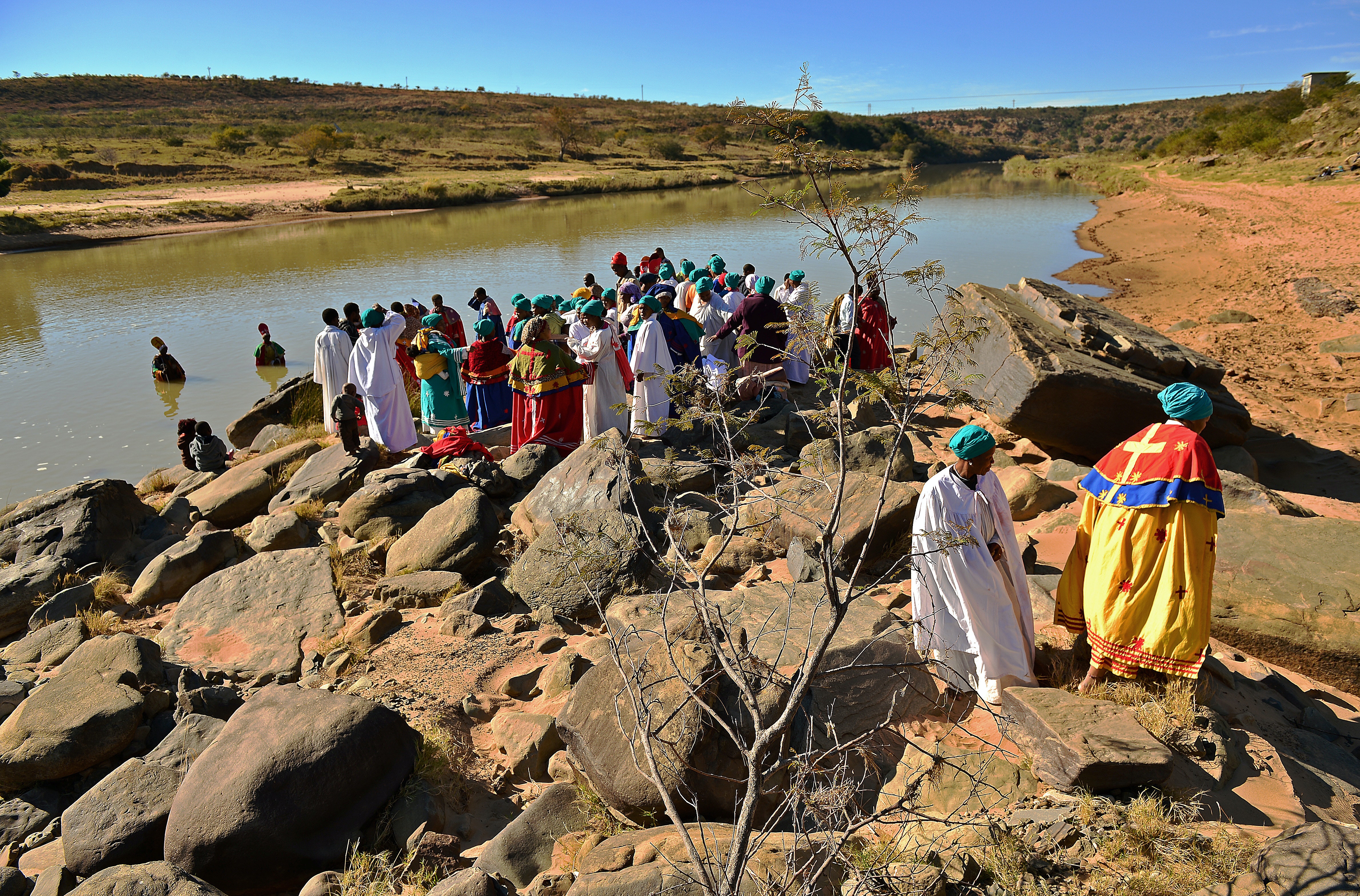
Water is a scarce commodity in much of Africa, particularly in southern Africa. This is well symbolised in the name of the Botswana national currency, pula (rain). When tragedies like flooding and drowning take place, it may seem inappropriate to speak of the scarcity and commodity of water. For example, members of the Johane Masowe church drowned in a flash flood during a baptismal ceremony at a river in South Africa recently.
But part of the attraction of moving bodies of water to religious groups may be rooted in this very scarcity. Whatever is scarce is also precious and whatever is precious might be termed sacred. Religions by whatever name venerate the sacred. Think, for example, of places like the city of Jerusalem, which has sacred status in Judaism, Islam and Christianity. Or think of Mecca for Islam, or the River Ganges in Hinduism.
Religious adherents are drawn to sacredness, and they often go to great lengths to be close to it. Pilgrimages in all the religions of the world are based on this principle, including African pilgrimage. Holy sites like Zion City Moria is a principal pilgrimage destination for members of the Zion Christian Church in South Africa, for example.
Another characteristic of the sacred is that it can be dangerous. It is not for idle reasons that the “fear of God” is a well-trodden theme in biblical literature. Readers are encouraged to be cautious of the sacred.
Most religious groups in southern Africa are broadly Christian, drawing on a common pool of biblical knowledge in constructing their rituals and spirituality. Throughout the Bible, the miraculous nature of rain and water is emphasised. In one passage Moses secures life-giving water by striking a rock with his staff. In another the prophet Elijah illustrates his divinely sanctioned role by praying successfully for rain at Mount Carmel. In the Christian New Testament, Jesus walks on the water of the sea of Galilee, illustrating his sacred power. When his disciple Peter attempts to copy the act, his fear proves greater and he must be saved. In another instance Jesus shows his submission to the sacred by being baptised in the River Jordan.
Water baptism has been a central rite in the Christian church since antiquity. Over the centuries it became institutionalised as a once off ritual administered to church members either at infancy or at a later stage upon their confession of faith.
Different church groups have battled over which form of baptism is the theologically more correct option – infant baptism or the baptism of confessing adults. But in more recent times, especially in many African Christian communities, a completely new version of the ritual has arisen. This is where a church group conducts not only once off baptisms of new members but also subsequent baptism-like rituals at natural bodies of water at specific occasions for a variety of reasons.
Ancient spiritual rituals
In conducting rituals connected to water, African Christian churches often also tap into ancient remnants of spirituality that have existed in these regions for thousands of years. I have written about this as instances of religious hybridity.
The San people of southern Africa were known to conduct “rainmaking” rituals at special sites for many centuries. Rain rituals are still at the forefront of especially rural spiritualities. Modjadji, the rain queen, is perhaps the best-known ritual specialist in the northern part of South Africa. There have been many other lesser-known ritual specialists with similar rain and water-related roles throughout southern and central Africa. For example, the anthropologist Penelope Bernard has written about “living water” in South African Nguni healing traditions. In these divine-healing traditions mythical underwater snakes or mermaids are mentioned in connection with sacred water.
When Christian missionaries first attempted to establish themselves among such communities, they often encountered questions about their ability or inability to bring rain. Often their own position as bearers of good news was accepted only after they had prayed, and rains had fallen. Successes for Christian missionaries occurred when powerful rain ritualists occasionally converted to Christianity. Such rain specialists often went to special sites to perform their rituals, often at or near pools of water.
In pre-Christian tradition certain mythical animals were often associated with such places, typically snakes, as mentioned above, which were believed to have mythical and spiritual connotations. Nyami Nyami, the Zambezi river god, is perhaps the best known of such entities in the region.
When ordinary people go to visit apparently ordinary water sites they may well be on a sacred journey. Tragedies, when they occur, should be mourned, but the practice of water rituals should not be condemned. Water is life, after all, and therefore sacred.


