School tech: teachers explain what they need to make it work better:
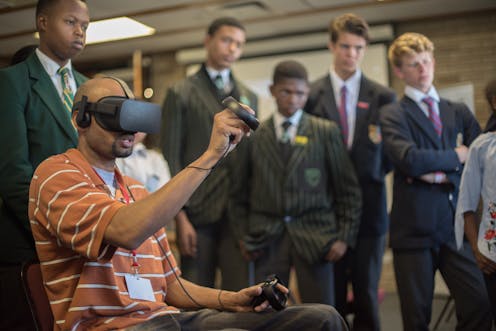
At the start of each new year there’s a global flurry of excitement and attention around education’s new directions. Technology has become a key part of the discussion. Increased pressure on educators to improve student performance, combined with increasingly disconnected, inattentive students, means that schools and universities are desperate for solutions. So they look to technology for change.
As 2020 started, for instance, pundits predicted that schools will buy ever more educational software. These writers believe that educational technology – enhancing teaching and learning with technology – will continue to take centre stage both at schools and universities.
This is happening despite numerous studies which suggest technology is not bringing about the learning gains that were expected.
One of the reasons this technology may not be delivering on its promise is that educators – teachers and lecturers – don’t get much say in decisions about what, when and how to use technology. Research has identified several factors that must be in place before educational technology is effectively used: these include leadership and vision, positive attitudes among teachers and proper training.
But, as researcher and academic Irena White has argued, the key factors that affect how teachers use and adopt educational technology are “dynamic, non-linear, (and) complex”. A clearer understanding of teachers’ needs is required if schools and universities are to be better prepared for a future where technology is key to teaching and learning.
This is what prompted me, just more than five years ago, to start asking educators the fundamental question: “What do you think is most important for successful technology-based teaching?” I’ve done this using an innovative, dynamic wiki survey tool called All Our Ideas. It allows respondents to add items they feel should be included, which are then voted on by future respondents. It’s a powerful correcting approach, which I’ve explored in my other research, and has resulted in rich data and insights into teachers’ needs.
Three of the top 10 items or “needs” were user generated. This shows why it’s so crucial to listen to stakeholders, such as educators – as we may not even be asking the right questions or identifying the right issues when it comes to their concerns.
What’s emerged is a sort of hierarchy of needs that can help schools and universities make informed decisions about how best to implement effective technology-based teaching.
Hierarchy of needs
In the five years since I launched the survey, approximately 900 votes have been cast by educators from all over the world.
Analysing the results shows that a range of needs are important for a successful approach to teaching with technology. Many of these echo what’s already been reported in previous research, including my own: having the basic technological platform in place, effective training, support, and social aspects like school support communities for idea sharing.
However, what is is particularly interesting is that the top 10 factors align closely with psychologist Abraham Maslow’s hierarchy of human needs. This model helps to explain human motivations.
Needs lower in Maslow’s pyramid, such as food, sleep and clothing (what he calls physiological needs) must be satisfied before higher needs such as respect, self-esteem and freedom (esteem needs) can be tackled. When considering the top 10 needs for effective teaching with technology, it becomes apparent that a similar hierarchy exists.
At the most fundamental “physiological” level are needs associated with working technology and appropriate training. The second “safety” layer sees the need for supportive leadership and access to experts. The third set of “love and belonging” needs is associated with teachers experiencing a sense of buy-in and having networking opportunities. The fourth level of “esteem” needs relates to the freedom of teachers and students to try new things. The fifth and highest layer of “self-actualisation” is the need for ultimate seamless integration of content and digital-age teaching approaches.
Addressing all of these needs, beginning with the most “physiological” basic needs is, in the view of teachers, key to a successful move towards effective technology-based teaching and learning.
Solutions
So how can this be done?
Firstly, teachers’ most fundamental needs must be addressed. They want working technology, along with appropriate training in technology and in how it can be applied to teaching. In most developing countries, including South Africa where I conduct my research and teach, while working technology is improving, the basic needs around training are woefully lacking.
Once these needs have been addressed the second level – support needs – can be tackled. Here, structures must be put in place to provide support to the teachers both internally from school leadership and externally from experts in technology and teaching methods.
With a supportive environment in place, the third level of social needs should be addressed. A positive active social space where teachers can connect with other teachers and share successes and failures, needs to be developed and facilitated within and between schools.
Then, what I’ve grouped as “space needs” must be addressed. Teachers and students need space: to make mistakes, to experiment, and to try new approaches. Teachers need space to try new things without fear of sanction. Students need space to experiment with new ways of engaging with content.
Finally, once all of the other needs have been addressed, the need for seamless integration of technology and approaches to teaching and learning in schools can be addressed. This would see teaching enhanced by technology in such a way that education is foregrounded while technology becomes invisible. This should be the educational technology’s ultimate goal.

Dr. Craig Blewett is the author of the book "Wake Up Class!: 5 Activating Digital-Age Pedagogies that will Revolutionize your Classroom" and runs the website https://www.act.click/ that trains educators to teach effectively with technology.
Source: The Conversation – Articles (AFRICA)
Read more on The Conversation.
Join the fun: Add Your event | Submit a Press Release | Add your listing.


