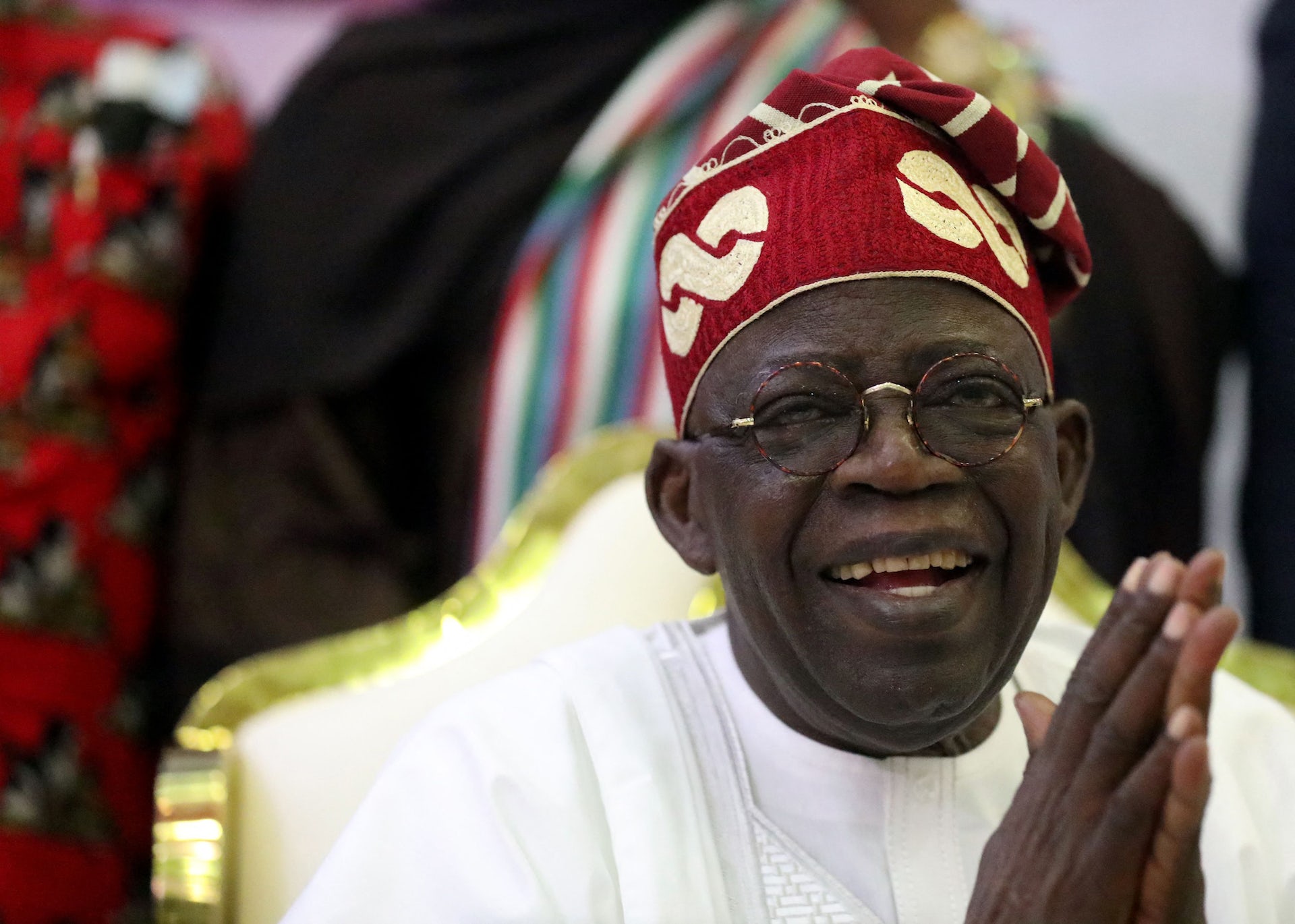
Bola Ahmed Tinubu will be sworn in as president of the country on 29 May 2023. That’s if the courts uphold his election victory.
Tinubu won the highly contested 25 February presidential election with 37% of the total votes. At least two leading opposition candidates have filed separate legal challenges to the election results.
The new president will face many challenges, chief of which is insecurity. Multiple armed conflicts, high levels of organised crime and worsening food insecurity persist around the country.
The United Nations High Commissioner for Refugees estimates that some three million Nigerians have been internally displaced by insecurity. The country’s geographical regions are associated with distinct ethnicities and religions. Each has experienced different forms of insecurity:
We have published work on communal conflict in Northern Nigeria, South Sudan, the Central African Republic, and Kenya and have worked in community development. Based on the lead author’s work on conflict in Nigeria, we are of the view that Tinubu’s presidency could increase tensions in central and south-east Nigeria, while reducing violence in the north.
Our research indicates that Nigeria’s sociopolitical environment is characterised by strong patronage networks. And that ethnic and religious identities strongly overlap and reinforce political cleavage. The perceived exclusion of one religion or ethnic group can fuel tensions that quickly turn into a violent ethno-religious crisis.
Tinubu’s unprecedented choice of a fellow Muslim as vice-president is likely to increase ethnic and religious tensions in the north-central zone. Allegations of discrimination against Igbos in Lagos could spur Biafra-related activism and violence in the south-east.
His promises to create more employment opportunities and establish civilian neighbourhood watch groups hold potential for reducing the Boko Haram conflict and banditry in the north-east and north-west.
In the north-central region, Tinubu’s presidency will likely face more communal conflicts between farmers and herders. These have long interlinked with ethnic and religious tensions.
The drivers of violence
Tinubu, a Muslim from the south-west, won the election alongside another Muslim from the north-east. Thus the new administration is a “Muslim-Muslim ticket”.
Since 1999, all past administrations have semi-officially shared power in religious and ethnic terms to manage sectarian sentiment. Nigeria is a secular country with almost equal Muslim and Christian populations.
The Christian Association of Nigeria denounced the Muslim-Muslim ticket. Religious mobilisation was evident throughout the campaign.
Tinubu received the most votes and met the constitutional requirement of at least 25% of the vote in 25 of Nigeria’s 36 states. This indicates a nationwide appeal. But the “Muslim-Muslim” perception may increase religious polarisation. It may undermine the new government’s ability to address the causes and consequences of communal violence.
In the south-east region, the Indigenous People of Biafra will likely continue to agitate for independence. The separatist group has been protesting the marginalisation of the ethnic Igbo population.
The presidential candidate Peter Obi, an Igbo, enjoys a massive youth following in southern Nigeria. Numerous Igbo elders and Obi’s allies dissuaded the group from attempting to sabotage the election.
But Obi’s third-place finish, amid the electoral body’s logistical challenges, allegations of voter suppression and ethnic profiling of Igbos in Lagos, will likely increase Biafra-related activism and violence.
During the campaign, Tinubu pledged to negotiate with Indigenous People of Biafra. In contrast, Buhari had treated it as a terrorist group.
In the north-east region, Boko Haram and the Islamic State of West Africa are expected to challenge Tinubu’s administration. They previously challenged Buhari’s and Goodluck Jonathan’s.
Tinubu’s manifesto frames the insurgency as a security problem spawned by a socioeconomic crisis. It outlines the need to create jobs and revamp the nation’s security architecture. But his policy document is silent on reintegrating Boko Haram members into society.
In 2013, Tinubu sparked controversy when he advocated amnesty for Boko Haram members. Two years later, the Buhari administration set up “Operation Safe Corridor” for those who surrendered. The military claims the programme has reduced Boko Haram’s fighting force.
A recent survey shows that people appear to be more receptive to the return of former insurgents than previously thought. Tinubu’s vice-president-elect, Kashim Shettima, has previously called for amnesty – so Tinubu will likely continue the programme.
Finally, in the north-west, militias known as bandits continue kidnapping for ransom, stealing cattle and killing people. According to the Armed Conflict Location and Events Dataset, bandits killed more than 2,600 civilians in 2021. This is a staggering increase compared with 2020. Bandits have no stated political aim.
The conflict began as a land dispute between Hausa farmers and Fulani herders. It has been partly linked to the impact of climate change. In January 2022, Buhari (a Fulani) banned the militias as terrorist groups and deployed the military.
Since then, military air raids have repeatedly killed civilians instead of militants.
Contrary to Buhari’s approach, Tinubu called for engagement with violence-affected communities. His policy document emphasises using civilian neighbourhood watch groups to address banditry. Whether these groups will be limited to non-violent conflict resolution or engage in armed vigilantism is unclear.
Armed vigilantes may increase violence, as research on civilian defence militias in the Boko Haram conflict indicates.
Way forward
The new administration faces enormous challenges in addressing widespread armed conflict and deep societal divisions.
Lawmaking and law enforcement are critical to dealing with the root causes of insecurity, such as poverty and unemployment. It’s also important to have ethnic and religious balance in the appointment of crucial security positions.
This could reduce tensions and make dialogue possible, particularly with community leaders and religious associations.


