Self-testing: a potentially powerful tool for fighting HIV:
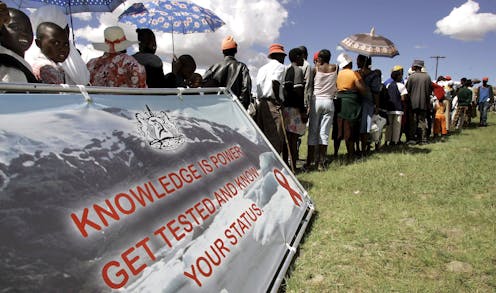
In recent years, more emphasis has been placed on testing for HIV. The idea behind this drive is that if people know their status, they’ll be able to seek treatment and support. One approach that’s become fairly common is self-testing, or self-screening.
This is when a person collects their own specimen (blood or oral fluid), performs a rapid diagnostic test and interprets the result themselves. This type of test can also be done by a health provider or peer educator. The blood is obtained by pricking one’s finger; the oral fluid is swabbed from the inside of your cheek.
The rapid diagnostic test detects HIV antibodies in the blood or oral fluid. If the result is positive, people are encouraged to go and get their blood tested by a professional for confirmation.
Self-screening for HIV has been touted as a disruptive innovation: one that can help to close the HIV testing gap by reaching key and under-tested populations who won’t necessarily want to visit a doctor or clinic for testing. These under-tested populations include sex workers, men who have sex with men and young women aged between 15 and 24.
Research shows that HIV self-screening yields highly accurate results even when carried out by untrained lay people. Two years ago the World Health Organisation published guidelines recommending that self-screening be included in countries’ existing testing services. So far, 59 countries have implemented HIV self-screening policies and 53 others developing these policies.
Access to HIV testing is an important factor in reaching the United Nations’ “90-90-90” goal: by the year 2020, 90% of people with HIV must know their status, 90% of people with HIV must be on antiretroviral treatment, and 90% of people on treatment must be virally suppressed.
It’s estimated that only 75% of people around the world know their HIV status. This figure is higher in South Africa where an estimated 85% of people with HIV know their status.
Read more: HIV, AIDS and 90-90-90: what is it and why does it matter?
To help South Africa reach this first “90”, my colleagues and I at the University of the Witwatersrand, Wits Reproductive Health and HIV Institute are collaborating with a number of organisations to scale up HIV self-screening among under tested populations. These include men, who have lower testing rates than the general population, young people, sex workers and their networks (clients, partners and peers).
Self-screening
From November 2017 to September 2018, we distributed HIV self-screening kits to primary recipients (clients directly receiving the kit) and secondary recipients (people related to primary recipients, for example their sexual partners). These were distributed in four of the country’s nine provinces.
The kits were handed out in a number of different places including existing HIV testing mobile services, and selected spaces in communities such as shopping centres. HIV self-screening kits were also distributed in workplaces, taxi ranks, and at health facilities for partners of pregnant women and people living with HIV. Participants in our sex worker programmes were also given self-screening kits to share with their networks.
As part of the initiative, follow-ups were done telephonically with a randomly selected and representative sample of people who received kits in communities, workplaces and taxi ranks. We also followed up with everybody who received self-screening kits at health facilities and through our sex worker programmes.
The aim is to encourage people to use the HIV self-screening kits and interpreting the results themselves. If the results are positive, the person must have the results confirmed by a health professional. If the results are still positive, the person should start HIV treatment immediately.
By the end of September 2018, we had distributed 505 836 kits. A majority – 62% – went to men; 12% were received by people who had never tested for HIV before; and 45% of the recipients had not tested in the last year. The WHO recommends testing for HIV every six to 12 months.
In less than a year we were able to reach the target populations. Our project is ongoing and forms part of a Unitaid-funded HIV self-testing Africa initiative, which is evaluating HIV self-screening around the continent.
Our findings, is informing the implementation of HIV self-testing in South Africa, and other countries. The findings will also be published in open access journals early next year.
Mohammed Majam, technical head of HIV Self-Testing at the Wits Reproductive Health and HIV Institute contributed to this article.

Joel Msafiri Francis received funding from HIV Research Trust, UK, THRiVE consortium, Global Fund Round 8 (HIV-Initiative), HIV Implementation Science fellowship, NIH grant through Harvard School of Public Health, Global Health Department.
Source: The Conversation – Articles (AFRICA)
Read more on The Conversation.
Join the fun: Add Your event | Submit a Press Release | Add your listing.


