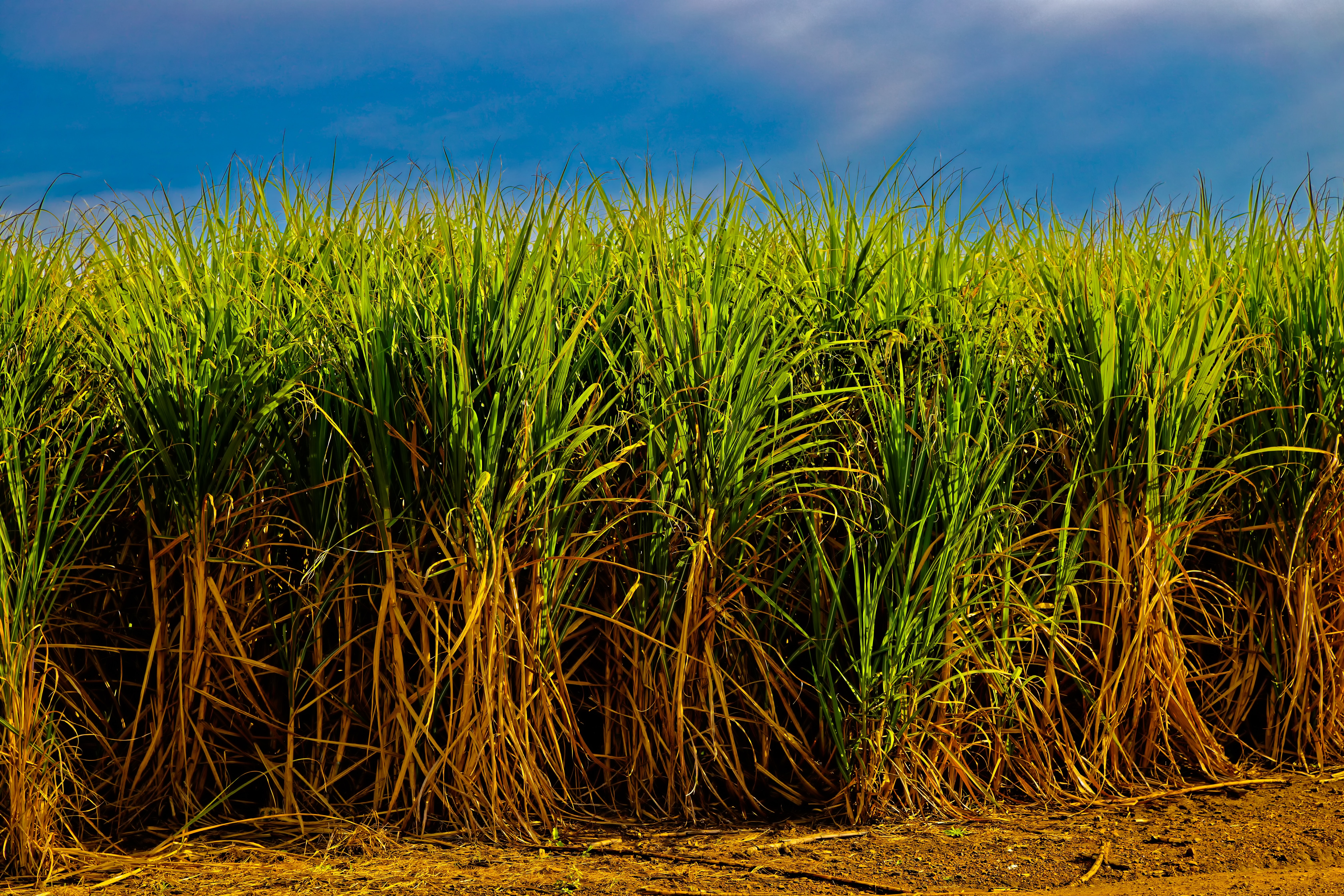
In some parts of South Africa’s Mpumalanga and KwaZulu-Natal provinces, sugarcane fields stretch as far as the eye can see. The crop is more than just a treat for those with a sweet tooth: in 2017 the country’s sugar industry had an estimated value of more than R12 billion; of this, sugarcane production alone was worth R5.1 billion.
But the sugar industry is shrinking, at least partly because many people are eating less sugar, for health reasons. How, then, might sugarcane production continue to extract value? We believe the answer lies with the crop’s waste material.
Sugarcane bagasse is the fibrous material left over after the crop has been crushed to extract its juice to make sugar. About 54 million tonnes of sugarcane bagasse is produced annually around the world. The inadequate disposal of this bagasse leads to environmental pollution and attracts many insects when left unattended.
But there are ‘jewels’ among the piles of ash that remain once bagasse is burned. With the right chemical and physical processes, valuable nanoparticles of silicon and silica – which are used in the construction, pharmaceutical, cosmetic and detergent industries, among others – can be generated.
Scores of chemical processes are being tested and fine-tuned to extract silica from bagasse ash, and from there synthesising it into silicon particles. Some tests are fairly advanced but nobody has yet cracked the code to producing high grade, pure silica at levels high enough to meet industrial demands.
Our recent work took a ‘green’ approach to the extraction process. First, we confirmed what a growing body of research has shown: that sugarcane bagasse ash is a natural resource of silica which should be harnessed for industrial purposes. And, using organic acids and bases, we showed what processes might be used for a more environmentally friendly extraction procedure.
Many forms and uses
Silicon is a chemical element. It is the second most abundant element in the earth’s crust after oxygen and is believed to account for 27% of the make-up of the average rock.
Most people have likely seen silicon in the form of silica (also called silicon dioxide), the chemical compound made up of a combination of silicon and oxygen. Silica is most commonly found in nature in the shiny, crystalline mineral quartz. It is also present in plants such as sorghum, wheat, corn and sunflower.
Silicon comes in many forms and uses. As silica it is used in the making of brick, concrete and glass. In soluble form, silica is widely used in the glass, ceramic, and cement industries, as well as in the cosmetic, pharmaceutical, and detergent industries as bonding and adhesive agents.
In its elemental form is it a wonderful semiconductor of electricity and is commonly used – in a powdered form known as nano silicon powder – in the production of microchips and solar cells. Silicon Valley in the US, home to countless electronics and computer companies, is named in the element’s honour.
But despite silicon’s abundance, its many applications means that industry can sometimes run short of the metals produced from it. In 2021, for instance, a shortage meant that China had to cut its silicon metal production; this pushed up global prices by some 300%.
That’s where sugarcane bagasse enters the picture. Increasingly, research – including our own review – has shown that the ash of sugarcane bagasse offers one of the cheapest sources of silica production, comparing favourably with, for instance, mining the substance from sand.
In search of purer silica
Silica is stored abundantly in soils and is absorbed in large amounts by plants. This is not harmful and, research suggests, may even be beneficial to the plants. In sugarcane, silica is stored in the plants shoots – which will eventually be among the bagasse. And it’s from this that researchers are working to extract silica for conversion into silicon.
It’s not a simple process. The ash generated in these industrial processes typically has a high impurity content and is laced with metals like iron and aluminium oxides. This hinders the process of obtaining silica that is pure enough for use.
There are also environmental concerns. That’s why we took a ‘green’ approach in our most recent research. We used organic materials which are both eco-friendly and easy to handle, and found this was an effective way to extract silica from the sugarcane bagasse. Some further fine-tuning is needed: there were still small impurities that will need to be weeded out if this method is to produce silica of high quality and meet the necessary standards for industrial applications.
Overall, our approach could help to further lower the costs of extracting silica from sugarcane bagasse and is a good way to manage what might otherwise be little more than waste.


