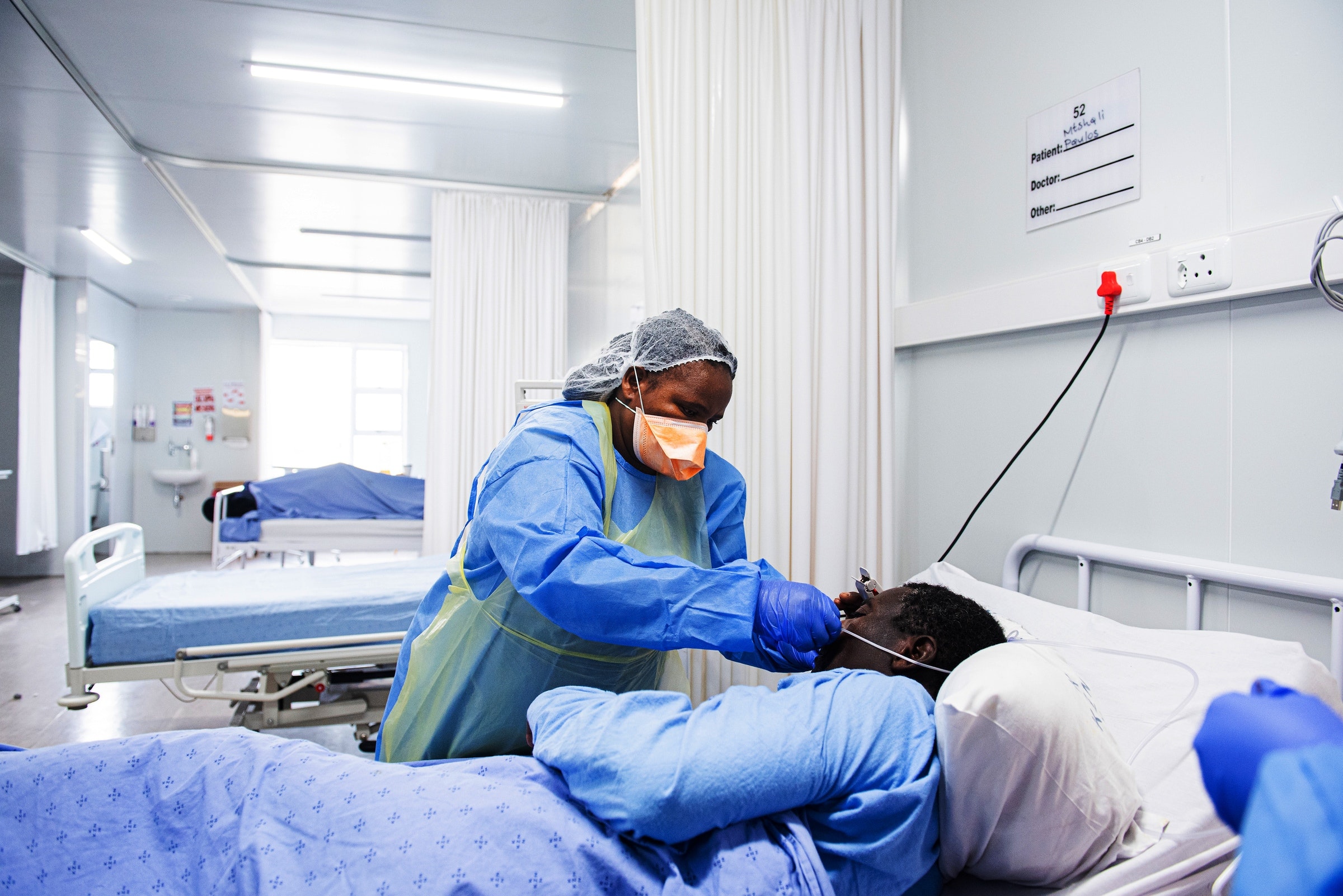
Everywhere, patients have died from COVID-19 when patient numbers exceeded the capacity of the health system. The number of doctors, nurses and oxygen points just wasn’t enough.
People died from a lack of oxygen because no one noticed that their oxygen mask wasn’t well positioned or that their oxygen saturation was dropping. They died of dehydration or kidney failure because they didn’t receive enough water. They died because there weren’t enough staff, or because new staff added in an emergency were inexperienced and poorly organised.
There are a number of things every hospital can do to prevent unnecessary deaths when the system is overloaded.
COVID-19 has exacerbated the global shortage of health workers, already estimated to be over seven million before the pandemic. Where there are not enough doctors and nurses to deliver medical care, one solution is to move certain tasks to less specialised health workers, a process called task-shifting.
There is extensive public health experience with task-shifting and substantial evidence that this can reduce costs and improve efficiency in the areas of HIV, tuberculosis (TB) and other diseases.
In January 2021, during the peak of the second wave of COVID-19 in South Africa, I coordinated a support intervention of Doctors Without Borders in a large hospital in the country’s KwaZulu-Natal province. Hospital staff were so overwhelmed that many patients died because of lack of the basics: oxygen, water and basic patient monitoring and support. Colleagues supporting interventions in other resource-limited settings reported similar experiences.
When there is a shortage of nurses, such as in the COVID-19 pandemic, task-shifting of basic care to less specialised cadres such as caregivers, nursing auxiliaries or community health workers can prevent unnecessary deaths. Hiring lower level workers and staff to manage them can be life-saving.
Precedents
Distribution of antiretroviral therapy has been successfully shifted from doctors to nurses, to lay counsellors or peer educators, and even to patients in the community.
In Mozambique, task-shifting of tuberculosis logistic management services to hospital auxiliary workers reduced delays to tuberculosis treatment initiation and hospital mortality. In another study, triage by lay staff reduced child deaths in the emergency department of a rural hospital.
And there are examples of family members partially taking over some basic tasks in resource-limited hospitals. Research in Kenya has shown that to cope with difficult work conditions nurses delegate tasks to family and support staff. But family members aren’t allowed into COVID-19 wards and these tasks have fallen back to nurses.
Task-shifting can and should be used in COVID-19 wards.
Nursing assistants or caregivers can provide basic care and patient support. Volunteers or lay staff can be hired to function as runners and porters, and communicate with families. This leaves time for nurses to focus on more medical tasks.
In KwaZulu-Natal and in Lesotho, Doctors Without Borders hired enrolled nurses to monitor oxygen saturation, and lay caregivers or ward attendants to ensure oxygen masks and nasal prongs were in place, and help with proning, hydration, bedpans, feeding and mobilisation of patients. In addition, doctor and nurse activity managers ensured management, coordination and training. This led to rapid improvements in patient care.
What needs to be done
Where resources are limited, basic care and oxygen delivery save more lives than intensive care. Yet the basics are often neglected. To prepare for future waves of COVID-19, hospitals need to plan for sufficient oxygen delivery, be prepared to hire sufficient basic health staff, and organise task-shifting of basic care and support.
Emergency responses require a great deal of coordination. Attention is needed to ensure adequate managerial staff are added to coordinate teams of sometimes inexperienced or new staff to work coherently. For example, in Ngwelezana hospital in South Africa, addition of a nursing activity manager was essential to improve organisation and quality of care in the ward.
Special attention should also be given to the night shift. Most patients die at night. Ensuring increased attention to and sufficient staff for patient monitoring and support at night can save lives.
Then there’s the provision of basic materials such as water bottles, cups, straws, pillows for proning (which can increase oxygen saturation by up to 10%) and bedpans. Availability of these items in sufficient quantities can also make the difference between life and death.
Healthcare workers have learned many things from the fight against epidemics such as HIV and Ebola in Africa over the past twenty years. When doctors and nurses were overwhelmed, innovative ways of task-shifting allowed them to efficiently provide quality care to high numbers of patients.
Small things can prevent unnecessary deaths during the COVID-19 pandemic, even in the poorest countries with the weakest health systems. Investing in sufficient oxygen capacity and basic care by hiring entry level health staff may save more lives than ventilators and high care.


