Social media is making it harder to protect the identities of suspects:
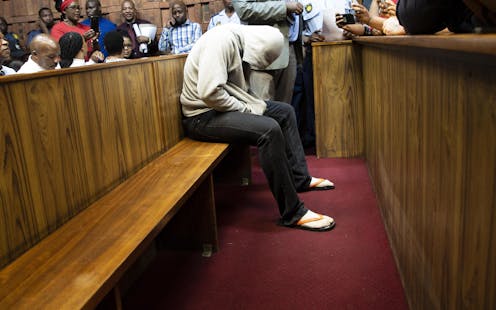
A controversy is raging in South Africa over the naming of a man accused of raping a seven-year old child at a restaurant in Pretoria, the capital city, before he had appeared in court. His name and photograph were widely circulated on social media. At least two major Sunday newspapers identified him. The Conversation Africa asked Jameelah Omar, a criminal procedure expert, to explain what is and isn’t allowed.
What does the law say?
The country’s Criminal Procedure Act of 1977 prohibits the publication of the identity of the accused before they appear in court and plead. This is to prevent undue prejudice to a person before the prosecuting authority decides to prosecute.
Some information can be reported before the accused appears in court and pleads. But this is limited to information about an alleged crime, such as where it allegedly took place.
The act also stipulates that the identity of the complainant in a sexual matter must always be confidential.
Generally, criminal trials are public. In some cases, however, a court can direct that a criminal matter be heard behind closed doors (in camera), and that any person whose presence is not necessary will be barred from attending the trial. This is common practice in sexual offence cases given the sensitivity of the subject and the vulnerability of the complainant.
Even if a case is heard in camera, the name and personal particulars of the accused, the charge against him, the plea, the verdict and the sentence (unless the court directs otherwise) can all be reported.
Another law that sets down conditions for what can and can’t be reported is the South African Police Service Act. This prohibits the publishing of pictures (photos or sketches) of someone who is in custody on suspicion of having committed an offence before a decision to prosecute has been made or criminal proceedings have started. But, in particular circumstances, permission can be sought from the national or provincial commissioner of police to authorise publication.
In the latest furore, both sets of laws were broken because people on social media circulated the name of the alleged rapist, as well as his photo before he pleaded in court. At least two major newspapers also broke the law by doing this.
Why is identifying suspects before they have pleaded a problem?
The rationale behind about banning the publication of details, particularly when it comes to sexual offences, is threefold.
Firstly, to (always) protect the complainant, secondly, to protect minors, and finally, to protect the accused (or any witnesses) if there is a likelihood that they may be harmed.
The prohibition of the accused’s identity before they plead has a slightly different rationale.
The logic here is that the prosecuting authority must be able to apply its mind as to whether there is, at face value, enough evidence. If there is sufficient evidence a prosecution should proceed. But this should happen without the pressure of a public outcry.
Should the prosecuting authority opt not to prosecute, the matter doesn’t go to trial? If the alleged perpetrator had already been named they would suffer reputational harm.
It’s of course frustrating if someone who people believe has committed a crime doesn’t get charged. But, the thing to bear in mind is that the law has to apply consistently for everyone. None of us would want our name to be spread through the media before we’ve appeared in court.
What about public figures and public interest?
The prohibition against identifying alleged perpetrators before they have actually appeared in court, and pleaded, doesn’t depend on who the person is. As soon as the accused has pleaded, their identity can be disclosed, regardless of the person’s public profile.
The prohibition applies to any person publishing details of a criminal allegation, not only the media. But media houses are more likely to be cautious about sticking to the law compared with ordinary people.
The rise of social media has brought about a whole new set of challenges. For example, it would be ridiculous to envisage charging every person who has shared the identity of an alleged perpetrator on Twitter or Facebook. Individuals are not bound by the same restrictions of ethical reporting guidelines as media companies are. Individuals could also possibly claim ignorance of the law as a defence, something media companies can’t do.
Having said that, I always make a point of warning my students to be cautious when they share information on social media, as we should all abide by an ethic of care when we communicate publicly.
What is the penalty for breaching the law or rules?
Contravening the Criminal Procedure Act by identifying alleged perpetrators before they have pleaded is a criminal offence. Those found guilty can be either fined, or jailed for up to three years. If the person who has been wrongfully identified is under 18-years-old, the imprisonment could be five years.
Violations of the South African Police Act involving the publication of a picture of someone in custody before criminal proceedings start carries a possible sentence of either a fine or a year in jail.
These laws have been applied in South Africa. But making them stick in the era of social platforms like Twitter and Facebook presents a whole new set of challenges. m

Jameelah Omar does not work for, consult, own shares in or receive funding from any company or organization that would benefit from this article, and has disclosed no relevant affiliations beyond their academic appointment.
Source: The Conversation – Articles (AFRICA)
Read more on The Conversation.
Join the fun: Add Your event | Submit a Press Release | Add your listing.


