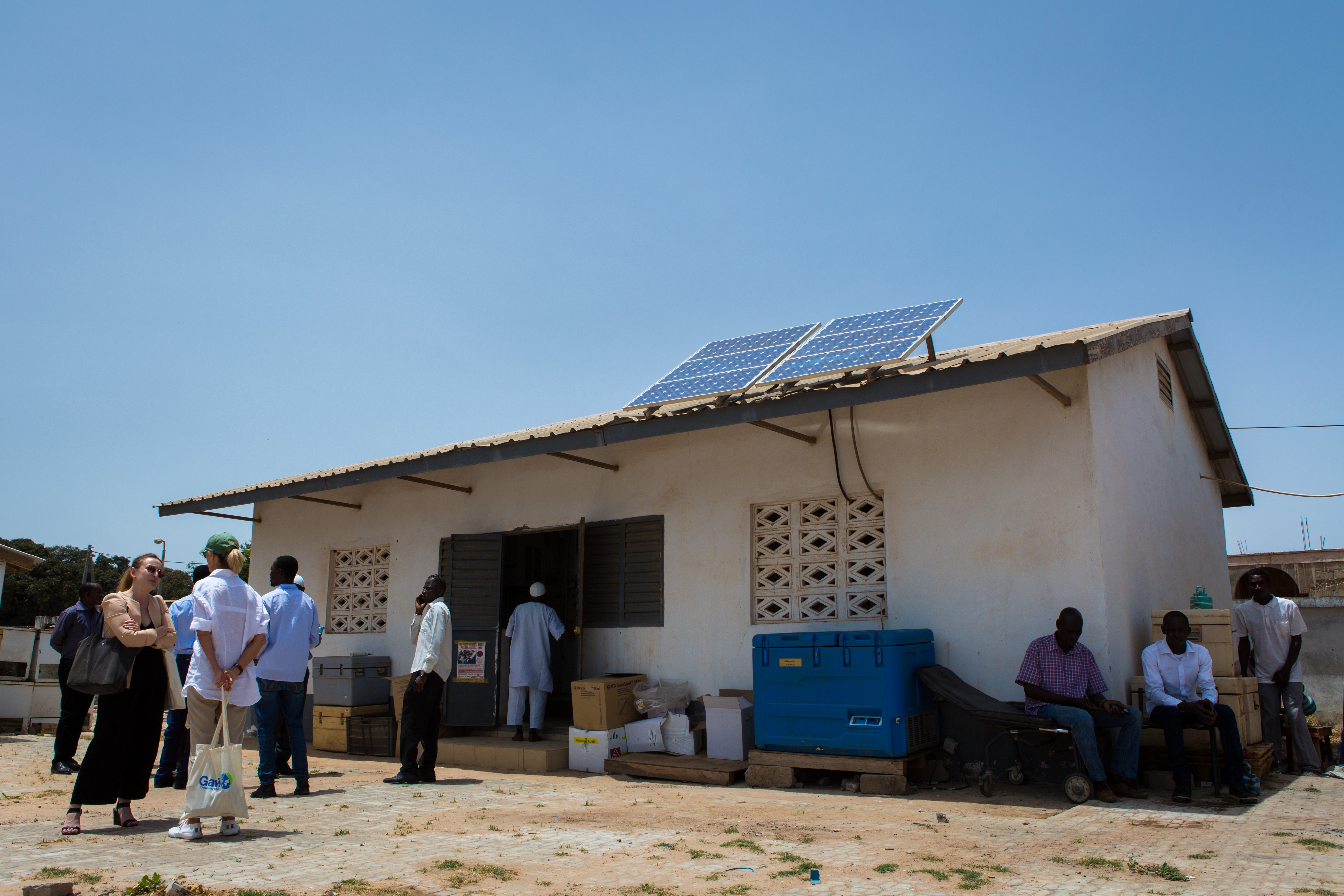
There’s hope that some industrialised countries will achieve near-universal vaccination against COVID-19 in the coming months. Yet the effort to vaccinate even the most essential workers in developing countries has only just begun. By current estimates, achieving herd immunity (to current strains) will require at least 75% of the world’s population to be vaccinated. Some developing countries haven’t reached that level of coverage even for common vaccine-preventable diseases like measles and polio.
Many low-income countries will soon get vaccine access through the COVAX initiative. The first doses distributed in sub-Saharan Africa under COVAX were injected at the end of February. Around 30 million more doses are expected to arrive in March 2021.
But the success of national distribution efforts depends on a functional cold chain. This is an uninterrupted system of storage, transport and delivery of vaccines at low temperatures all the way from national warehouses to local clinics and into the arms of people.
Most vaccines must be stored between 2°C and 8°C. This is the case for polio and measles vaccines as well as the COVID-19 vaccines from Johnson & Johnson and AstraZeneca-Oxford. Others have temperature requirements that are notoriously more difficult to maintain. The COVID-19 vaccines from Moderna must be stored at between -25°C and -15°C. The Pfizer-BioNTech requires -70°C, but can be kept between -25°C and -15°C for up to two weeks.
Keeping vaccines seamlessly refrigerated is an especially daunting challenge where electricity is unavailable or unreliable. A 2013 review spanning 11 African countries found that just 28% of clinics and hospitals had reliable electricity, and 26% had no electricity access at all. Updated data on energy access in health facilities is scattered and sparse, but we are working on a new comprehensive review.
Unreliable power is extremely costly for vaccination efforts. Each year, nearly 50% of freeze-dried and 25% of liquid vaccines are wasted. This is in large part due to cold chain electricity disruptions.
Thus, to deliver COVID-19 vaccines at the required scale, the problem of energy access at health facilities must be confronted. But realistically, entire national grids can’t be overhauled overnight to provide universal, uninterrupted power. So what can be done?
Solar as a solution
In many cases, the answer may be to go solar. Solar photovoltaic solutions, like other decentralised renewable energy systems, come in countless configurations. These typically include battery storage and can be used along with existing electricity sources like the national grid or a diesel generator.
This flexibility means that photovoltaic systems can be deployed rapidly and modularly to provide health facilities with power, often more reliably than the grid. Electricity is essential for vaccine cold chain and other services needed during a pandemic.
Health facilities in areas with limited electricity have long relied on gas-powered “absorption type” refrigerators. Solar-powered refrigerators are more reliable and efficient. Photovoltaic refrigerators with batteries store energy from solar panels for later use. In this way power is available even on cloudy days or at night, or (for grid-connected clinics) during a power outage.
Other photovoltaic refrigerators do not use batteries at all. Solar direct drive refrigerators use solar energy to directly freeze water into an ice wall. This keeps the storage container cold for days, even when solar energy isn’t available.
Solar direct drive refrigerators have had a profound impact in “last-mile” settings. These include rural parts of the Democratic Republic of Congo (DRC), where it’s hard for health facilities to get fuel and batteries and they are far from the national grid. In 2020, Gavi, the vaccine alliance, supported a massive rollout of solar direct drive refrigerators. It led to a 50% increase in monthly immunisation sessions in the nine poorest provinces of the DRC just in the last year. These refrigerators have been instrumental in boosting the proportion of health facilities in the DRC with working cold chain equipment, from 16% in 2016 to nearly 80% today.
Subzero storage solutions
Most solar refrigerators are equipped to store vaccines only at standard temperatures (between 2°C and 8°C). Solar-powered solutions for subzero storage and transport are available, though not yet at wide scale. For example, the MOTE vaccine cooler, developed by Nigerian startup Gricd, has solar-powered batteries that can maintain stable internal temperatures as cold as -20°C for up to 24 hours.
For the time being, however, the most widely used subzero storage and transportation devices forgo electricity altogether. They use passive cooling instead, essentially functioning as giant, highly insulated “super-Thermoses”.
Solar power can also help with another essential electricity-dependent component of vaccine delivery systems: information and communication technologies. These enable national health programmes to monitor vaccine stocks and refrigerator temperatures in remote, rural health facilities in real time, and alert them when deviations occur that may compromise their integrity.
In rural areas that are far from the grid, cellular and internet connections are often more difficult to access. But in recent years, solar-powered cell towers have strengthened and expanded telecommunications networks in areas with unreliable power in countries such as Guinea, the DRC and Mali. Off-grid cell towers have also been used to power vaccine refrigerators in settings such as Zimbabwe. These refrigerators also rely on the cellular network to relay monitored temperature data to health facility staff.
Solar-powered cold chain technologies can be game-changers in the fight against COVID-19 in resource-limited settings in sub-Saharan Africa and beyond. As the COVAX initiative scales up across the continent, governments and development partners should consider how solar-based solutions can aid vaccine delivery. They are invaluable tools – perhaps even equal in importance to the vaccines themselves.
Benson Kibiti from the non-profit organisation Power for All contributed to this article. We also thank Jonathan Parr and Michael Emch (UNC) for their feedback and comments.


