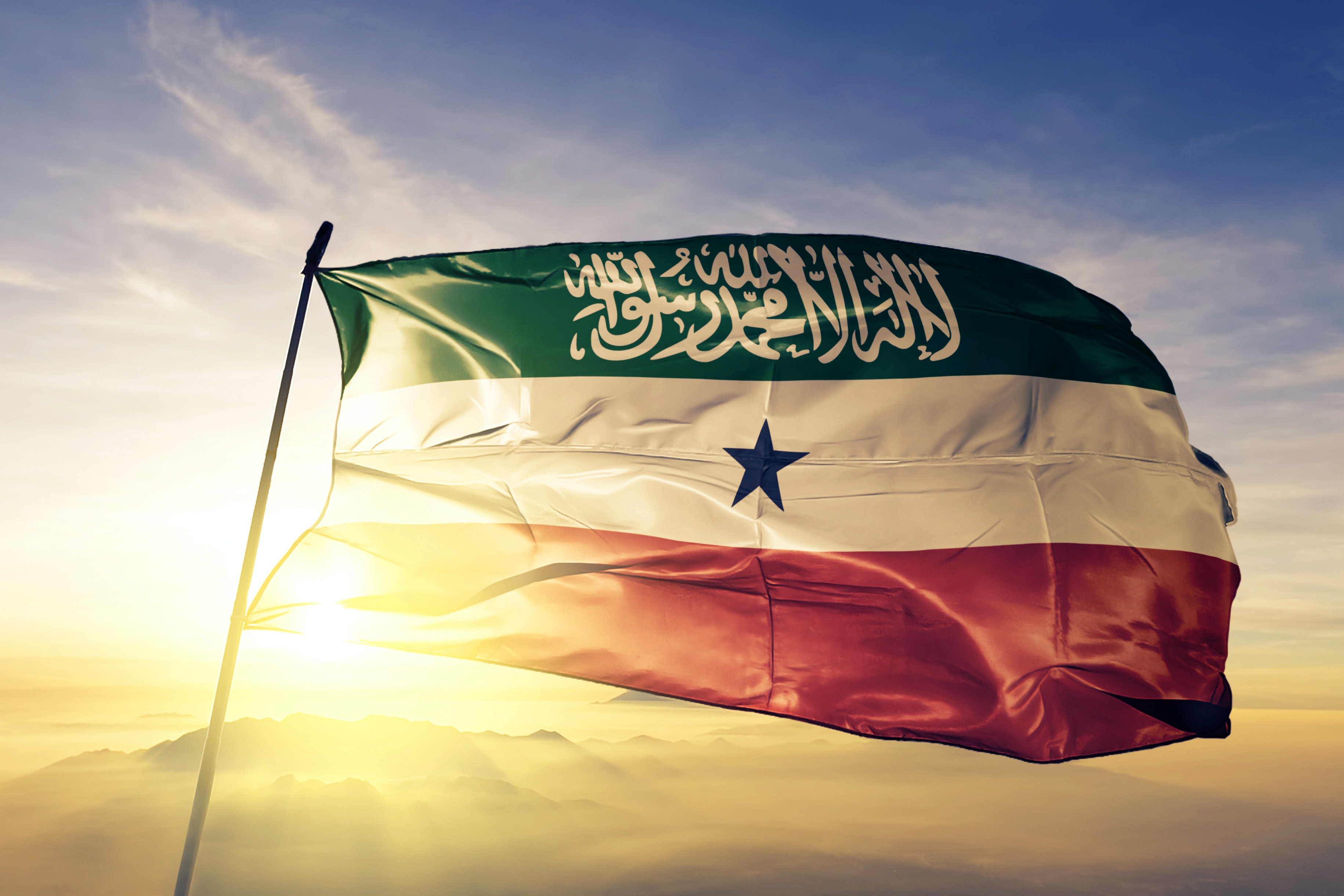
While the rest of the Horn of Africa region is making waves on the battlefield, the tiny, self-declared republic of Somaliland has been having its presence felt where representative democracy and open debate lurk.
In the halls of the UK Parliament, where, on the 18th of January, around two dozen British MPs convened to discuss the recognition of Somaliland’s independence.
The surprisingly large turnout and display of cross-party consensus (a rarity) gave the proceedings an air of hope, the slight rumblings of a sea change. This was despite the fact that the government representative’s concluded by insisting on stubbornly maintaining the status quo.
For the UK – and the West more generally – this has involved treating Somaliland as a region of wider Somalia. This is despite its practical self-governance and ambitions for independence.
At the same time the West has chosen to leave it up to Somalia and its African neighbours to lead a change of course, if they so choose.
Over the past three decades Somaliland has accumulated achievements in maintaining peace and holding elections. These developments have earned it special attention and praise from foreign governments and policymakers. But they have not won it diplomatic recognition.
There are signs, however, that the country’s fortunes are changing. This is partly due to the West losing allies in Horn of Africa region to China. At the same time Somaliland is establishing itself as a hub of regional trade following a deal with DP World to redevelop its Berbera port.
These developments seem to have paid off in the form of increased international attention. Evidence of this is in the recent uptick of open engagement from US political actors towards Somaliland. This has included a visit from the first-ever staff congressional delegation to the territory last month.
The fact-finding mission was itself the direct result of lobbying of Congress members and think tanks by Somaliland’s foreign minister in Washington. Somaliland’s president, Muse Bihi, is scheduled to make his own trip sometime soon.
In one sense, this recent flurry of developments is just the world catching up to the reality of Somaliland. Listening to the speeches from parliamentarians, it is clear that the moral, legal, political and economic justifications for Somaliland’s recognition have seeped into the bloodstream of political discourse.
This is itself the result of the tireless campaigning of diaspora activists over three decades. Since the 1990s they have drilled their local representatives on the talking points and encouraged them to take a stand on the issue.
Some have gone on to join the All-Party Parliamentary Group on Somaliland, or visited the capital Hargeisa. Gavin Williamson MP, the organiser of the debate, paid a visit during his time as Defence Secretary.
But Somaliland’s newfound strategic importance has been both a gift and a curse. It has boosted international interest, investment and support for the country. But only on condition of gifting out its land, diplomatic manoeuvrability and, frankly, some of its soul.
Somaliland emerged as a viable and legitimate government by translating inter-communal reconciliation into a horizontal social contract of peaceful coexistence between relative equals.
As this social contract was built into a state, international recognition was seen as the culmination of these efforts. It would affix an external stamp of legitimacy. It would also help secure its inviolability in the face of continued threat from Somalia, which rejects Somaliland’s independence claims.
Pitfalls of realpolitik
The tricky nature of Somaliland’s more realpolitik approach to seeking recognition was apparent during President Bihi’s trip to Addis Ababa, which unintentionally coincided with the events in London.
The underlying objective of discussions between these neighbouring heads of state were not made public. But there is credible suspicion that it involves renewed intent on the part of Ethiopia to lease land on Somaliland’s Zeila coast, from which to establish a naval outpost.
The Tigray war has exacerbated Prime Minister Abiy Ahmed’s ambition for more diverse outlets to the sea. So far the Somaliland government has reportedly been cautious, out of understandable concerns ofgetting caught up in regional rivalries. Domestic constituencies have also long been wary of Ethiopian imperialism.
This geopolitical messiness feels far removed from the clear picture painted of Somaliland’s potential as a preferential British ally among members of UK parliament.
For instance, several mentions of Somaliland as a diplomatic vacuum that the UK must step into before rivals such as China does seems far-fetched. Firstly, the geopolitical field in the region is already so crowded. Secondly, the UK is not set up to compete with heavyweights like China. Financially or geopolitically.
It should be remembered that the UK’s lack of influence in Somali affairs is not a result of taking their eyes off the ball. It has in fact been actively muscled out, first by Turkey and then by any number of more active players, specifically from the Gulf.
Limits to what can be achieved
When it comes to what Somaliland can expect from Britain, there are limits to what can be achieved. The UK’s leadership, as an ill-fitting mix of populists and ideologues, offers little of the visionary thinking that would be required to lead a change of the status quo in the Horn.
Up to now, the UK has engaged with the region primarily through security training and cooperation, and on developmental and humanitarian support. But even the development aid is at risk due to cuts to the aid budget..
As the UN Security Council penholder on Somalia, it conceivably take the lead in coordinating wider political initiatives. But on the ground it is money and investment from the Middle East that holds sway.
Somaliland is pitching to the grand strategic visions of Western countries and the way it fits into them. The reality, however, is that decision-making in the UK – and even the US – seems more and more beset by short-termism and deadlock.
At a strategic call organised by intellectual Dr. Jama Musse Jama after the event in parliament, Somalilanders from home and abroad highlighted well the absurdities of UK foreign policy on the issue.
The UK’s claim that its current stance in favour of union is sensible merely by virtue of being ‘consistent’ is the kind of tautological nonsense that betrays a deeper political rudderlessness.
It rewards a Federal Government in Somalia whose unearned legitimacy has enabled its intransigent pursuit of elite plunder and fecklessness, while punishing those who built democracy, peace and liberty for themselves.
More criminal is its pawning off responsibility for the resolution of Somaliland’s status to dialogue between it and Somalia. In the eyes of many Somalilanders the UK is forcing victims of genocide to plead for freedom at the feet of their former captors and torturers.
It’s position of letting African governments lead in recognising Somaliland is equally indefensible. It may be driven by an impulse to divest Britain of any perceived colonial pretensions, but it does not come across as empowering. Rather it’s viewed as a timid abdication of responsibility from a government ready to play the part of global leader and former benevolent empire when it suits it.
In the short term, however, Somalilanders, from Twitter to the benches of local parliament to the streets of Hargeisa, are celebrating this latest diplomatic achievement, and placing faith in the good graces of the UK to deliver recognition once and for all.
At the same time, they are using the win to mobilise among themselves for the next sets of campaigning and activism that has become the staple of their long and unflappable journey in the quest for recognition.


