The story of democratic South Africa and its approach to human rights in the rest of the world is a tale of woe. For two-and-a-half decades, its foreign policy mostly failed to defend internationally – and quite often contradicted – the human rights principles contained in its constitution.
An assessment in the Washington Post more than a decade ago still rings true:
South Africa remains an example of freedom while devaluing and undermining the freedom of others. It is the product of a conscience it does not display.
Why has South Africa behaved this way?
Surprisingly, it is not the case of the country feeling compelled to make common cause with African states, many of which have poor rights records, as is often claimed. In fact, many African states weaker than South Africa are more committed to international human rights. A 2018 report on the voting records of the 13 African members of the UN Human Rights Council ranked South African eighth on this score in terms of international commitment to human rights.
A more convincing explanation of South Africa’s actions is that it sees the world in terms of a conflict between the West and the developing world. When this ‘anti-imperialist’ struggle and human rights conflict, the latter must be sacrificed. This has resulted in a foreign policy The Economist described as ‘clueless and immoral’.
While the overall picture remains bleak, the good news is that there have recently been signs that South Africa is becoming more willing to stand up for human rights. Evidence for this comes from its recent final year of a six-year term on the UN Human Rights Council.
A disappointing record
In 2006, the Human Rights Council replaced the UN Commission on Human Rights. The commission had become, according to then secretary-general of the United Nations Kofi Annan, so dysfunctional that it was damaging the reputation of the entire UN. The plan was that the council would retain the commission’s good parts and shed the bad.
It is hard to find proof that South Africa, during its 2006 to 2010 council membership, did anything to improve the new organisation. Rather, it voted to shield the rights-abusing regime in the Democratic Republic of Congo and the genocidal one in Sudan. It helped the Sri Lankan government to evade international pressure to ensure accountability for war crimes committed during the final months of the country’s civil war.
South Africa tried to curtail the independence of the UN’s human rights investigators. It prominently attacked free speech by supporting the Islamic bloc’s demand that speech lacking in “respect for religions and beliefs” be made illegal under international human rights law.
When South Africa returned to the Human Rights Council in 2014 for a tenure that ended in 2019, it often made common cause with the authoritarian regimes in China and Russia. Perhaps most shocking was when South Africa represented these states in attacking a 2014 resolution on the right to peaceful protest.
On the council, South Africa often invokes its democratic constitution and history. Yet, in a recent book and in reports for the South African Institute of International Affairs, I show that apart from a vote for a 2016 resolution on human rights defenders and two votes against hostile amendments on a 2014 resolution on civil society, South Africa not once, out of more than 100 such votes, voted to support human rights related to the democratic process.
Rights violations in specific countries
The Human Rights Council is notorious for singling out Israel. Frequent resolutions criticise Israel and support incisive investigations into its violations against Palestinians, its settlement-building in occupied Palestinian territory or its international aggression. South Africa has backed council resolutions on Israel without fail.
While South Africa has been willing to support hamstrung country-specific investigations, such as the African Group’s 2017 resolution on Burundi, it either abstains or votes against resolutions that authorise incisive investigations into the human rights problems of countries other than Israel.
A welcome change
In 2019, however, an improvement became detectable. South Africa, for the first time ever, supported imposing Human Rights Council investigations on countries that did not want them, Israel excluded.
It backed two resolutions on Myanmar, both of which urged criminal prosecution of alleged perpetrators of human rights crimes. Then, after an abstention on a similar resolution in 2018, it supported extending an investigation into human rights violations related to the Yemeni Civil War.
South Africa’s actions regarding sexual orientation and gender identity, an issue on which it has been inconsistent, offer further proof of change. In March 2011, it tabled a resolution to confine discussion of sexual orientation throughout the UN to a committee that would meet for only 10 days a year.
Opponents of LGBTI rights did not want to discuss sexual orientation. Proponents of LGBTI rights wanted to discuss worldwide violence and discrimination against LGBTI people. Isolated, South Africa withdrew its draft resolution.
Three months later, South Africa went from skunk to saviour when it led the council to adopt the first ever UN resolution on sexual orientation. But the glow faded as the country, weighed down by African opposition and its own confusion, failed to lead on the issue.
As patience with South Africa ran out, Latin American states took over and in 2014 sponsored a new sexual orientation resolution. South Africa and others successfully lobbied to weaken the text.
In 2016, Latin America tabled a follow-up resolution. South Africa denounced the resolution’s sponsors for being arrogant, reckless, confrontational, divisive and causing acrimony. More importantly, it refused to support a resolution authorising reports on violence and discrimination against LGBTI people for the subsequent three years.
But in 2019, the country came in from the cold. It wholeheartedly supported Latin America’s resolution asking for three more years of reporting on the persecution of LGBTI persons. It countered numerous attempts to distort or weaken the text.
Uncertain future
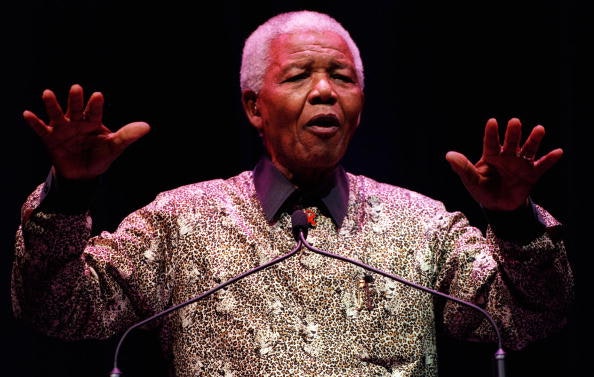
In recent decades, South Africa has continued to find creative ways to disappoint those who share its former president Nelson Mandela’s belief that human rights should be a light that guides the country’s foreign affairs.
It is too soon to become optimistic, but some of South Africa’s recent actions on the Human Rights Council are small but significant breaks from a dismal past.


