South Africa adopted its electoral system during the process of making a new constitution in the run up to its transition to democracy in 1994.
The system agreed was proportional representation. This involved parties drawing up lists of representatives which would get seats in legislatures according to the proportion of votes the parties won in the polls. This system was chosen because it was seen as allowing maximum representation of different political opinions and ethnic identities.
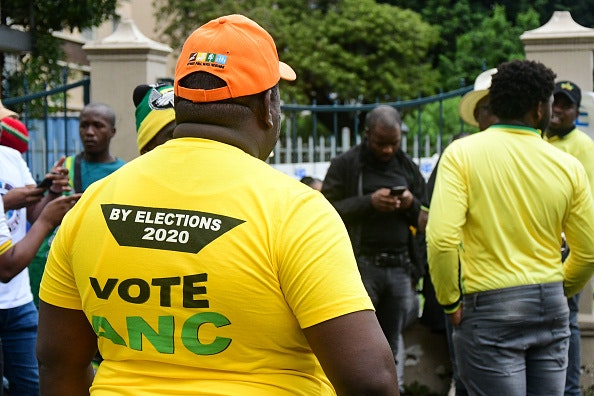
The system has worked well to represent minority parties along with recurrent African National Congress majorities in the National Assembly and in most of the country’s nine provinces.
But some now see it as working against accountability. This is because proportional representation hands power to party bosses – which in turn disempowers voters. MPs feel beholden to their parties, rather than to the people who elected them.
The existing electoral system has attracted extensive criticism for rendering elected representatives unaccountable to those who elected them. Correspondingly, calls for electoral reform have been growing louder, with especial demands that voters should be enabled to elect their representatives directly. But attempts at reform have all been stymied by a reluctance on the part of the politically dominant African National Congress which is well served by the current system.
The call for reform was given a significant boost following a ruling by the country’s top court, The Constitutional Court, in June last year. The judgment forced the issue by calling for amendments to the Electoral Act. In the wake of the ruling, an influential lobby group, the Inclusive Society Institute, has recently produced a detailed report setting out recommendations for electoral reform.
Electoral reform
The Constitutional Court judgment of June 2020 declared the current Electoral Act unconstitutional. This is because the act barred individuals, as distinct from parties, from standing for election at national and provincial levels.
Parliament is now obliged to change the law. A bill to allow for the change is in progress. This has opened the door to wider reform of the electoral act, particularly with regard to the idea of blending the right of voters to elect their representatives directly with the constitutional imperative for proportional representation.
The proposals for reform made by the Inclusive Society Institute were drawn up by a committee chaired by Roelf Meyer, who served as the chief representative of the former ruling National Party during the constitution-making process.
The committee’s report makes a number of suggestions. These include:
-
that the National Assembly should consist of the current 400 representatives. Of these, 300 should be elected from multi-member constituencies.
-
A further 100 compensatory seats should be provided to ensure the overall proportionality of the outcome.
-
If a party obtained, overall, 55% of the total national vote, it would receive extra seats (in addition to those it won at constituency level) to provide it with 55% representation in parliament. (Similarly at provincial level.)
To meet the demands of the Constitutional Court, independent candidates would be able to stand in the multi-member constituencies.
Given the number of registered voters, around 26.7 million in 2018, independent candidates would need to receive about 90 000 votes to be elected to the National Assembly.
More voice, greater fluidity
The idea behind multi-member constituencies is that 300 out of the 400 MPs would become accountable not only to parties but also to constituencies. This would be a welcome change, even if it would fall short of the direct accountability that many voters would like.
Such a system opens the door to candidates who want to raise issues that are too often smothered by the established political parties. Concerns about government service delivery and about the environment immediately come to mind.
Such a system would also enable aspirant candidates who have failed to gain nomination by their preferred political party to stand, perhaps as independent members of their parties.
The adoption of the system would, therefore, allow voters greater choice. It would also introduce great fluidity into the electoral system by impressing on MPs that they are accountable to constituents as well as their party bosses.
Given that recent elections have seen a steady decline in the proportion of the votes going to the ANC – there are suggestions that it could lose its majority in the next general election in 2024 – there are even chances that the country would have its first government by coalition in the national parliament.
What next?
The proposals revive the reforms proposed by the task team led by the late former opposition leader Van Zyl Slabbert in 2003. The team was carrying out a constitutional requirement to review the electoral system after five years of democracy.
The team recommended a change that would have introduced multi-member constituencies – whereby each constituency is represented by between three and seven MPs. But the ANC used its majority in parliament to block the proposed reform. What chances are there that this time round the ANC will agree to what would be a far-reaching reform of the electoral system along the lines suggested by the institute?
The party rejected the Slabbert Committee’s recommendations on the grounds that the current system was working satisfactorily. Not least because it was simple and easy to understand. It might now well argue along similar lines. It might suggest that the introduction of multi-member constituencies, with a proportional representation top-up to ensure proportionality, might appear opaque to the majority of the population.
It would be simpler, it might say, to fulfil the Constitutional Court’s ruling by merely allowing individual candidates to stand alongside political parties on the national list. That would enable their election if they garnered the necessary minimum of votes.
While such a minimum change might serve the party’s interests, the sheer difficulties which individual candidates would encounter in attracting nationwide support would effectively gut the reform of content. It will leave MPs as unaccountable in practice as they are today.
There is, within the ANC, a reformist group lobbying for a major change within the electoral system. Likewise, the recent formation of a grouping of “struggle veterans” to defend the constitution and democracy, suggests that momentum for electoral reform might grow.
But, there is real danger that any debate around electoral reform will get caught up in the ANC’s factional politics. Yet, still, the present moment presents a genuine opportunity for a more accountable and truly democratic politics. It will be to South Africa’s great detriment if that opportunity for change is missed.


