South Africa needs to refresh how it manages by-products from mining:
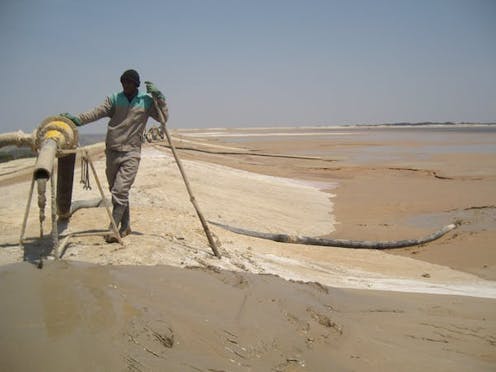
To extract minerals from host rocks, mines grind down rock into fine sand. Once the mineral is extracted, most of this fine sand remains as a by-product called tailings. Every mining operation produces a unique tailings stream and local conditions dictate storage options.
In countries like South Africa which has a big and robust mining sector, tailings need to be managed with extra care. Typically they’re conveyed as a slurry and placed into dams that are incrementally built over a mine’s life. This watery tailings slurry takes a long time to dry out and gain strength, resulting in unique challenges. If they aren’t managed correctly, the results can be disastrous – and even fatal.
South Africa has more than 200 active tailings dams and many more dormant facilities. The Departments of Mineral Resources, Environmental Affairs and Water and Sanitation all have regulations for the management of these facilities. The aim is to maintain a balance between environmental protection, economic growth and social development.
There have been two major tailings dam failures in South Africa in the last half century – in 1974 and 1994. As many as 29 people died. These two failures galvanised the industry, leading to a better technical understanding of tailings dams and the development of systems to manage the inherent safety risks.
This progress – and the fact that there have been no further catastrophic failures in the last 20 years – can easily lead to complacency. But recent disasters in Canada and Brazil have shown how quickly things can go wrong. The recent failures of the Mt Polley Tailings Dam in Canada and Fundão Tailings Dam in Brazil have shown that even though the risks are known and technical solutions are available, failures still happen. Failures can result in the loss of life, environmental destruction and financial damage that could exceed the mine’s capacity to pay.
These international failures have highlighted the need for South Africa to revise its laws and regulations. Mining houses and the government need to take stock of these two incidents and look back at local failures with a view to improving practices. The tailings industry comprising of design engineers, tailings dam construction contractors, mining houses and regulators need to join together to update codes of practice, and commit to current best practice in the South African context.
Better technical and operational understanding
Forty four years ago a platinum tailings dam operated by the Bafokeng Mine failed tragically. Tailings from the dam flowed 45 km flooding a mine shaft, trapping and killing 12 miners.
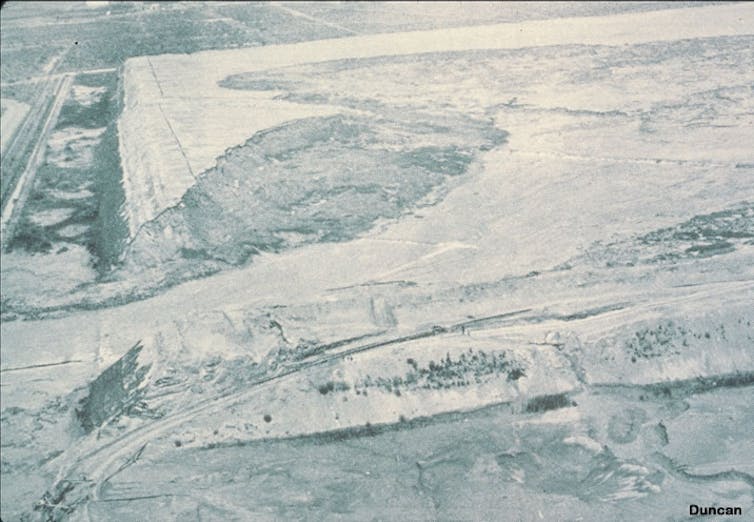
Various theories were put forward for the failure. In the end the likely cause was identified as being concentrated seepage through the dam wall. Poor management of water on the dam surface and heavy rain prior to the failure were equally considered causes of the failure.
Almost 20 years after the Bafokeng failure a tailings dam collapsed, releasing tailings that engulfed the village of Merriespruit and killed 17 people, many of whom were children. This brought into stark focus the importance of controlling water and the key role mine management plays.
These two failures resulted in significant changes within the mining industry. Following the Bafokeng disaster, the Chamber of Mines in 1979 issued a document providing mines with guidance on how to protect the environment. These guidelines predominantly dealt with technical aspects.
For its part, the Merriespruit disaster focused attention on management. This resulted in the publication of a South African National Standard Code of Practice in 1998. This document provides guidance for the appropriate management of tailings facilities throughout a dam’s life-cycle.
The codes are arguably world class and are probably the reason no major catastrophes have occurred since.
Shortly after they were released the Department of Minerals and Energy issued guidelines on how mines should develop their own site specific and mandatory codes of practice.
Many in the industry have adopted the recommendations. But some argue that the recommendations have been largely ignored or have been implemented merely as tick box exercises.
Another challenge is that the documents have remained largely unchanged in the intervening years. Codes of practice in other countries now include better change management requirements and guidelines for peer review of designs and operational procedures.
Nearly 25 years have passed since the Merriespruit disaster. Custodians of tailings dams in South Africa can’t rely on existing systems, nor should regulators consider prescribing practices that have been developed in other countries because they can lead to poor local engineering solutions.
A recent industry conference showed that while contractors and consultants are willing to come to the party to refresh South Africa’s codes, mining companies and regulators are less so. Hopefully, all parties will join together before another disaster destroys the industry’s credibility and its social license to continue mining.
John Wates, Geotechnical and Tailings Engineer, contributed to this article.

Charles MacRobert does not work for, consult, own shares in or receive funding from any company or organization that would benefit from this article, and has disclosed no relevant affiliations beyond their academic appointment.
Source: The Conversation – Articles (AFRICA)
Read more on The Conversation.
Join the fun: Add Your event | Submit a Press Release | Add your listing.


