South Africa needs to reverse corporate capture of agricultural policy:
South Africans are embroiled in heated debates about the expropriation of agricultural land. But very little space is being devoted to how the country’s scarce arable land could and should be used once it has been acquired.
This is an important part of the puzzle given that the country’s existing industrial agricultural system has failed on a number of levels. A quarter of the country’s population goes hungry every day. Price inflation makes nutritious food increasingly unaffordable and – as the listeriosis scandal recently revealed – food safety is easily compromised.
Unlike most other countries on the continent, South Africa’s agricultural sector is heavily skewed to industrial farming. Its 40 000 commercial farmers produce most of the country’s food. The official number of households engaged in small-scale farming is around 1,3 million, although this could be a low estimate.
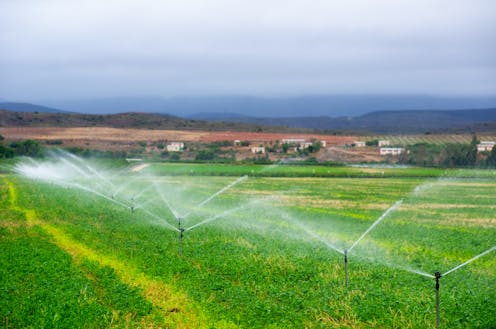
The country’s commercial agriculture sector relies on expensive and polluting genetically modified seed, pesticides and chemical fertilisers. It is also heavily reliant on irrigation: the commercial agricultural sector extracts 63% of the country’s available surface water. None of this is good for the environment.
South Africa urgently needs to rethink its existing agricultural model. The current preference for large-scale, high-input farming enterprises fails to trust in small-scale family-based producers’ ability to provide more efficiently for the market. Employing agroecology – farming without GMOs, chemical pesticides and artificial fertilisers – small-scale farmers can, with sufficient policy and practical state support, contribute significantly to food and nutritional security. This has been accomplished successfully elsewhere.
For example in the state of Santa Caterina in Southern Brazil, the state supported 60 000 small farmers with their agriculture, resulting in an increase of the sales of their produce by 64% after one year. In South Africa, it is also possible to make small scale farms work.
Powerful corporate interests
Why are South African policy makers choosing to back large scale farmers? The answer is that they have succumbed to pressures from transnational corporations that have made farmers dependent on hybrid or genetically modified proprietary seeds, herbicides and fertilisers.
South Africa is the only country in the world that permits its staple food, maize, to be grown from genetically modified seed. Over 87% of South Africa’s maize is now based on proprietary GM seed.
On top of this, the country’s legislation is weak. The Genetically Modified Organisms Act passed in 1997 does little to ensure biosafety. In effect it opened the door to the import and release of GM seed and enabled GM seed experimentation and bulking in South Africa. Instead of a strict impartial assessment of applications by the gene companies, the act allows for self-regulated risk assessments to be submitted to the regulator based entirely on in-house tests conducted by the GMO-purveying corporates themselves.
Nine years ago the state was forced, for the first time, to provide the public with information on GM permits after it was challenged by Biowatch, a South African food sovereignty non-profit group.
But the power of the large corporations has intensified in the intervening years. In 2012 South Africa’s Competition Appeal Court allowed for the largest remaining local crop seed company, Pannar, to be purchased by DuPont’s subsidiary, Pioneer Hi-Bred. This signalled the beginning of foreign monopoly control over local crop seed. This is now dominated by transnationals Monsanto, DuPont, Dow and Syngenta.
The country’s drive to adopt GMOs has resulted in some spectacular failures. One involved Monsanto attempting to persuade small-scale farmers at the Makhathini Flats, a floodplain on the Phongola River in KwaZulu-Natal, to plant their proprietary GM cotton. The project was an attempt to convince the world that GM crops were suited to farmers like this. Monsanto flew representative Makhathini farmers around the world to advocate the corporation’s position. But within only a few years the farmers found themselves deeply in debt and the GM cotton project was abandoned.
In the Eastern Cape province small-scale farmers were initially given free Monsanto GM and hybrid seed. Traditional farming practices were abandoned in favour of mechanical tilling and monocropping of maize. Called the Massive Food Production Programme, it failed to meet any of its key objectives over five years and swallowed R570 million in state funds. Productivity hardly improved and small-scale farmers where left with unpayable debts.
Support for small scale farmers
Helping small-scale farmers requires a number of interventions. The first is practical support. South Africa used to provide extension services to farmers, which consisted of independent advice. But budget cuts have reduced the quality of the service and opened the way for corporate agents to take on the roll. For example, in the Hlabisa district, KwaZulu-Natal, the state and Monsanto have combined efforts to influence the GM crops that farmers plant.
As part of the land debate, South Africans should be calling on government to abandon its bias towards monopoly agribusiness. The first step would be to reverse the measures that favour international agribusiness interests. Secondly, biosafety regulations should be tightened.
And significant resources should be diverted to support small-scale farmers. In doing so it will be minimising land and seed contamination, honouring traditional practices of seed saving and exchange, reviving and building sustainable employment opportunities, guaranteeing soil quality and food sovereignty. It will be a positive contribution to reducing carbon emissions and sustainable water usage.
It is time to reduce the policy influence of agribusiness interests and answer the call for land with practical agrarian reform measures.

David Fig chairs the Biowatch South Africa Trust, which has sponsored the writing of this article.
Source: The Conversation – Articles (AFRICA)
Read more on The Conversation.
Join the fun: Add Your event | Submit a Press Release | Add your listing.


