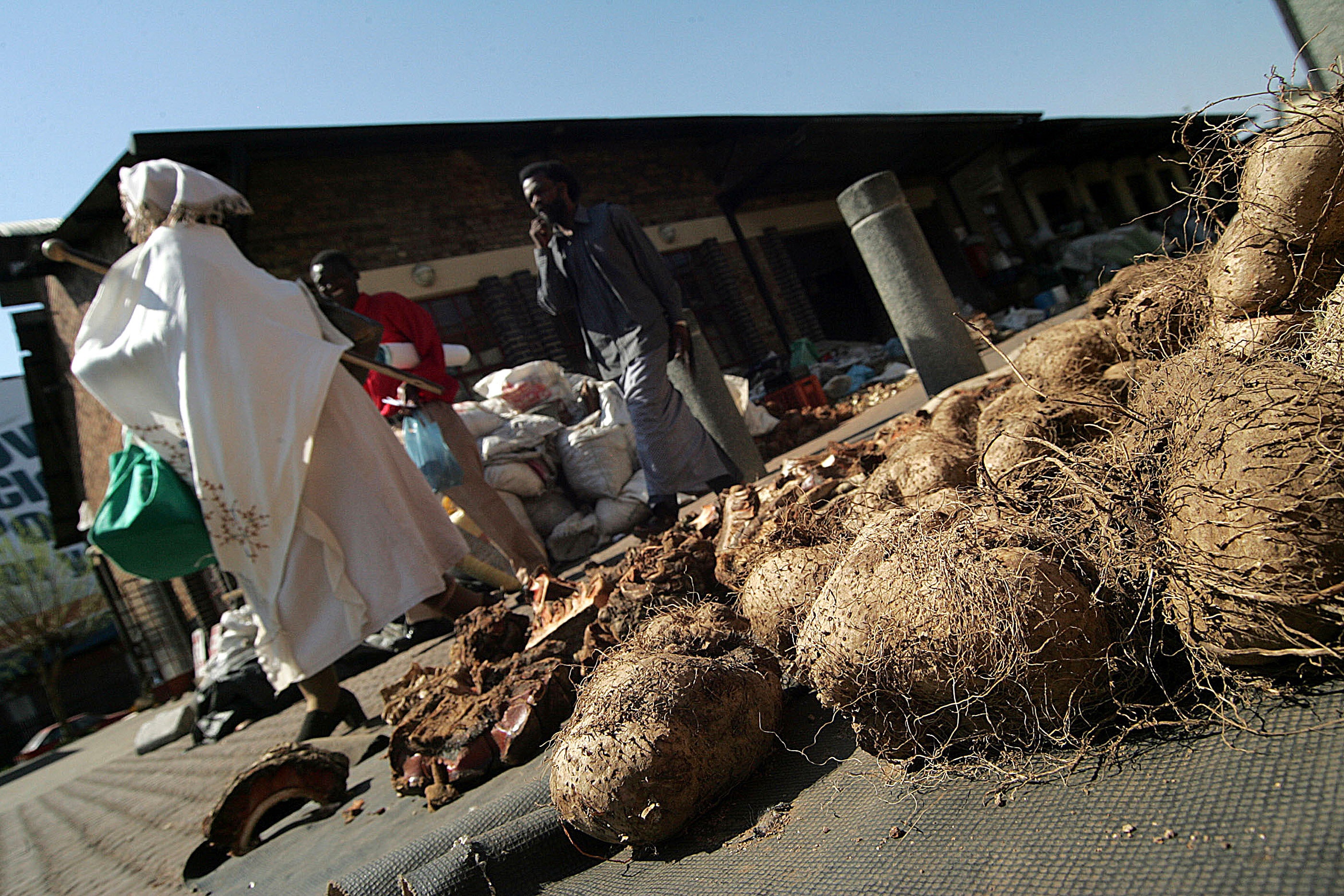
South Africa has a long tradition of using plants for medicinal purposes. Some of these, such as Aloe ferox, Sutherlandia frutescens and Kiggelaria africana, have been studied as sources of useful compounds. But most still need to be scientifically validated as treatments for particular diseases.
Medicinal plants are gradually gaining prominence in scientists’ search for potential treatment agents for COVID-19. Currently there is no specific antiviral drug to treat this new respiratory disease. Most treatment strategies focus on managing symptoms and supportive therapy such as supplementary oxygen and mechanical ventilation.
My colleagues and I from the Durban University of Technology and the University of KwaZulu-Natal in South Africa are among the researchers looking for potential COVID-19 treatments from plants. We recently completed the first phase of our project, which ultimately seeks to develop a novel SARS-CoV-2 therapeutic.
Our aim in the first phase was to identify bioactive compounds in plants that are indigenous to South Africa which could be effective against SARS-CoV-2, the virus that causes COVID-19. We looked for potential COVID-19 therapeutic agents from a list of 29 bioactive compounds. The species chosen were based on their use for the common cold, flu, other respiratory conditions, antimalarial, antiviral and antioxidant activity.
Our initial findings show that some compounds had the potential to inhibit SARS-CoV-2. We are now in the second phase of our study, which will test the compounds rigorously in the laboratory. This is a starting point in the search for a novel SARS-CoV-2 therapeutic.
From plant extract to therapeutic
In the initial stage of this project we worked with collaborators from the University of KwaZulu-Natal, Bio-computational and drug design laboratory. The team screened potential bioactive compounds isolated from commonly used South African medicinal plants using molecular docking.
Molecular docking is the study of how two or more molecular structures (for example, a drug and an enzyme or protein) fit together. Protein-binding may affect drug activity in one of two ways: either by changing the effective concentration of the drug at its site of action or by changing the rate at which the drug is eliminated, thus affecting the length of time for which effective concentrations are maintained.
We performed molecular docking of the plant compounds against SARS-CoV-2, using biocomputational analysis.
Some of the plant compounds showed potential. These were from Acacia senegal, Sutherlandia frutescens, Hypoxis hemerocallidea, Xysmalobium undulatum and Aspalathus linearis (commonly known as rooibos). They exhibited favourable binding orientations and were identified as potential inhibitors of the SARS-CoV-2 receptor binding domain and SARS-CoV-2 RNA-dependent polymerase. Four compounds exhibited extremely good binding to the virus, meaning that these compounds may prevent the virus from replicating.
These compounds could serve as a starting point for the discovery of a novel SARS-CoV-2 therapeutic.
Next steps
For the next stage we will infect animal cells with the virus. Then we’ll administer the compounds (cytotoxicity screening) to see what effect they have. If this in vitro study shows promising results, further analysis will be conducted using an animal model. The effects of the compounds on infected rats will be monitored.
Our end goal is to finally have a successful treatment for this virus. Infections can still occur even when a safe and effective vaccine is available. This is why it’s important to ensure effective treatments are also part of the efforts to end COVID-19.
No traditional African medicine has been scientifically validated yet as a treatment for SARS-CoV-2.
Read more: Why more must be done to fight bogus COVID-19 cure claims
We are now in the second phase of our study, which will test the compounds rigorously in the laboratory if funding can be found. This depends on a lot of different factors.
We will be working with collaborators from the University of KwaZulu-Natal’s Department of Virology, where the analysis will take place.


