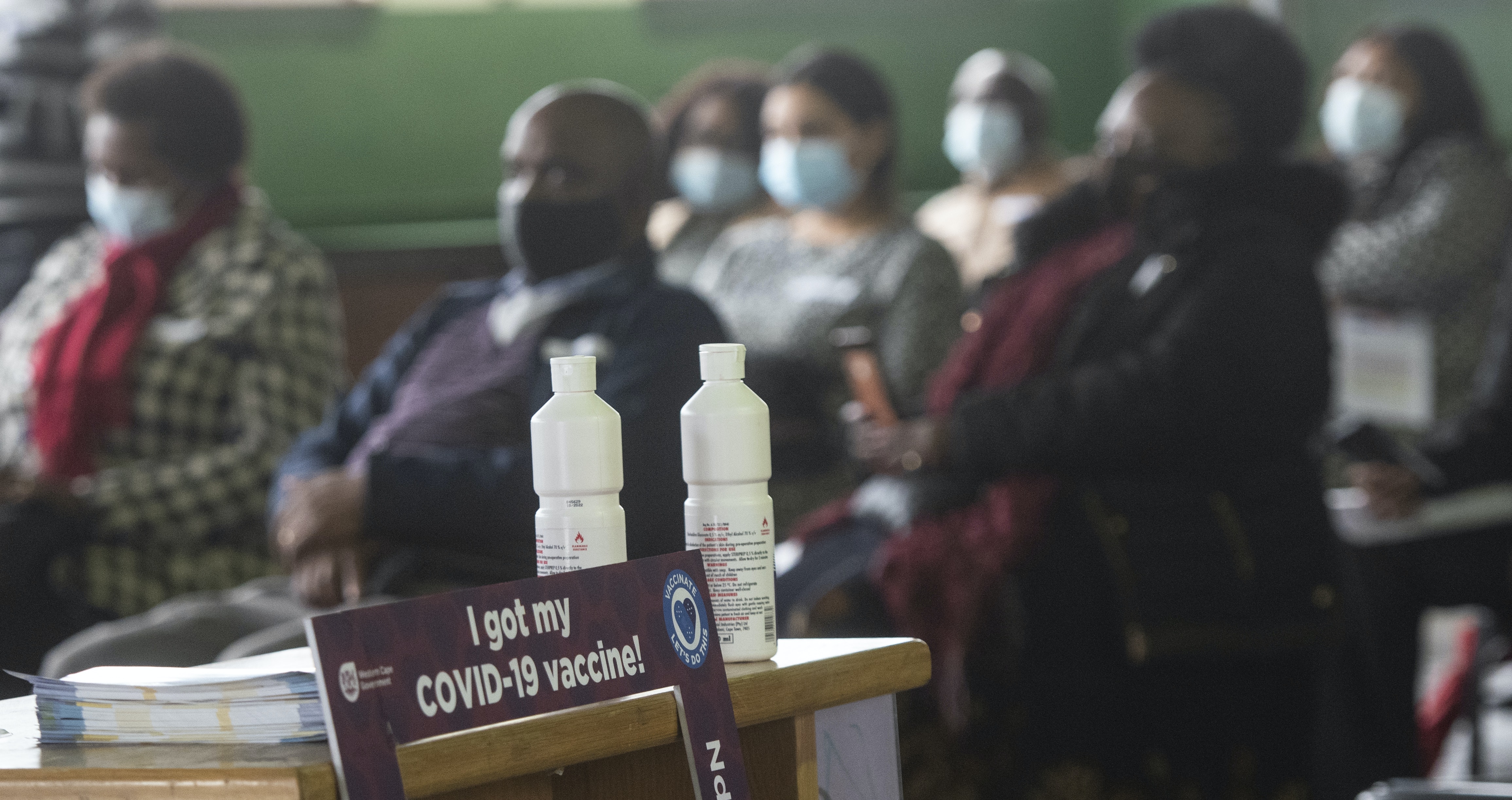
The number of people being vaccinated against COVID-19 in South Africa is on the rise after a bumpy start. But the more positive attitudes are not always reflected in vaccine registrations and vaccinations, according to the latest results of the Coronavirus Rapid Mobile Survey. The survey follows a nationally representative sample of South Africans. The same people are contacted on a monthly basis and asked questions about a wide range of issues such as their income, household welfare, and their knowledge and behaviour related to COVID-19. The research was done by experts at the universities of Stellenbosch and Cape Town. Ronelle Burger, one of the lead researchers of the survey, spoke to The Conversation Africa about the findings.
How is South Africa doing?
Our survey found an increase in the proportion of adults willing to get vaccinated from 71% in March 2021 to 76% in May 2021.
Vaccine acceptance in South Africa is now comparable to high-income countries such as Australia and Germany.
But nearly one in four participants were still hesitant about getting vaccinated. About one in 15 were strongly opposed to vaccinations. This group may not be open to persuasion.
What are the gaps between intention and action?
We also found a large gap between the proportion of people saying they were willing to vaccinate and those who had actually taken action. In the survey we used the electronic registration for vaccination as a proxy to measure people’s ability to convert intention into action.
In the age group of people older than 60, 78% said they were willing to vaccinate. Nationally, by the beginning of July 2021, only 55% this group had registered for vaccination. This shows that there are many people who say they are willing to be vaccinated but have still not taken action to get themselves registered. It is important to understand this gap between intent and action. The international literature suggests that this is most likely attributable to underlying uncertainty and distrust, requiring more assurances or due to a high time or money cost of registrations and vaccinations.
This interpretation aligns with the large gaps we see in vaccine registrations across the provinces and Limpopo’s strong lead at 77% versus the 55% average. Limpopo is the country’s poorest province, and has a large population of elderly who are mostly illiterate and live in rural areas. It also has the lowest share of people covered by medical schemes. To ensure an equitable and efficient vaccine rollout the province chose a different path. Community health workers were provided with smartphones and went into communities to help older people get registered for vaccination. Royal and religious leaders were among the first to get the jab, and this helped to encourage people to vaccinate. And vaccine sites were set up in areas that are easy to access.
What needs to be done?
The international literature and the case study of Limpopo suggest that addressing this intent-action gap requires a three-pronged strategy.
The first is to provide accurate information about vaccine safety and side effects. Vaccine safety was a major concern among respondents. People expressed concerns about the possible side effects and that the vaccine testing might have been rushed. Such communication should be done in languages that people understand, on platforms that are readily accessible.
Communication campaigns must be tailored to address those who are still fearful. For example, vaccine acceptance was higher among people living in traditional settlements, among isiZulu, isiTsonga and Setswana speakers, and black respondents. It was significantly lower among respondents living in urban formal residential housing who are Afrikaans speakers, and white and Coloured respondents. Vaccine acceptance also remains low among young people.
The second thing is to increase trust by working with community leaders and networks to spread the correct information about vaccines. In our survey, more than half of the respondents who were on the fence said they would get vaccinated if a trusted community leader got vaccinated and stayed healthy.
The third thing to do is to remove barriers for those who do want to get vaccinated. Some of these barriers are access to internet and other resources required to register for vaccination, being far from vaccination sites and not having time to go to a vaccination point during the work day.
What about vaccination inequality?
The worst case scenario of uneven vaccine distribution would be a localised version of the global events where rich nations have vaccinated large proportions of their populations and poor countries are dealing with constant resurgence. The same could happen if there isn’t a concerted effort to make sure that people who don’t have access to private health services are vaccinated at the same rate as their richer counterparts. South Africa could see continued COVID-19 hospitalisations and deaths among the poorest communities. Currently, the proportion of people older than 60 with medical aid who have been vaccinated is around double of those without.
But the National Department of Health has shown increased awareness of this situation and seems willing to take measures to address this. For example, COVID-19 vaccinations will also take place over weekends and plans are under way to set up mobile vaccination sites at the pay points for old age grants.


