Following a decade of consultation and public debates, South Africa introduced a carbon tax in June 2019. Treasury faced strong opposition, especially from energy intensive businesses. But the country’s ratification of the Paris Climate Agreement in November 2016 signalled the government’s commitment to responding to climate change and gave impetus to implementing the carbon tax.
In line with the international “polluter pays” principle, the tax attaches a cost to greenhouse gas emissions. The idea is to change the behaviour of large emitters.
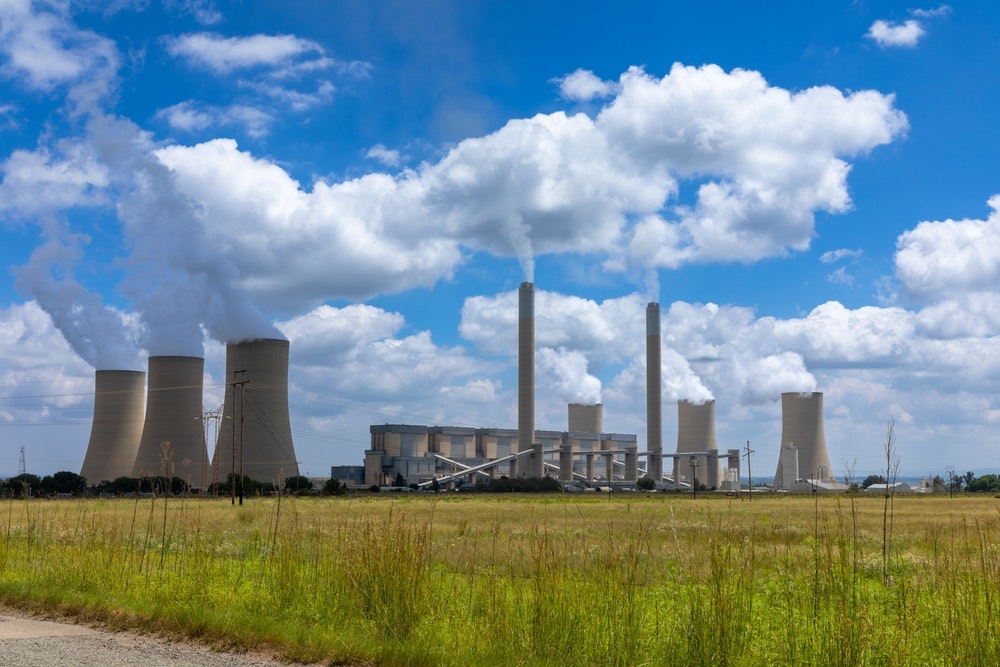
Burning fossil fuels for electricity production accounts for the largest share of South Africa’s carbon emissions, followed by transport, and the industrial production of materials such as cement. Coal makes up 75% of the country’s primary energy supply. It’s not surprising, then, that South Africa is among the top 15 largest per capita emitters in the world.
Numerous modelling exercises were conducted to determine the appropriate carbon tax rate, which started at a base rate of R120 (currently less than US$8) per ton carbon dioxide equivalent (tCO₂e) emissions. This compares poorly with international standards of US$40 to US$80 a ton by 2020. And as a result of all the tax-free allowances built into the carbon tax calculation, the effective rate could be as little as R6 (US$0.4) per tCO₂e emissions.
Treasury acknowledged that this rate was low, but wanted to allow large emitters time to transition to cleaner technologies. The rate was increased annually by inflation plus 2% and reached R134 (around US$8) per tCO₂e by the end of 2021.
The urgency of the climate crisis was overshadowed by the COVID-19 pandemic for a while. Nevertheless, the South African government displayed a renewed climate focus over the past year.
First, a Presidential Climate Commission was created to chart a pathway for a net-zero, climate resilient economy by 2050. Next, cabinet approved the National Climate Change Bill for tabling in Parliament.
In the run-up to the 26th international climate change conference (COP26) held in Glasgow in November 2021, South Africa raised its targets for greenhouse gas emissions. These are contained in the revised Nationally Determined Contribution submitted under the Paris Climate Agreement.
The climate negotiations held at COP26 resulted in a “watershed” moment in South Africa’s energy story. The European Union, France, the UK, the US and Germany pledged funding of R131 billion (US$8.5 billion) to South Africa. This climate financing is meant to help South Africa phase out its use of fossil fuels, especially its heavy reliance on coal, and phase in renewable energy.
Policy developments
In February 2022, two important policy spotlights have focused on South Africa’s carbon tax. First, the Climate Change Bill was formally introduced in parliament on 18 February. It heralds an “effective climate change response and a long-term, just transition to a low-carbon and climate-resilient economy”.
Second, the National Budget Speech on 23 February provided more clarity on issues that affect carbon taxpayers. Here are the main points:
Carbon tax rate increase: The finance minister announced an increase to the carbon tax rate to R144 (about US$9), effective from 1 January 2022. To uphold South Africa’s COP26 commitments, the rate will increase each year by at least US$1 until it reaches US$20. From 2026, government intends to escalate the carbon price more rapidly every year to reach at least US$30 by 2030, and US$120 beyond 2050.
Delaying the roll-out of the second phase: The carbon tax is being implemented in three phases, with the second phase originally scheduled to start in January 2023. But the finance minister extended the first phase by three years until 31 December 2025. Until then, taxpayers will continue to enjoy sizeable tax-free allowances which reduce the carbon tax liability. Although the minister did not provide reasons for pushing back the next phase, this might have been done to give taxpayers more time to navigate the complex carbon tax regime.
As a result of delaying the second phase, some sectors will remain beyond the reach of the carbon tax for now. These include agriculture, forestry and other land use and waste sectors, as well as Eskom, the state-owned power utility. Eskom had factored in the projected cost of the carbon tax in its proposed 21% increase in electricity prices. It remains to be seen if Eskom will now accordingly reduce the price hike.
Carbon budgets: The Climate Change Bill will make it compulsory for taxpayers to participate in the carbon budget system. This process allocates a greenhouse gas emissions allowance to an emitter for a specific period of time. The company’s actual emissions arising from its operations should stay within the budgeted allowance.
Emitters that have participated in the voluntary carbon budget system are entitled to an additional 5% tax free allowance. Once carbon budgets become mandatory, this allowance will fall away. Those who exceed their mandatory budgets will pay a tax penalty.
The finance minister also announced the following tax changes:
-
The tax incentive for energy efficiency will be extended to 31 December 2025. This tax benefit aims to encourage investment into cleaner technologies which improve energy usage.
-
When the National Treasury introduced the carbon tax in 2019, the intent was to avoid passing on the added cost of the carbon tax to consumers through higher electricity prices and more expensive goods. The budget speech announcements have ensured that electricity prices will be buffered against the carbon tax until 31 December 2025.
-
Industries or companies whose international competitiveness could be hampered by the carbon tax, especially when it comes to exports (the mining sector, for example), get a trade exposure allowance. It can reduce their liability by up to 10%. The minister has now increased the threshold for this to kick in, making it more difficult for some companies to achieve the maximum allowance.
Going forward
The finance minister warned companies that they would encounter “steep taxes” if they failed to put in place plans to reduce their emissions over the coming decade.
Emitters would do well to heed the minister’s warning, as the postponed deployment of the carbon tax only provides temporary relief. An estimated R1.3 billion in carbon tax revenues was collected in the period from 1 April 2021 to 30 November 2021. While this only makes up 0.15% of the total revenue collections, the carbon tax has the potential to become a significant contributor to the fiscus, especially when the second phase launches.
South Africa’s revised Nationally Determined Contribution targets are still insufficient to limit global warming to 2°C, not to mention the Paris Climate Agreement target of 1.5°C. The carbon tax has a crucial role in achieving this. The Climate Change Bill needs to be enacted soon to put the country back on track to decarbonise on time.


