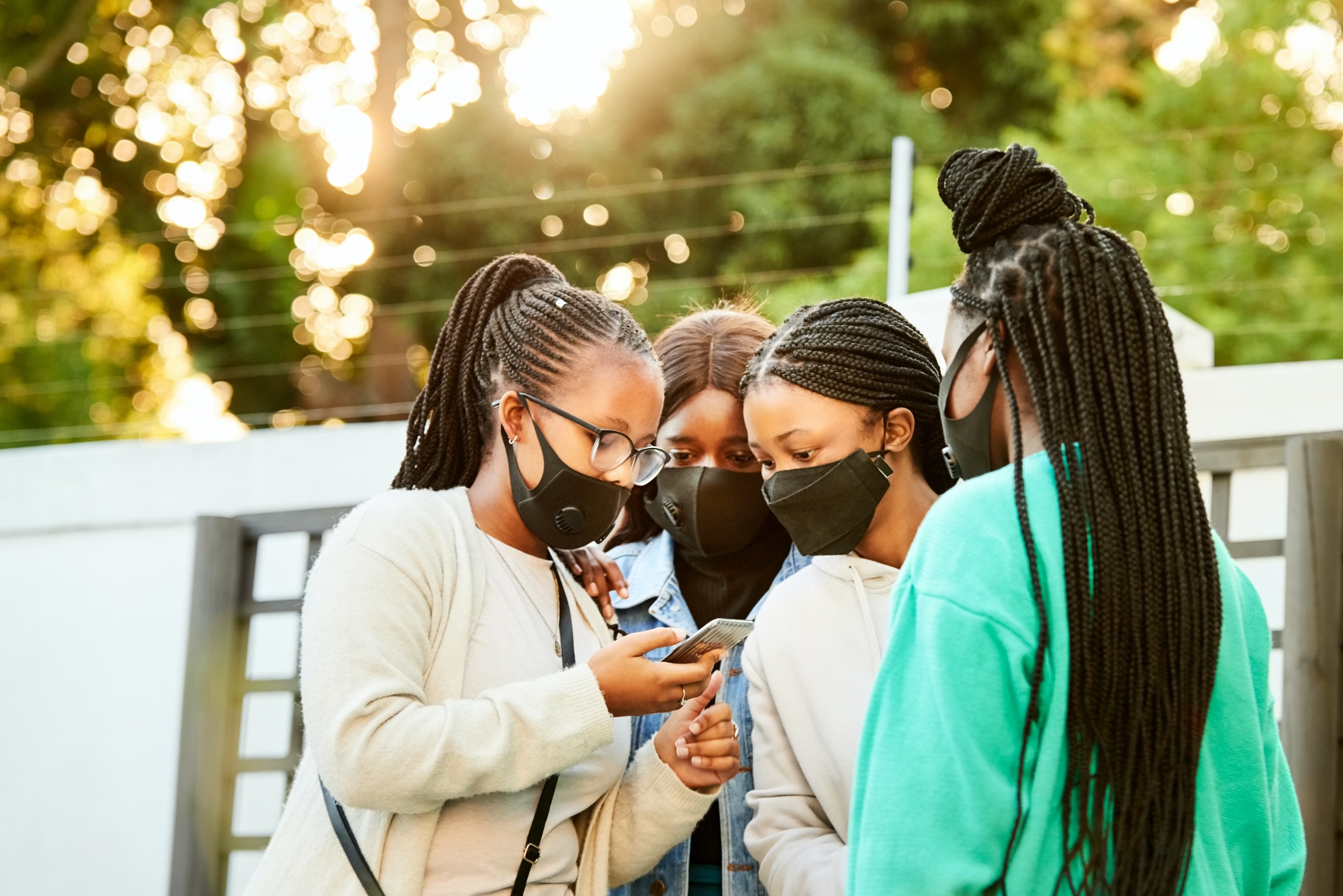
South Africa’s school dropout rate was high even before the COVID pandemic. Research shows that around 60% of young people effectively drop out of school, with no school-leaving qualifications to their names.
Most school dropout in South Africa occurs in grades 10 and 11, resulting in 50% of learners in any one school year dropping out before reaching grade 12. To understand how high this drop-out rate is, compare it with the 17% drop-out rates of both India and Malawi.
Before COVID, those most likely to drop out were female, from poor households, and attending poorly resourced schools with low academic performance. Dropping out of school has significant long term consequences for adolescent girls and young women. Young people who drop out are more likely to have limited earning potential, chronic unemployment and lower socio-economic status. They’re also more likely to engage in high risk behaviours, such as having older sexual partners and having condomless sex.
In March 2020 South Africa’s government ordered a hard lockdown to limit the transmission of COVID. Schools and universities were closed. As elsewhere in the world, schools had to shift rapidly to replace in-person teaching with various forms of technology based, remote and distance education. That shift exacerbated existing inequalities: poorer communities often struggle to access fast, reliable and affordable internet.
Given that girls were already more at risk of dropping out than their male peers, we wanted to know how COVID and lockdowns affected young women. So we conducted a study that involved 565 adolescent girls and young women aged between 15 and 24, from six South African districts characterised by high rates of HIV, teenage pregnancy and socio-economic hardship.
Read more: How COVID is affecting school attendance in South Africa: piecing together the puzzle
The digital divide
More than half of the young women who had been enrolled in education were not able to continue with their studies. Reasons for this included lacking cellphones or reliable internet access, and households struggling with food insecurity. The girls who were most likely to experience educational disruption were those in the poorest families, who were orphaned, who had no access to a cellphone or who had experienced hunger.
We found that due to poverty, lack of access to resources, limited access to internet and suitable devices, and the high costs of data, studying online wasn’t viable for many adolescent girls and young women. This led to their education being substantially disrupted by school closures.
One of the participants said:
Lockdown had a negative effect because we were forced to do online learning. It was not easy especially for those people who are struggling. Because we needed data… you have to find a way to get data.
Many of the young women spoke of challenges with online learning and studying at home. They also lacked support from schools and teachers. The young women spoke about the dreams for their future and education being shattered:
We want to apply for universities, but we do not have enough airtime or data in our phones for the application.
Narratives of resilience
It wasn’t all doom and gloom. There were some rays of light in young women’s stories. Some participants showed educational resilience, and a determination to achieve their educational goals. Some girls spoke of how they had found ways to cope, and with resourcefulness and creativity, had remained motivated and focused. This helped them to reduce disruptions to their education.
Read more: How COVID added to the stresses of the most vulnerable young women in South Africa
Keeping a positive attitude helped girls to remain focused on their studies. This resilience was enabled by support from other people such as family and friends. Girls who were able to access the internet could use online study resources, or connect with teachers and other learners to work together.
It was bad… I thought of quitting… But I continued anyway… I was able to manage… you could get notes from the internet or from the school… those websites and stuff…
Some respondents described receiving assistance with studying from other people at home, such as parents or partners.
I live with my boyfriend… he has helped me a lot, when it came to assignments and my schoolwork… I ended up doing very well at school this year.
Going forward
These findings are important because they help us to understand factors that bolster young people’s resilience, which can inform the design of programmes aimed at supporting young people to remain in school, and achieve their educational goals.
How can these findings inform efforts to help young people remain in school? We make the following recommendations:
-
South African educational institutions, public and private sector stakeholders and civil society organisations need to work together to develop inter-sectoral strategies to ensure a smooth transition to online learning.
-
Digital learning strategies need to include efforts to improve technological skills and digital literacy among learners and teachers.
-
Online learning needs to be mobile-friendly. It needs to consider accessibility so that learners who don’t have access to a computer can use smartphones.
-
Free learning resources and materials need to be made available on a variety of devices, operating systems and software applications. These need to be optimised for restricted bandwidth and unreliable internet access.
-
Infrastructure at government schools should ensure that both teachers and learners have access to basic digital technology and internet connectivity.
-
Given that mobile data in South Africa is prohibitively expensive, it’s important that the government and private sector jointly consider strategies to address these costs. Mobile operators should enable zero-rated educational sites and digital learner platforms should be developed with minimal data usage.
-
Providing support to learners, to motivate and encourage them to return to school and continue with their education, is critical. This needs to be combined with teacher support, provision of learning materials and increased involvement of parents.


