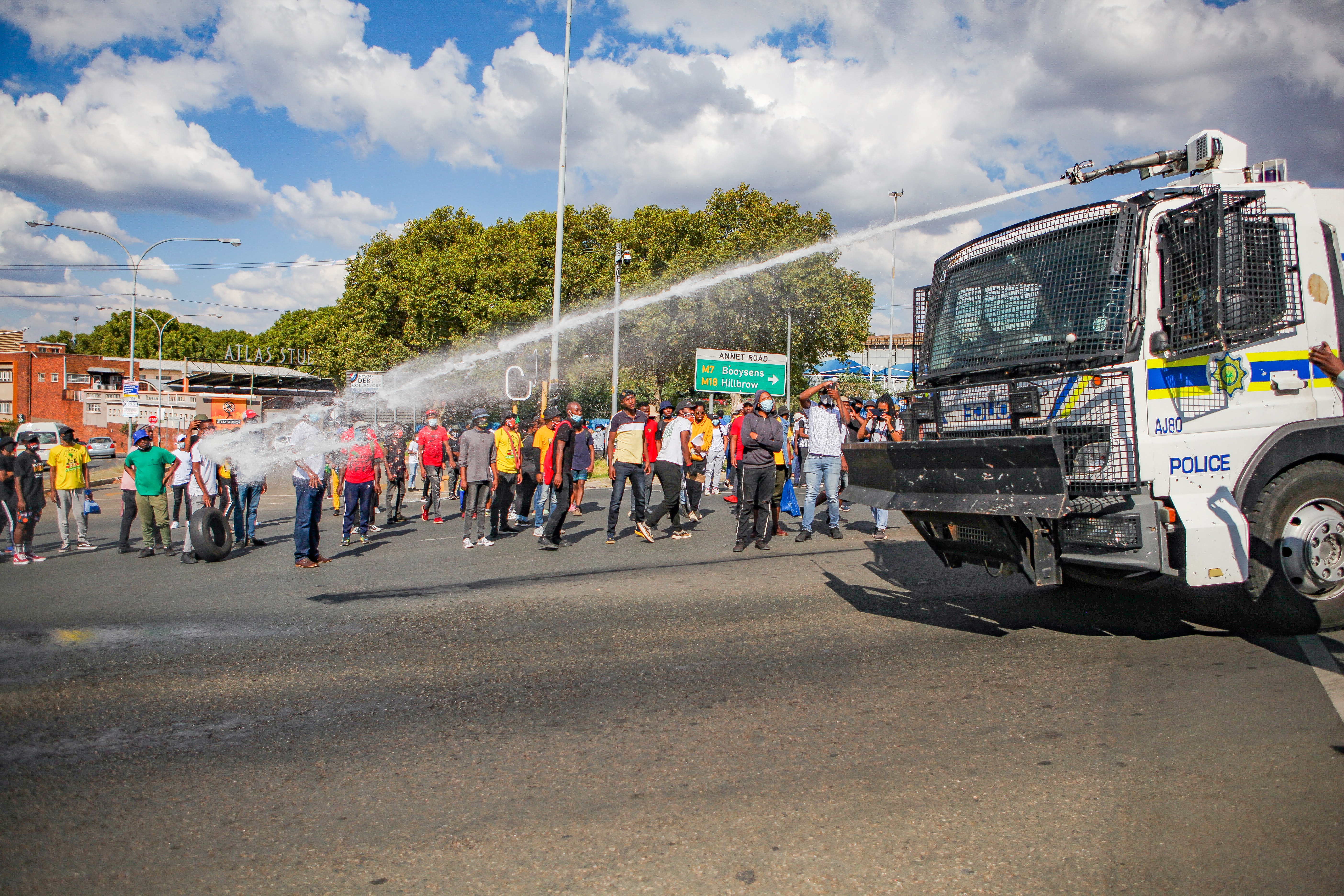
Ongoing student protests in South Africa have once again highlighted various problems with higher education funding. They boil down to challenges of affordability and sustainability.
State funding of universities is inadequate – it hasn’t kept pace with enrolment pressures and the increasing costs of providing higher education. Many students cannot afford to pay fees either. Yet the student financial aid system isn’t a reliable source of support.
The result is tension among higher education’s three key actors – universities, the state and students (and society at large). They don’t seem to share an understanding of needs, resources, challenges and visions.
Historical context helps this understanding. As is well known, education funding systems during apartheid weren’t fair. They didn’t try to address social inequalities.
In contrast, the present funding framework is generally aligned with government’s policies of expanded access, equity and development. These worked to shift higher education from an elite system to one where the student population represents the whole society better.
Whenever a higher education system is expanding like this, many students will require financial support. Previously, students tended to come from privileged socio-economic backgrounds. So the number of students needing financial assistance has grown faster than the general rate of enrolment growth. And this will continue.
An expanding higher education system needs funding that’s aligned with the realities of the country. Instead, state funding of higher education in South Africa has been declining in real terms. Initially universities responded by looking for more tuition fees to fill the gaps.
The rising fees were increasingly funded by loans rather than bursaries. This aggravated the crisis of inequality in South Africa because it placed a burden on those least able to manage.
Fee-free higher education
In 2016 there was a presidential Commission of Inquiry into the feasibility of making higher education and training fee-free. It found that the state couldn’t afford to provide free higher education to all who were unable to finance their own education. But the government then decided anyway to provide free university education for poor and working class students beginning in 2018.
The National Student Financial Aid Scheme, which had provided bursaries and mortgage-type loans, became a bursary scheme for students from families with an annual income under R350,000 (about US$23,300). A 2019 estimate by the World Bank showed that about 90% of university students in South Africa were eligible for fee-free higher education.
Even before the COVID-19 pandemic, which has increased financial hardship for families, several analyses showed that fee-free higher education would put unsustainable pressure on the country’s public finances, especially as enrolments grew.
South Africa’s economic growth has been weak over the past decade and in 2020 the economy shrank by 7%. Tax revenue is under pressure, public debt is soaring and corruption is endemic.
Countries such as Denmark, France, Taiwan, Colombia and Indonesia have approved funding support for universities or students in response to COVID-19’s economic challenges. Unlike them, South Africa’s reprioritisation budget reduced planned expenditure for higher education, including the National Student Financial Aid Scheme. This decision is difficult to comprehend given government’s own projections of significant job losses, meaning more students would need support.
Unsurprisingly, 2021 National Student Financial Aid Scheme applications exceeded 750,000, surpassing 2020’s by more than 185,000 applications.
Addressing the affordability crisis
The economic challenges facing the country, the high levels of inequality and the high number of students from poor and working class families call for a funding model that doesn’t create an affordability crisis, both for students and the state. It’s possible to intervene in a way that acknowledges the policy goals of expanded access and equity, the country’s perilous economic circumstances and the diverse economic situations of students.
The country needs a funding system that guarantees access, affordability and sustainability. It must protect the poor through bursaries to foster inclusion and limit personal debt.
It’s a good time to revisit the recommendations of the Presidential Commission of Inquiry on fee-free higher education and training. One recommendation was to introduce an income-contingent loan system. This system aligns repayments with student earnings. Student debtors start paying only when they start earning a certain income. This protects graduates during financial difficulties.
The student protests have highlighted, again, the structural weaknesses of the student funding model and the multiple funding-related crises confronting South Africa’s higher education. The immediate challenges need to be addressed to ensure students continue to learn and universities remain stable. But ultimately, South Africa needs to reshape the funding model for resilience and sustainability.


