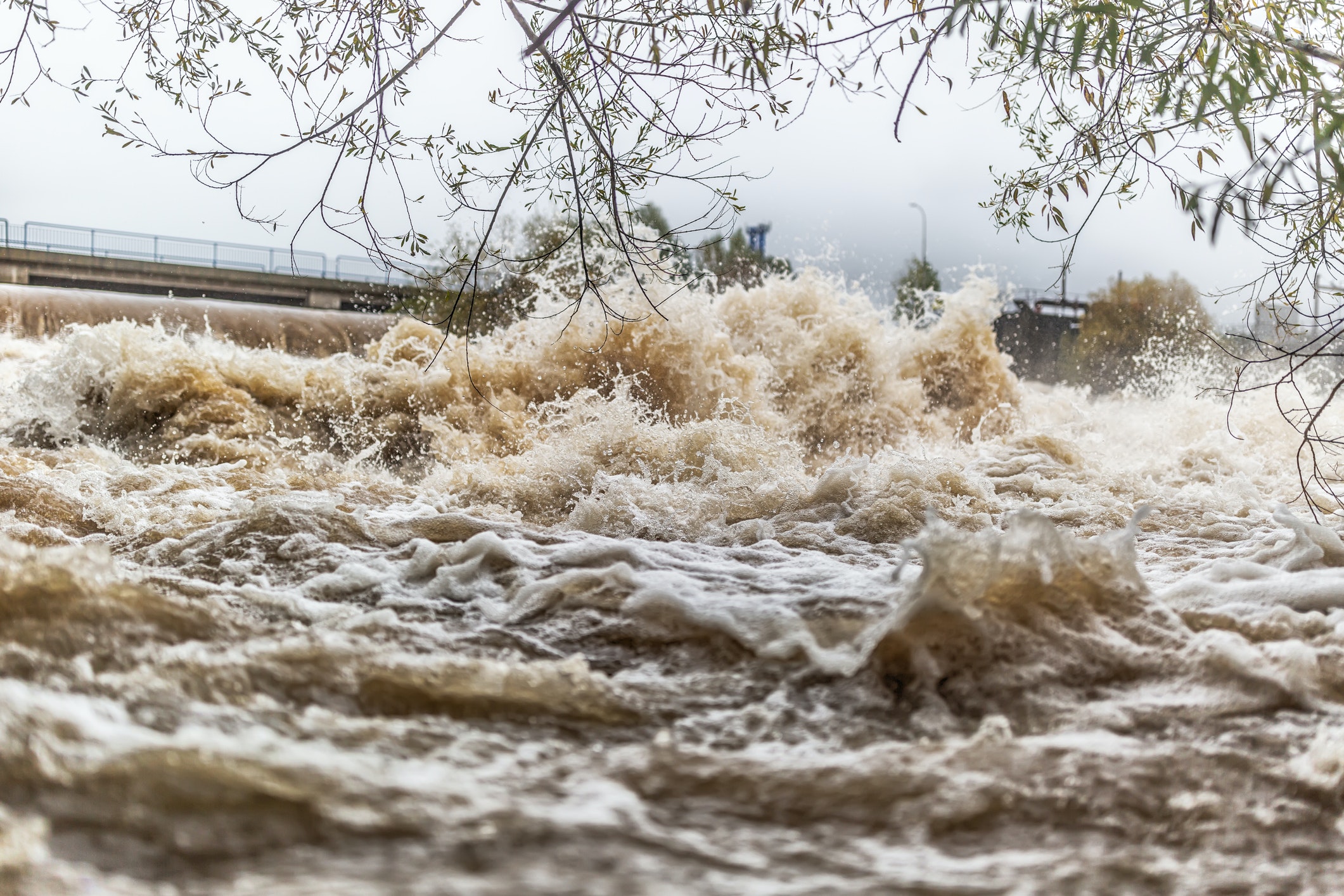
March marks the end of southern Africa’s 2021/2022 summer wet-season. Since its onset in October, most summer rainfall zone regions have experienced wetter than normal conditions.
Wetter conditions are positive for southern Africa’s rainfed agricultural activities and water reservoirs. But excessive rainfall has caused widespread flooding. This is in addition to flooding caused by tropical storm Ana, which made landfall in late January. And there is more to come: flooding will likely occur when tropical cyclone Batsirai – currently affecting the southern Indian Ocean – makes landfall.
These unusually wet conditions are the result of a weak La Niña event since December 2021. This weather pattern typically brings above-average summer rainfall across southern Africa.
A La Niña event is one of three phases of a climate cycle called the El Niño-Southern Oscillation (ENSO). The others are the El Niño and Neutral phases. These phases influence global atmospheric circulation and consequently global rainfall and temperature patterns. So the El Niño-Southern Oscillation is one of Earth’s most important climate phenomena.
What causes the La Niña event
The El Niño-Southern Oscillation is a naturally recurring phenomenon in which the ocean and the climate are related to each other. Every two to seven years, there are shifts in the temperature of the surface water of the tropical Pacific Ocean. There are also changes in the region’s east-to-west trade winds.
The Neutral phase, representing “normal” conditions, occurs almost half of the time. Sea surface temperatures are near-average and steady trade winds blow. The trade winds cause warm water to pile up in the western Pacific, while cool waters are drawn up from the bottom of the ocean to the eastern Pacific surface. Warm, moist air rises in the western Pacific, while in the eastern Pacific cool, dry air descends. This cycle of moving air is called the Walker Circulation. It pushes air over the equatorial Indian and Atlantic Oceans – which is one reason why the El Niño-Southern Oscillation makes an impact far away from the equatorial Pacific.
La Niña phases are basically enhanced Neutral phases. Trade winds blow harder, causing an expanded western Pacific warm pool and a more intense eastern and central Pacific cool pool. This causes a stronger sea surface temperature gradient which intensifies Walker Circulation.
El Niño phases are almost the direct opposite of La Niña phases. Trade winds weaken, or even reverse in direction, allowing warm waters to drift to the central and eastern Pacific. This eventually breaks down Walker Circulation.
The degree to which tropical Pacific Ocean waters deviate from average temperature determines the strength of La Niña or El Niño phases. That in turn determines their impact on global climate.
Influence on southern Africa’s weather
El Niño-Southern Oscillation phases have a regionally unique, although generally predictable influence on weather. For instance, while southern African summers typically have more frequent and heavier rainfall during La Niña events, southern USA regions usually experience the opposite conditions.
The current La Niña is the second event in two years. Impacts for this La Niña event are similar to last year, when southern African summer rainfall zone regions experienced a generally wetter and cooler than normal wet-season. This is the typical impact of a La Niña event. El Niño events typically have the opposite effects.
El Niño-Southern Oscillation phases influence the number of typical summer weather systems and where they form. That in turn influences rainfall and temperature patterns. Wetter and cooler conditions occur during La Niña phases because tropical temperate troughs – large rain-producing cloud bands – form more frequently and are located more eastward. Tropical lows – storms similar to very weak tropical cyclones – form more frequently and further south. Conversely, high-pressure systems – which promote hot, dry conditions – have reduced intensity and are located further south. The opposite occurs during El Niño phases.
Future outlook
El Niño-Southern Oscillation forecasts suggest the current weak La Niña should migrate to a Neutral phase during April-June. Southern Africa’s summer rainfall regions will likely continue experiencing wetter than normal conditions and additional flooding might occur.
Farmers, water managers and people generally should closely monitor daily weather forecasts and weather alerts issued by the meteorological bureau’s such as the South African Weather Service.
Looking beyond the current summer wet-season, it’s important to highlight the difference between climate variability and climate change. Southern Africa’s current above-average rainfall is a climate variability signal – a short-term fluctuation in average wet-season conditions. It will not necessarily cause an increase in the long-term wet-season rainfall average. Rather, the outlook under human-induced climate change suggests that southern Africa’s summer wet-seasons will likely become drier and shorter, but individual rainfall events may intensify.
Wet-season drought events may intensify and happen more often. These changes will have implications for long-term crop yield and surface water supply. Adaptation strategies need to account for this. Climate variability signals will, however, induce short-term implications, and to prepare for these seasonal forecasts need to be monitored.
Climate change will also likely have an impact on how El Niño-Southern Oscillation cycles behave and influence global climate. It’s not entirely clear exactly how the cycles will change. Some research suggests that El Niño and La Niña cycles may intensify, causing more intense impacts on global rainfall and temperature. El Niño-Southern Oscillation cycle changes are also expected to intensify current impacts on southern African summer wet-season periods.


