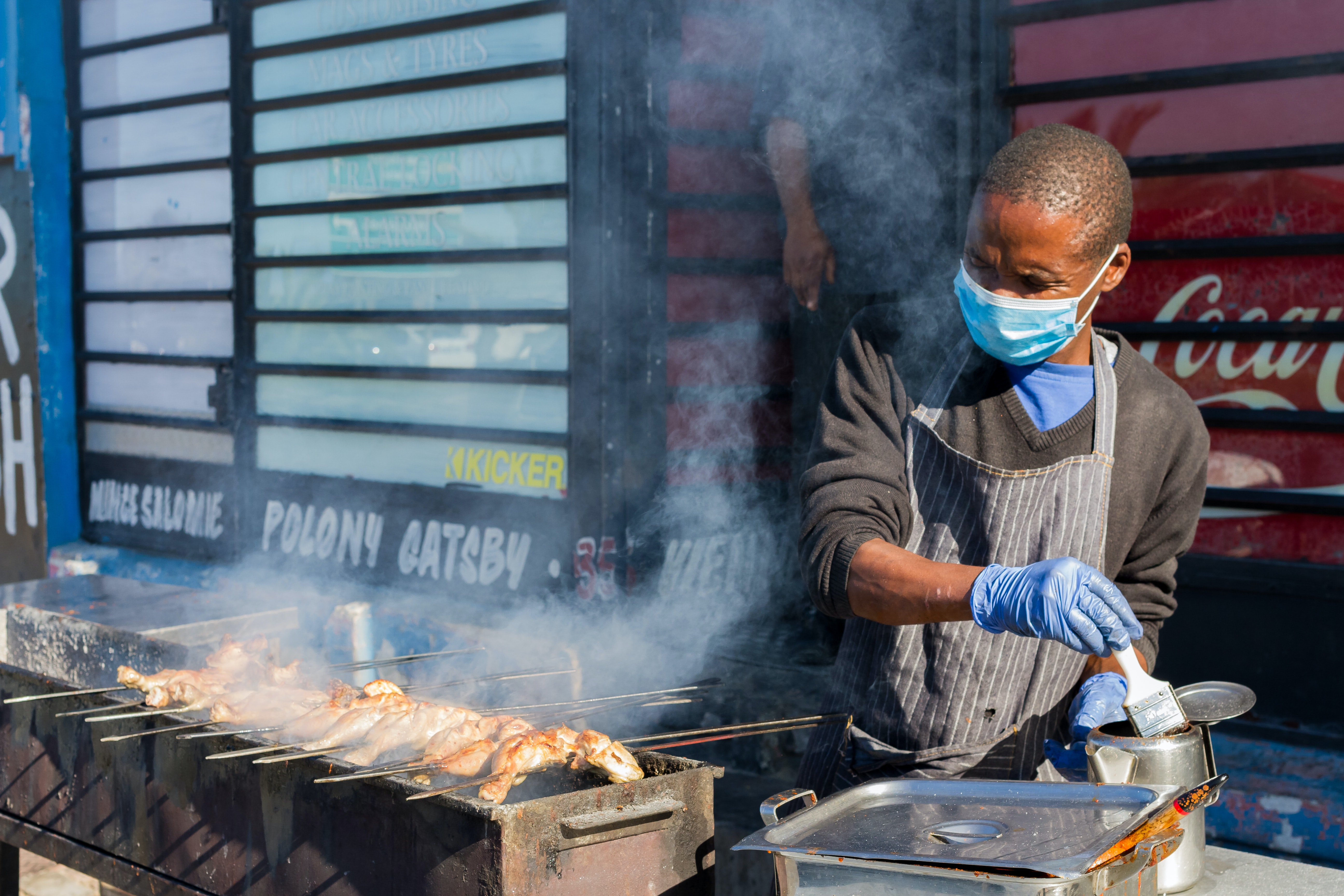
Informal vendors are a common feature in urban areas. Also known as street vendors, they sell products or provide services on a public road, in a regulated market or in other public spaces. These vendors usually sell food close to places of employment, educational institutions, and transit hubs.
Globally, it’s recognised that your workplace influences your health. South Africa’s National Development Plan estimates that by 2030, 1 million to 2 million new jobs will be in the informal sector. It’s therefore important for researchers to explore how working conditions in the sector affect workers’ health.
Informal street vendors are among the most underprivileged population groups. Their working conditions also make them vulnerable to ill-health. Vendors are continuously exposed to outdoor air pollution from a number of sources. These include traffic or automotive emissions, unpaved roads, construction sites, industrial processes, poorly ventilated or small stall spaces, and biomass fuel from cooking on gas and open fires. Exposure to these pollutants can cause sickness and death.
In our recent research we set out to test how pollution and working conditions affected the respiratory health of street vendors in Johannesburg, South Africa. We found that vendors lacked proper infrastructure to protect them from environmental health hazards. They also lacked sufficient health and safety training. Outdoor vendors were most at risk of ill health associated with poor air quality. Vendors who prepared food were especially susceptible.
The impact of air pollution can put a strain on already stretched healthcare systems. It’s therefore in a government’s interests to reduce that impact by providing suitable infrastructure at vendor markets, potable water points and good waste management services, and assessing air quality.
The study
Our study was conducted in the south of Johannesburg among 100 informal vendors. First, we conducted an environmental health walk-through survey to identify potential health and safety hazards at the vendor markets or stalls. We then interviewed vendors, asking questions about their health and occupational information such as time worked, the wearing of masks and hand hygiene practices.
We selected two different types of vendor locations: an enclosed market and the roadside. Out of the 100 participating vendors, 66% were trading outdoors and 34% indoors.
The indoor food vendors were situated in one of the biggest commercial or regulated markets in the country. Their stalls were provided with cooking facilities and hand-washing sinks.
Roadside vendors in public areas or on sidewalks operated from trailers or improvised with gazebos or tents.
What we found
In this survey, female vendors made up 63% of the total. Four percent of the vendors were 55 years or older.
The majority (69%) of the vendors worked at cooked food stalls, mostly using gas or electricity. Only 13% of the stalls had visible smoke and traffic was light in the areas where they worked. Most (63%) worked near substantial air pollution emission sources, such as industrial combustion plants and building activities. More than half the stalls were dusty or dirty and lacked a waste container. Only 12% of the vendors were smokers.
Nobody reported having lower respiratory diseases at the time of the study. Only 35% of the vendors said they had had a chest illness during the past three years that kept them from their usual activities for a week or longer. In the past 12 months, 25% of the participants had had a cough and 15% had brought up phlegm during the day or night in winter.
Upper respiratory symptoms including sore throat and nasal congestion were identified in 35% of the participants.
Only 5% of non-cooking vendors reported nasal congestion and sore throat. In contrast, 29% of cooking vendors reported having had congestion in their noses and 30% had had sore throats.
Thirty-six percent of the vendors sometimes experienced irritation of the eyes, nose, and throat while preparing food.
In the analysis of exposure duration, almost 73% of the vendors worked more than the recommended eight hours a day. But even short-term air pollution exposure has been linked to negative health effects.
The majority (66%) of vendors who participated indicated they were trained on health, hygiene, and safety issues. But this training only happened once, a fact which could influence individual health and safety decision making. Most of the vendors used masks during the COVID-19 lockdowns but did not necessarily use the type of mask suitable for roadside exposure, or use it as it should be used. Only 30% of the vendors practised hand hygiene at all times, though most had access to tap water.
What must be done
Various international studies have shown that outdoor vendors are at risk of exposure to air pollution and the development of respiratory health problems. Cooking vendors have been shown to be the group most susceptible and vulnerable to risks associated with air quality.
Over the years, numerous international studies have been published on occupational injuries and diseases. But the evidence hasn’t always been followed through in the form of policies and programmes to prevent and control ill health.
Mining and construction are exceptions, where occupational legislation and policies have improved worker health and safety. This level of development is necessary for unregulated sectors like informal vending.
City planning to demarcate trading sites should take into account the nearby industrial activities. Civil society and government organisations should look into the health and safety of vendors in general.
There is a need for infrastructure and municipal services such as waste collection, water provision and shelter, especially for roadside vendors.
It has been demonstrated that using biomass fuels often and being exposed to air pollution from traffic increases the chance of negative reproductive effects on women. Initiatives should take account of the fact that women dominate the informal trading sector.
Food vendors’ workstations must also be maintained in a hygienic state since they are essential to the food system.


